From Mumbai to Miami: The Global Evolution of the Big Fat Indian Wedding
Introduction
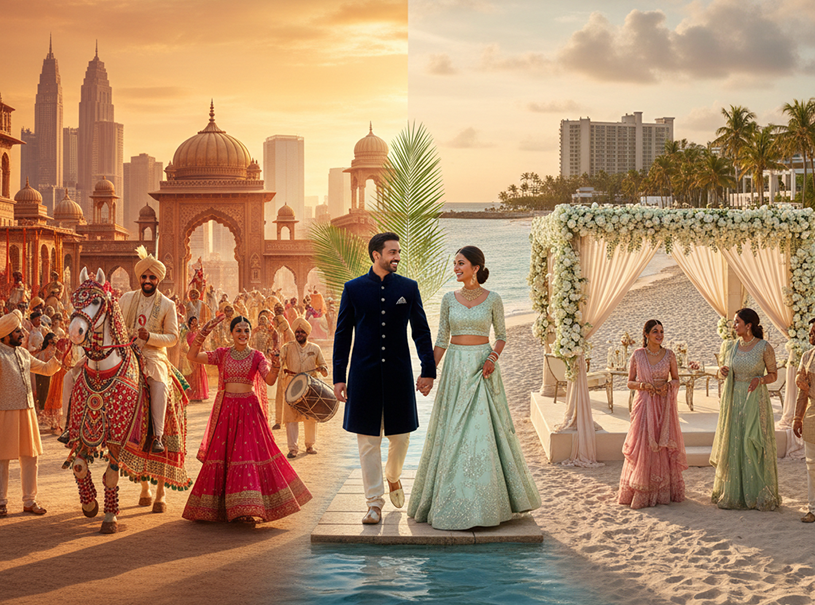
The term “Big Fat Indian Wedding” has long conjured images of vivid colors, multi-day celebrations, and guest lists that rival small town populations. It is a spectacle deeply rooted in family, community, and tradition. Yet, in the 21st century, the definition of this grand event is undergoing a profound transformation. The modern Indian wedding is no longer a monolithic concept; it is a globally evolving phenomenon, shaped by two distinct yet interconnected cultures: the ancestral homeland of India, exemplified by the bustling vibrancy of Mumbai, and the dynamic diaspora in the West, centered in metropolitan hubs like Miami.
This global flow of ideas, resources, and aesthetics has created a complex synergy. Celebrations in India are adopting the streamlined efficiency of the West, while Indian-American weddings are increasingly finding ways to incorporate the traditional scale and emotional depth of their heritage. The thesis is clear: the modern Indian wedding is a beautiful, intricate fusion of tradition and modern sensibilities, where Mumbai’s emphasis on sheer scale and community spirit meets Manhattan’s focus on personalization, elegance, and efficiency. This article explores the dramatic differences and surprising overlaps in logistics, aesthetics, and economics that define the Indian wedding, whether it’s hosted in a palace in Udaipur or a ballroom in New York.
The Traditional Anchor: Scale and Spectacle in India
The sheer, undiluted grandeur of a wedding hosted in India remains the benchmark for scale. For generations, the celebrations have been an essential social contract, extending beyond the immediate families to incorporate vast community and friendship networks.
The Undiluted Grandeur of the Motherland
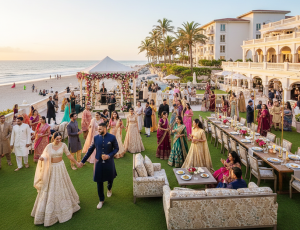 In India, particularly in cities like Mumbai or Delhi, it is common for wedding guest lists to exceed 500-1000 guests. This scale is a direct reflection of the extensive joint family systems and community ties that define Indian society. The wedding is, first and foremost, a community-focused event. The celebration is almost universally a multi-day affair as the standard: the joyous, choreographed dance routines of the Sangeet, the intimate artistry of the Mehendi, the sacred Wedding Ceremony, and the often sprawling Reception. Each event serves a distinct social and traditional purpose.
Managing this logistical maze demands highly skilled wedding planners who function more like event CEOs. They navigate the complexities of booking multiple large venues, coordinating hundreds of local vendors, and managing the often-chaotic flow of thousands of guests across several days. The challenge is not just execution, but maintaining the emotional and traditional authenticity in settings often marked by high volume and intense family expectations.
Family-Centered Celebrations: Emotional Moments Take Priority
More than ever, weddings are becoming celebrations of family bonding, not just ceremonies.
Parents, siblings, and grandparents are playing bigger roles in rituals, speeches, dances, and planning.
Popular trends include:
- Parent-child entrance walks
- Family-written blessings
- Heritage rituals revived (like kanyadaan, varmala, haldi traditions with twists)
- Custom gifts from bride or groom to parents
This shift toward heartfelt moments is one of the most cherished trends for both families and newlyweds.
Destination Weddings Dominate: Beaches, Palaces & Luxe Resorts
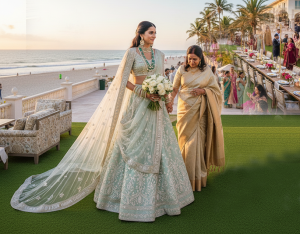 “Top destinations in India—like Jaipur, Udaipur, Goa, and Kerala—remain favorites. But for U.S.-based families, domestic venues such as Orlando, Scottsdale, San Diego, and Houston are becoming equally popular due to ease and affordability.”
The trend is fueled by the desire for multi-day celebrations in a relaxed environment, where all guests live, laugh, and celebrate together.
Parents appreciate simplified logistics, while couples enjoy a more personalized and scenic celebration.
The Diaspora Interpretation: Efficiency and Fusion in the US
The Big Fat Indian Wedding, when transported to the US, must undergo a radical adaptation to fit within American cultural, logistical, and financial frameworks. The result is a celebration that prioritizes efficiency and a seamless blend of cultures.
Fusion Ceremonies: Blending Cultures with Respect
With multicultural marriages on the rise, ceremonies combining Hindu, Jain, Sikh, Christian, or Western traditions are becoming normalized—especially in the U.S.
The key trend is respectful blending, ensuring each tradition is honored. Examples include:
- A Hindu mandap followed by a Christian blessing
- A Sanskrit vow ceremony paired with personal-written vows
- Mixed music playlists merging Bollywood, bhajans, and Western love songs
Parents appreciate the inclusivity, while couples enjoy creating a unique representation of their shared culture.
Technology at the Heart of Weddings: Livestreams, Apps & AI Planning
Technology has become a major trend on both continents. Families now use:
- Livestreaming for relatives in India or abroad
- Wedding websites with RSVP systems
- Drone and cinematic videography
- AI-powered planning tools for budgeting, scheduling, and décor inspiration
- LED mandaps and digital backdrops
For parents, technology reduces planning stress; for couples, it enhances creativity and convenience.
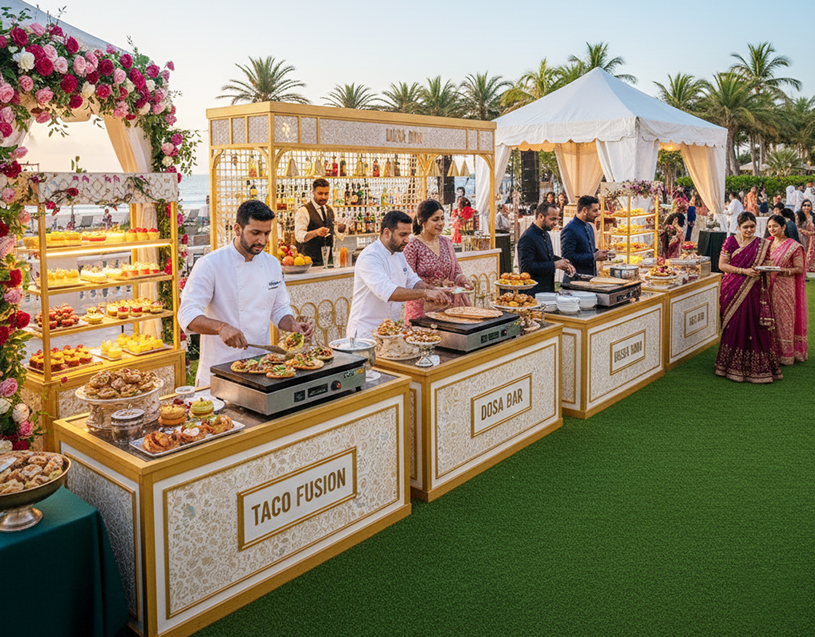
Food as an Experience: Regional Classics, Global Fusion & Live Counters
Food continues to be the soul of Indian weddings, but menus are evolving. In India, families focus on regional delicacies, millet-based dishes, artisanal mithai, and global stations.
In the U.S., couples blend Indian cuisine with American favorites—think paneer tacos, butter chicken sliders, dosa bars, Indo-Chinese bowls, and vegan/healthy options.
Live interactive counters, mocktail mixology bars, and dessert rooms are trending too. Parents love the balance between comfort food and innovation.
Trends in Aesthetics and Fashion: A Two-Way Street
The most visual evidence of this global evolution is seen in the aesthetics of the wedding day, particularly in bridal and groom fashion, where trends flow rapidly between the two continents.
The Indian Runway’s Global Influence
“The Indian fashion industry, spearheaded by designers like Sabyasachi and Manish Malhotra, dictates trends globally”. However, the Indian runway is now heavily influenced by the diaspora’s simpler aesthetic. Brides in India are increasingly moving away from heavy traditional reds and maroons toward pastels (blush pink, mint green, powder blue) and opting for lighter, more contemporary jewelry for pre-wedding events. This shift signals a move toward a less formal and more personalized look, a trend that took root in the Western diaspora.
Bridal Fashion Evolution: From Traditional Reds to Personalized Couture
The bridal industry is experiencing a revolution. In India, designers like Sabyasachi, Manish Malhotra, and Falguni Shane Peacock continue to set trends, while in the U.S., custom fusion outfits are becoming popular.
Brides today are gravitating toward pastel lehengas, modern Banarasi silks, organza saris, embroidered veils, and personalized heirloom jewelry.
American-born desi brides often blend cultures—pairing a lehenga for the ceremony with a white gown for the reception. Mothers of the bride especially appreciate the meaning and elegance behind these choices
Grooms Take Center Stage: Stylish Sherwanis, Custom Suits & Cultural Fusion
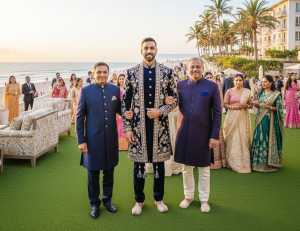
Indian grooms are no longer sticking to simple creams and golds. They are embracing their own fashion moment through velvet sherwanis, floral jackets, Indo-western bandhgalas, gemstone colors, and tailored tuxedos.
In the U.S., grooms often add cultural touches such as embroidered stoles, custom mojris, or subtle motifs of their heritage.
Parents welcome this trend because it reflects pride in culture while allowing the groom’s personality to shine.
The Economic and Ethical Shift
The economic decisions underlying the two wedding styles reveal fundamental differences in priorities, while ethical considerations are creating a shared new mandate.
Budgets and Priorities
While the overall budget for a wedding in India might be numerically higher simply due to the vast volume of guests and events, the per-guest cost is dramatically higher in the US. This forces diaspora couples to prioritize a premium experience for fewer guests—investing heavily in gourmet, fusion catering, high-end production, and celebrated DJs.
In contrast, the Indian wedding, though also prioritizing luxury, must allocate a larger portion of the budget to covering a larger social network, focusing on satisfying community expectations.
The Rise of Sustainable Nuptials
A progressive trend originating largely in the West and rapidly being adopted by conscious couples in India is sustainability. The global conversation around climate and waste has reached the wedding altar. This includes implementing zero-waste practices, avoiding single-use plastics, opting for locally sourced flowers and materials, and ethically sourcing apparel. This shared ethical mandate demonstrates a modern consciousness that transcends borders. The focus is shifting from conspicuous consumption to conscious consumption.
The Big Fat Indian Wedding is a living, breathing cultural event, and its global evolution confirms its enduring significance. The journey from Mumbai to Manhattan is not a story of one replacing the other, but of a fruitful, dynamic dialogue.
Weddings in India continue to anchor the spectacle with their deep emotional warmth and community-driven spirit, while weddings in the US diaspora offer streamlined elegance and seamless cultural fusion. The future of the Indian wedding is not about choosing between these two paths, but rather integrating the best of both worlds—harnessing the spectacle of tradition with the consciousness of modern global living. The result is a celebration that is both deeply personal and universally unforgettable, ensuring the “Big Fat Indian Wedding,” in all its glorious forms, remains a vibrant global institution.