Guest Editorial

Responding to the Debate on Marriage After 30
As the managing editor of Desh-Videsh, I was deeply encouraged by the thoughtful responses we received following my December 2025 editorial on the growing trend of Indian-Americans marrying after the age of 30. The article sparked meaningful discussion across our community, with readers sharing diverse perspectives shaped by personal experience, professional insight, and cultural values. Some agreed with the observations in the editorial, while others offered alternative viewpoints on the ideal timing of marriage. The responses that follow reflect the richness of this dialogue and demonstrate how an open conversation can help our community think more deeply about marriage, family, and changing social norms.
 If you want to share your experience, please email editor@deshvidesh.com. Please let us know if you do not want your name to be revealed..
Raj Shah
Managing Editor,
Desh-Videsh Media Group
Marriage, Maturity, and Timing: A Perspective from Hindu Culture
Dr. Piyush Agrawal
There was a very thought-provoking article in the Desh Videsh in the month of December 2025, written by the managing editor of the monthly, Shri Raj Shah, about
The article discussed weddings within the context of Hindu culture.
It is an excellent article worthy of reading by all, but it raises certain issues worthy of being addressed. Hence, this article.
Human life is one of the greatest gifts of nature, and mostly the cycle of human life is governed by the laws of nature. The activities of the human body in the life cycle are all well-defined and they take place in a sequence in a predictable order.
For example, Puberty does not happen during childhood, nor does it happen during mid-life. Having said that there is a time in life to get married, which is about the age of 25.
Though human beings are intelligent enough to tweak nature’s design wherever possible, those variables are not consistent with nature’s expectations and sometimes have adverse consequences.
The basic issue raised by Mr. Shah was to support the idea of getting married after the age of 30 with an outstanding narrative to justify that.
The purpose of this article is to support the idea of getting married around the age of 25.
For the following reasons:
- The individuals: the boy and the girl are in the process of maturation and have not fully mature enough to start thinking they are right: their way or the highway.
- The issue of compatibility between the boy and the girl in married life is extremely important, and an “adjustment” in behavior becomes essential for a mooth sailing in life. If their views are fixed at the “mature” level, adjustment may become questionable.
- Emotional adjustment is very important, and at the age of around 25 the boy and the Girls are more adaptable to each other than at the age of 30 plus.
- In the context of Hindu culture, where marriages used to be arranged, it was an opportunity for the boy and the girl to explore the goodness of a married life at an immature age of 25 while creating a growing family.
- While the husband and wife are in the process of maturation and adjustment, the Children are also growing, and collectively the whole family is in the similar mode of growing together, which provides a better family environment.
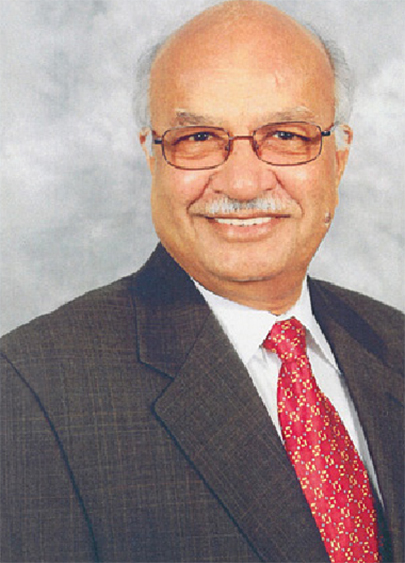 About the Author
Dr. Piyush Agrawal is a distinguished educator, successful entrepreneur, and dedicated community leader. With six university degrees, more than two dozen publications, and numerous awards, he has built an impressive professional record. After serving as a classroom teacher for 40 years, he later became superintendent of schools and also transformed APS Technologies, Inc. and Allied Joint Venture, LLC into thriving businesses.
Dr. Agrawal has also played an important role in public service, serving on the U.S. Census Advisory Committee on Asian and Pacific Islander Populations and on several Florida state boards. He has been actively involved in many civic organizations, including serving as national president of the Association of Indians in America and senior vice president of GOPIO International. A committed philanthropist, he funded a girls’ college in his home village in India and helped install a Mahatma Gandhi statue in Davie, Florida. He is also credited with requesting President George W. Bush to begin celebrating Diwali at the White House, which started in 2003 and continues today.
Marriage After 30 and the Divorce Question in the Indian-American Community
By Dr. Kavita Iyer
Recently, while reading the discussion around the Desh-Videsh editorial on why many Indian-Americans are choosing to marry after 30, I noticed an insightful comment posted on the magazine’s Facebook page by Apurva Desai. He pointed out that the conversation should also address another important issue—the rising number of divorces among this new generation and whether marrying in the mid-30s plays a role.
As an Indian-American licensed marriage and family therapist in the San Francisco Bay Area, I work closely with South Asian professionals navigating relationships, marriage, and family expectations. Many of my clients are highly educated individuals in fields such as technology, medicine, law, and finance. Increasingly, they are choosing to marry in their early or mid-30s rather than their mid-20s.
This shift reflects many positive changes. Young professionals today want emotional compatibility, career stability, and personal clarity before entering marriage. Financial independence and maturity often make couples better prepared for long-term commitment.
However, Apurave Desai’s question about divorce trends is worth discussing.
Research from organizations such as the National Marriage Project and the U.S. Census Bureau suggests that divorce rates tend to follow a U-shaped pattern related to age at marriage. Couples who marry very young—before age 22—have the highest divorce rates. The risk of divorce decreases steadily for couples marrying between ages 25 and 30, which researchers often describe as the most stable window for marriage.
Interestingly, some studies suggest that after the early 30s, the likelihood of divorce begins to rise slightly again. This does not mean that marrying later causes divorce. But it does highlight certain lifestyle realities that affect couples who marry later.
In my counseling practice, I often see couples who are exceptionally successful professionally but find the adjustment to marriage more complex than expected. By their mid-30s, individuals have spent more than a decade building independent lives—establishing routines, financial habits, and personal expectations. When two independent individuals come together, learning to compromise, share decision-making, and adapt to each other’s lifestyle can take time.
Another factor is career intensity. For many Indian-American professionals, the early and mid-30s are peak career years. Promotions, relocations, startup ventures, and long work hours can create pressure during the first years of marriage.
Expectations also play a role. People who marry later often have a very clear vision of what they want in a partner and in a relationship. While clarity is valuable, rigid expectations can sometimes make conflict resolution more difficult.
That said, it is important to keep the broader perspective in mind. Indian-Americans still maintain divorce rates significantly lower than the overall U.S. average, largely due to strong family values, cultural support systems, and a deep respect for commitment.
Ultimately, the success of a marriage depends far less on the exact age at which it begins and far more on the readiness of the individuals involved. Emotional maturity, communication skills, shared values, and mutual respect remain the true foundations of lasting relationships.
Apurave Desai’s comment highlights an important truth: conversations about marriage timing should include honest discussions about relationship expectations and preparation for partnership.
Whether someone marries at 27 or 35, the goal is the same—to build a relationship grounded in understanding, patience, and the willingness to grow together over time.
About the Author
Dr. Kavita Iyer is an Indian-American licensed marriage and family therapist based in the San Francisco Bay Area. She specializes in relationship dynamics among South Asian professionals, focusing on cross-cultural marriages, delayed marriage trends, and work-life balance challenges faced by immigrant communities. Dr. Iyer has over 15 years of counseling experience and frequently speaks on modern relationship patterns within the Indian-American diaspora.
A Young Indian-American Woman Reflects on the “Marry After 30” Trend
By Kavya Srinivasan, 28, Fremont, California
Like many Indian-American women of my generation, I always believed there was no rush to get married. I am 28 years old, live in Fremont, California, and work as a product manager at a technology company in Silicon Valley. My boyfriend, whom I met during graduate school, is also a young professional in the tech industry. We have been dating for two years, and until recently, our plan seemed very clear.
We told our families that we loved each other and were serious about our relationship—but we were not planning to marry for another five years. Our reasoning was simple: focus on our careers, travel a little, enjoy independence, and think about marriage sometime in our mid-30s.
To us, that timeline felt modern and sensible.
Then I happened to read the December 2025 editorial in Desh-Videsh Magazine written by Raj Shah, which discussed the rising trend of Indian-Americans marrying after the age of 30.
The article was thoughtful and balanced. It acknowledged that marrying later often brings advantages such as emotional maturity, financial stability, and clearer career direction. Those arguments made sense to me because they reflected how many of us in the Indian-American community think today.
But one particular message in the editorial stayed with me.
Raj Shah wrote that while marriage after 30 is becoming more common, the late 20s are often the ideal time to start seriously considering marriage, because this stage of life offers flexibility, emotional openness, and a wider pool of compatible partners.
That perspective made me pause.
For the first time, I began questioning whether we were truly being thoughtful—or simply postponing an important decision because our generation assumes we have unlimited time.
At 28, my boyfriend and I are still shaping our future. Our careers are growing, but they are not yet locked into rigid paths. We are deciding where we want to live, how we want to balance professional ambition with family life, and what kind of home we want to build.
Reading the editorial made me realize something simple yet powerful: marriage is not just about timing—it is about growing together.
If we marry in the next couple of years, we will make many of life’s big decisions as partners. Waiting until our mid-30s might mean merging two very established lives, with habits and expectations that are harder to blend.
The article also reminded me that in Hindu culture, marriage is not just a social milestone. It is a sacred partnership—a samskara—meant to support emotional growth, family continuity, and shared purpose.
Modern life has given our generation incredible opportunities. We pursue higher education, ambitious careers, and independence in ways our parents never imagined.
But independence does not mean delaying every meaningful step in life.
After reading Raj Shah’s editorial, I had a long conversation with my boyfriend. For the first time, instead of automatically saying “maybe in five years,” we asked a different question.
Why wait so long if we already know we want to build a life together?
We are not rushing—but we are no longer assuming that marriage must wait until our mid-30s.
Sometimes a thoughtful article can quietly change how you see your future.
For me, that moment came while reading the December issue of Desh-Videsh.
Comments from Desh-Videsh Facebook Page:
Very well articulated !!!
You did not cover the very high percentage of divorce among this new generation and what factors getting married in their mid 30s plays…
Apurva R Desai
Well articulated!
Smeeta Patel
A very important topic that is consuming the parents of kids of marriageable age is Kids have been facing distrust among the kids of their own generation. Why?
Sanjiv Anand
So true. I was among the last few of my friends to get married in my early 30s. The main reason was stability and a path forward (in the USA).
Neeraj Mendiratta