Editorial June 2026
Beyond the Big Fat Wedding: What Makes a Marriage Last?
“May you two remain here together, never be separated. May you enjoy the full span of life, playing with your children and grandchildren in your own home.”
— Rig Veda 10.85.42
Every wedding season, I have the privilege of witnessing extraordinary celebrations. Lavish décor, breathtaking venues, designer attire, exquisite cuisine, and unforgettable entertainment have transformed Indian-American weddings into some of the most spectacular celebrations anywhere in the world.
Today’s weddings are grander than ever. Multi-day events, destination celebrations, personalized ceremonies, social-media storytelling, and carefully curated experiences have become the norm. Families invest enormous time, energy, and resources to create memories that will last a lifetime.
And rightly so.
A wedding is one of life’s most joyous milestones. It brings together families, friends, traditions, and generations. It celebrates love, hope, and the promise of a shared future.
Yet every wedding also raises an important question:
What happens after the celebration ends?
After the final dance, the last photograph, and the departure of the guests, another journey begins—a journey that is far more important than the wedding itself.
The journey of marriage.
In our excitement to create the perfect wedding, we sometimes forget that a wedding lasts a few days, while a marriage lasts decades.
A wedding is an event. A marriage is a relationship.
A wedding is carefully planned. A marriage unfolds day by day.
A wedding is about celebration. A marriage is about commitment.
The distinction is important because while beautiful weddings create cherished memories, strong marriages create meaningful lives.
Our Hindu traditions have long understood this distinction. Marriage, or Vivaha, is not merely a social contract. It is considered a sacred partnership—a commitment to walk together through all stages of life. During the Saptapadi, the seven sacred steps taken around the holy fire, the couple makes promises that go far beyond romance. They pledge mutual support, shared responsibility, trust, respect, friendship, and spiritual growth.
At the heart of Hindu marriage, or for that matter, any marriage, lies the concept of Dharma.
Dharma is often translated as duty, righteousness, or moral responsibility. In marriage, Dharma reminds us that love is not simply about what we receive from another person. It is also about what we give. It is about fulfilling responsibilities with sincerity, compassion, and commitment.
This idea may seem old-fashioned in a world that increasingly emphasizes individual fulfillment. Yet many of the strongest marriages continue to thrive because both partners understand that lasting relationships require effort, patience, and sacrifice.
The word “sacrifice” itself has become somewhat unpopular in modern culture. We are often encouraged to prioritize personal happiness above all else. While self-care and personal growth are important, successful marriages also require compromise. No two people agree on everything. Differences in personality, habits, priorities, and expectations are inevitable.
Marriage teaches us how to navigate those differences with grace.
It teaches us that being right is often less important than being kind.
It teaches us that listening can be more valuable than winning an argument.
It teaches us that mutual respect is the foundation upon which love continues to grow.
The ancient sages understood that lasting marriages are built on far more than attraction or romance. They require patience, mutual respect, trust, sacrifice, and a willingness to place the well-being of the relationship above momentary disagreements.
One of the most beautiful blessings from the Rig Veda captures this ideal perfectly:
“May your minds be united. May your purposes be united. May your hearts be united. May your thoughts be united, so that you may live together in harmony.”
— Rig Veda 10.85
This vision of marriage remains as relevant today as it was thousands of years ago.
Modern Indian-American couples face opportunities and challenges unlike any previous generation.
Most couples today are highly educated and career-focused. Both partners often pursue demanding professional goals while simultaneously managing family responsibilities. Financial pressures, home ownership, raising children, caring for aging parents, and maintaining work-life balance can create significant stress.
Social media adds another layer of complexity.
Every day, we encounter meticulously curated snapshots of others’ lives. Perfect vacations, romantic anniversaries, luxury homes, and seemingly flawless relationships can create unrealistic expectations. Comparison often becomes the thief of contentment.
The truth, however, is that no marriage is perfect.
Every couple faces disagreements.
Every family encounters challenges.
Every relationship experiences seasons of growth, adjustment, and change.
The strongest marriages are not those without problems. They are those in which both partners learn how to navigate problems together.
Another unique challenge for Indian-American couples is balancing two cultural worlds.
Many young adults are deeply rooted in American values of independence, personal choice, and individual achievement. At the same time, they inherit Hindu traditions that emphasize family, duty, community, and collective responsibility.
Neither perspective is inherently right or wrong.
The challenge lies in creating harmony between them.
Questions about family involvement, religious traditions, parenting styles, career priorities, financial decisions, and caregiving responsibilities often require thoughtful conversations and mutual understanding.
Successful couples learn that marriage is not about one person winning and the other losing.
It is about finding solutions that honor both partners while strengthening the relationship.
In this regard, there is much we can learn from our parents and grandparents.
Many of them built marriages that lasted forty, fifty, or even sixty years. Their lives were not free from hardship. They faced financial uncertainty, immigration struggles, health challenges, family obligations, and personal sacrifices.
Yet they endured.
What was their secret?
Perhaps there was no single secret.
Rather, there were certain values that consistently guided them.
Commitment over convenience.
Patience over impulsiveness.
Respect over ego.
Partnership over competition.
They understood that love is not sustained solely by grand romantic gestures. It is sustained through countless small acts of kindness performed every day.
A cup of tea prepared without being asked.
A supportive word during difficult times.
A willingness to listen.
A readiness to forgive.
A habit of showing appreciation
A commitment to show up for one another every day.
These small moments rarely appear on Instagram, but they are the moments that build enduring marriages, the foundation of lifelong relationships.
As I speak with newly married couples, I often notice that enormous effort goes into planning the wedding itself. Couples spend months selecting venues, photographers, entertainment, menus, invitations, and décor.
But imagine if couples devoted an equal amount of time preparing for marriage.
Imagine discussing financial goals as carefully as wedding budgets.
Imagine planning communication strategies as thoughtfully as reception seating charts.
Imagine investing in premarital counseling with the same enthusiasm used to select a wedding venue.
Imagine preparing for a lifetime together with the same dedication used to prepare for a single day.
The return on that investment would be immeasurable.
Fortunately, many young couples are already moving in this direction.
As wedding celebrations continue to evolve, I am encouraged by a growing trend among younger couples. Increasingly, they are seeking more meaningful experiences rather than simply following tradition for tradition’s sake. They want ceremonies that reflect their values, tell their stories, and create authentic connections with family and friends.
This is an encouraging trend because meaningful weddings often lead to meaningful marriages.
The true purpose of a wedding is not simply to impress guests.
It is to establish a foundation upon which two people can build a life together.
A successful marriage is not measured by the size of the ballroom, the number of guests, or the popularity of wedding photographs on social media.
It is measured by something far more meaningful.
It is measured by trust.
It is measured by mutual respect.
It is measured by friendship.
It is measured by resilience.
It is measured by shared values.
It is measured by the ability to support one another through life’s inevitable joys and challenges.
It is measured by the willingness to grow together rather than apart.
Most importantly, it is measured by the countless ordinary days that become extraordinary.
As you enjoy this Wedding Issue of Desh-Videsh, filled with beautiful celebrations, inspiring love stories, and unforgettable moments, I encourage you to look beyond the splendor of the wedding day.
Celebrate the wedding, certainly.
But honor the marriage even more.
Cherish the memories.
But remember that the real achievement is not creating a perfect wedding.
The real achievement is creating a lasting marriage.
Because long after the flowers fade, the music ends, and the photographs are placed in albums, what remains is the partnership.
What remains is friendship.
What remains is the commitment.
And what remains is the beautiful journey of two souls walking through life together.
And that is where the real love story begins.
That is the true meaning of marriage.
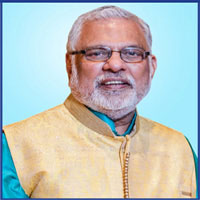 Raj Shah,
Managing Editor,
Deshvidesh Media Group.