
Jay Vaingankar Seeks Historic New Jersey Congress Seat
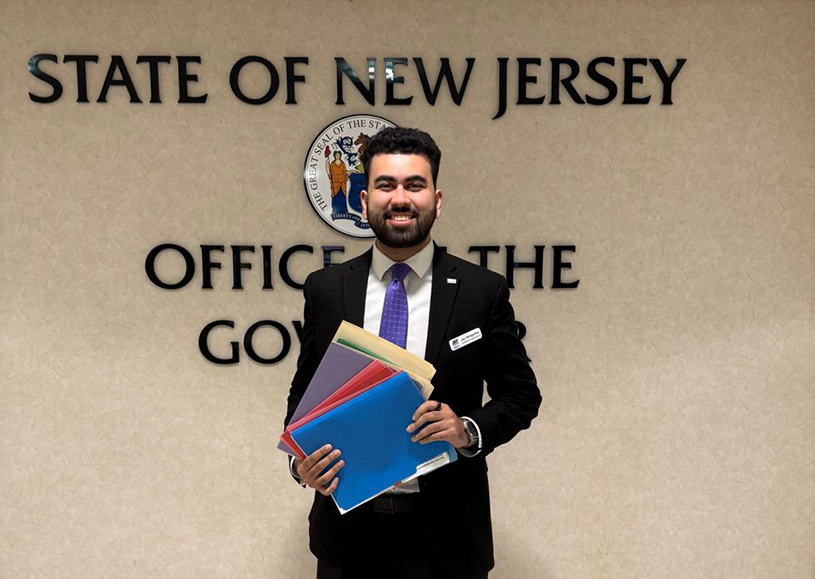
As New Jersey heads toward a closely watched Democratic primary, 28-year-old former White House official Jay Vaingankar is positioning himself as a candidate of generational change, aiming to bring younger leadership into American politics. He is also seeking to make history by becoming both the first Gen Z and the first Indian American representative from New Jersey’s 12th Congressional District.
The open seat became available after long-serving Congresswoman Bonnie Watson Coleman announced her retirement, drawing a competitive field of Democratic contenders. With the primary just days away, the race has gained attention not only for its crowded lineup but also for the possibility of reshaping representation in a district that includes a significant Indian American population.
Vaingankar has centered his campaign on the idea that voters are increasingly disillusioned with traditional political structures and are seeking leaders who better reflect present-day community concerns. He has argued that Washington needs a generational shift, emphasizing responsiveness and accountability to local issues.
He explained that his decision to enter the race was influenced by conversations with residents following the retirement announcement. Many, he said, expressed frustration with repeated election of long-established politicians and the perception that leadership change is overdue. He believes voters want representatives who are actively engaged with everyday concerns rather than relying on political tradition or seniority.
A key focus of his campaign is affordability, particularly the rising cost of living. Drawing from his experience working in the Department of Energy during his time in the White House, Vaingankar said he witnessed firsthand how economic pressures affect families. He highlighted frequent price increases in essential goods, along with growing concerns over property taxes and household expenses.
He argued that while the cost of living continues to rise, the quality of services and goods has not necessarily improved, creating additional strain on working families. This issue, he said, remains the most common concern he hears from voters across the district.
Vaingankar is also advocating strongly for clean energy expansion. He believes renewable sources such as solar, wind, and nuclear power can simultaneously reduce costs, create jobs, and address climate challenges. He rejected what he described as a false choice between affordability and sustainability, arguing that both goals can be achieved together.
The Democratic primary is expected to be highly competitive, with more than ten candidates in the race. Vaingankar noted that vote splitting could allow a candidate to win with a relatively small share of support, potentially as low as 15%. Despite the crowded field, he remains optimistic that younger voters and diverse communities will play a decisive role.
He also highlighted increasing political participation within the Indian American community, noting that thousands have registered to vote in response to the campaign. He emphasized that greater representation for South Asian Americans could have broader national significance.
Born in Trenton to immigrant parents from Mumbai, Vaingankar grew up in East Windsor and Hightstown before studying at the University of Pennsylvania’s Wharton School. He later worked in the Biden administration before returning to New Jersey to launch his congressional campaign.
With the primary approaching, the contest is being closely watched as a potential turning point for both generational and cultural representation in the district’s political landscape.