

Anticipating a New School Year
By Komak Shah
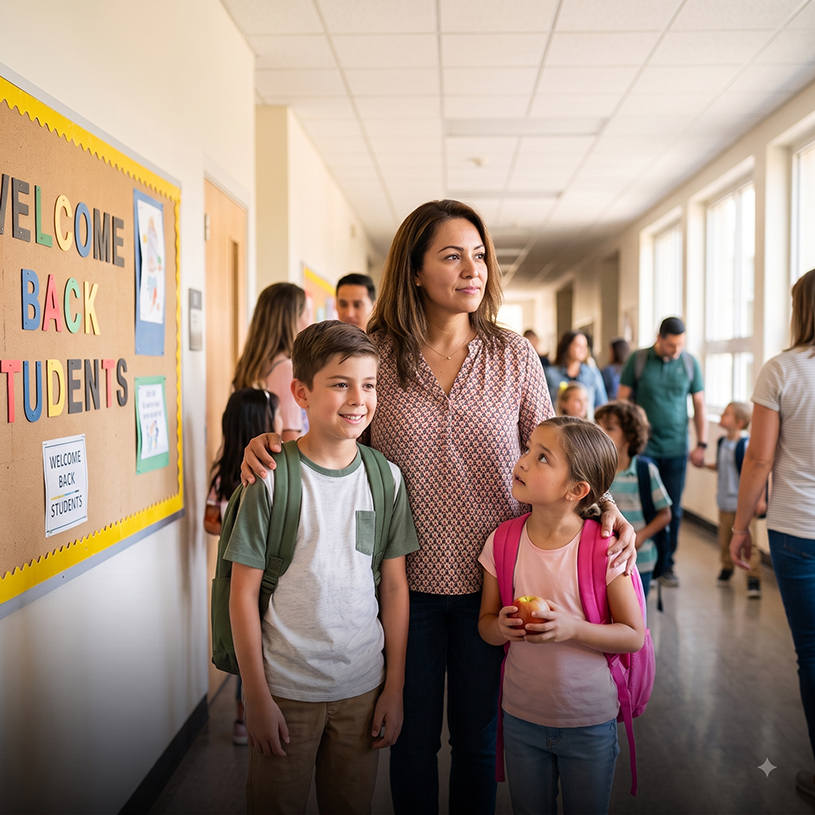
The scariest part about back-to-school season? The unknown.
It’s the thing that most parents feel as they work through in anticipation for the new year. There are a lot of questions that come up as you frantically do back-to-school shopping, attend orientations, and pick up class schedules.
Questions such as:
Will my child like their new teacher?
Will my child make new friends? Will they keep their old friends?
Will my child have a good school year?
As reasonable as these questions are, they usually are left unanswered. After a summer break, the beginning of the school year is usually a slow transition, and it takes an adjustment period.
Though parents feel this uncertainty, us teachers do too.
I remember going to school two weeks before students came back for professional development – sitting in long staff meetings, collaborating with grade level teams, and setting up my classroom. I would be in the throughs of preparation, many times having similar unknowns.
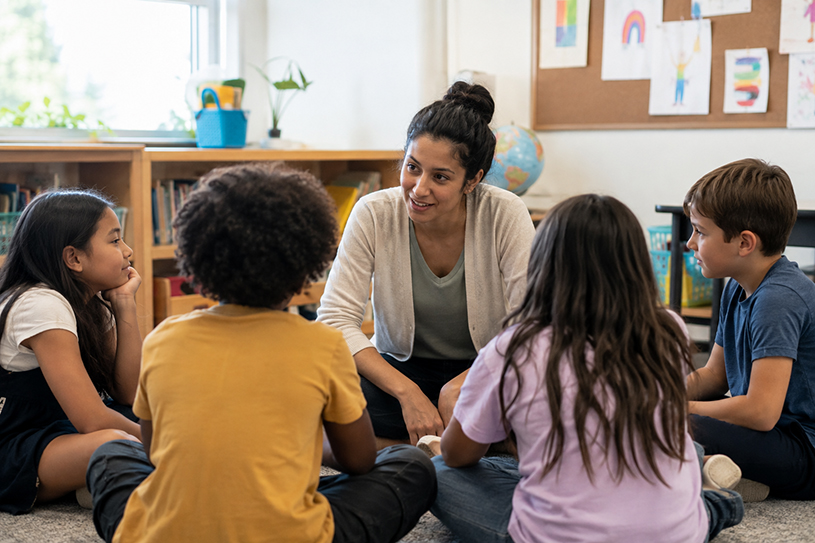
Questions such as:
Will my students like me?
Will I be the right teacher for them?
Will this be a strong school year?
Just like parents, I was just as much steeped in the unknown. Many times, decisions around class lists or teacher schedules wouldn’t be answered until school started. It made me realize that both parents and teachers are going through the same dilemma. Heck, even the kids are.
The reality is that this all comes from a place of care. Whether it is a parent or a teacher, the focus is the same – the child. The unknown is never eliminated (as much as we would like it to be) – but I know that we can shift our expectations for the beginning of the school year.
Instead of focusing on all the uncertainty, we can see it as a new opportunity for children where we learn alongside each other. To assuage all of these questions and concerns, I’ve put together some of my thoughts from a teacher to hopefully support this crazy transition called back-to-school.
Navigating Five Questions as a K-12 Parent:
Will my child have a good teacher?
 It’s fair to say that this was the biggest wonder when I used to see parents during class schedule pick-up. There was anticipation of knowing who your homeroom teacher would be, your math/science teacher, and your fun art teacher. Heck, if it was elementary school – it was finding out who your teacher would be all day.
I could understand the anticipation – maybe wanting a teacher that your other child had, or hearing about a teacher that was seen as an exemplar. In this day and age, there usually isn’t a guarantee. There are just as many new teachers as veterans, resulting in varied experiences and reputations amongst the community. Unfortunately, these preconceived notions can cloud the judgment before the school year even starts.
What I realized is that the teacher-student relationship is a messy one. I know for me, I was starting the school year trying to know my student’s likes and dislikes, and being acquainted to the baggage they brought from their previous schooling. To make matters more difficult, as a teacher, I had 60 students, which meant sixty relationships that had to be built at the same time. It is a slow process, and it definitely doesn’t happen overnight.
For parents, I would ask – what does a “good” teacher mean to you?
- Your child likes them?
- Are they warm?
- Are they organized?
- Do they have high expectations?
- Does your child get good grades?
- Do they communicate frequently?
- Do they challenge your child?
- Your child feels seen?
There is no wrong answer, but it can give clarity on what you are looking for. I would say to provide grace to a teacher, and you may be surprised. Sometimes, a strict teacher that your child complains about can end up being the teacher who pushes your child more than ever. I would say know what you are looking for, and then surrender that experience as you let yourself and your child navigate those first few weeks.
- Will my child transition well between grade levels?
I taught sixth grade which meant that I was in a pivotal grade transition for my students – elementary to middle school. There were BIG changes – one teacher to many teachers, passing periods between classes, and a completely new school building. My students showed varied emotions from excitement to nervousness. Many also carried plenty “baggage” from fifth grade.
Though the transition was tough, I truly saw kids blossom over the school year. That was the thing I noticed the most – every child came with their assumptions, but they were so resilient. I saw timid kids find more of their voice, I saw socially struggling kids sitting with new friends, and I saw angry kids become more patient and loving. It made me realize that though changing grade levels can be tough, it can also be the time that your child will develop and learn so much about themselves in the long-run.
As a parent, I think it’s important to give your child time to find their footing in those first few weeks. It is okay if it feels hard or challenging. There are so many adults in the building supporting students through these transitions. Also, students are being thrown so many rules and expectations, that they may need an adjustment period. I found that the students who knew that transition was completely normal, found themselves to come out the other side with growth.
-
Will my child make friends?
 Since I was a middle school teacher, I was very acquainted with the friendship breakups and makeups. This was a daily occurrence while I was teaching, and many times, it was more of a focus area than the learning in the classroom. Why? Because kids are going through different developmental stages, and friendship and belonging slowly become a key part of their identity. Of course, this has now become more complicated with phones where group chats and social media have become a place to either include or isolate others beyond the school building.
Through my experience, I made it a point to normalize friendships evolving and shifting. It was usually a supportive adult at both school and home to help them navigate those conversations. We always told the students that you may not like everyone or want to be their best friend, but the basic rule is to be kind to others. I saw students change social circles constantly, and even find their people in other grade levels.
As a parent, I get this can be hard when this experience of friendships is usually happening the eight hours in a school building out of your purview. However, I think its safe to say that children will change their connections often, and find different peers to connect with. Instead of trying to curate or control that experience, I would say that the parents who showed support when encounter friendship challenges are important.
Another quick note – I found that when parents told me that their child struggled socially – it kept me on their radar. We were good about pairing students together that we thought could build a relationship, and even curate lunch spaces where there was inclusion of all kids. Don’t be afraid to tell a teacher – they are there to help!
- Will my child keep up academically?
At the end of the day, it usually comes down to those Common Core standards. I found myself working with a lot of parents who felt deeply frustrated because they were not familiar with this way of learning when they were younger. Believe me, I get frustrated when you can’t help your own kid with basic subjects.
The beginning of the school year is sticky because students come back from being off of school for a few months. Students were usually travelling, at summer camps, or on their phone a little too much. It’s like coming back to work after a vacation. If anything, both teachers and students (and parents) are transitioning back to this way of life.
I found that the first few weeks, I was focusing way more on culture building with students and getting to know them as people. Though I would introduce math pretty early, it was to cultivate a growth mindset, and to equip a child with the resilience needed to get into our first math unit. I also spent time doing pre-assessments to get data on every student, before moving into more standards-driven work.
Learning can’t happen if your child doesn’t feel belonging in the classroom. This is key and should be the focus for that first month. Does your child feel a sense of trust and safety? Are they transitioning well with both their adults and peers? If this doesn’t occur, then the standards will be harder to learn. As a parent, it’s okay to not sweat the academics right away. Let the transitional period happen before we get into the nitty gritty
-
Will my child have a good school year?
 I hate to break it to you – but this is one of those situations where you have to go through it and come out the other side. It will not be a perfect school year – I will give you that. Your kid may encounter problems with adults, peers, or the learning itself. This is a completely normal experience for any child in school.
As mentioned before, giving yourself and your child time to transition is important. It is also important to give that teacher some time to get acquainted with your child, and to build that rapport. We are truly all figuring it out together.
If you feel called to it, I would have moments to check in with your child to to see how they are feeling about school. Talk about highlights, something that made them laugh, or something that was a struggle that day. If they are having a hard time with the transition, normalize it. These challenges will continue, and it will take some time to get acclimated to this new year, new grade level, and new experience altogether.
As I reflect on my time in the classroom, I hope that my teacher’s perspective gives you some clarity on how to navigate those first intense, wild, and school-filled weeks.
All that to say, I truly hope your child has a wonderful first day and first weeks of school.
About the author
 Komal Shah is an educational consultant and thought leader on a mission to transform the world through conscious education. Having spent five years as a middle school educator with Teach For America, Komal’s passion was born from watching the broken system produce unfulfilled children. She wanted more for her students and the education system as a whole. To pursue this, Komal received her MBA at USC Marshall School of Business. Now, she brings a unique perspective and powerful approach to educational reform.
In addition to having passion for education, Komal enjoys connecting with nature, spending time with loved ones, Kundalini yoga, Bollywood dance, and curling up with a good book.