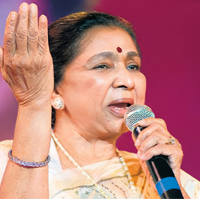
Asha Bhosle: The Voice That Defined Generations (1933–2026)
Early Life and Musical Roots
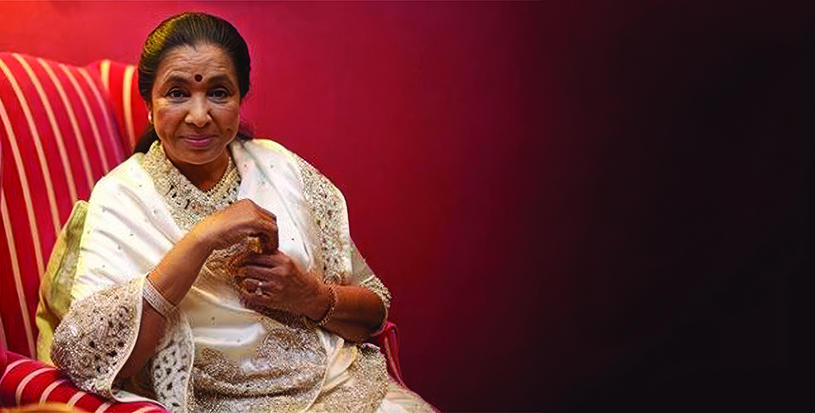
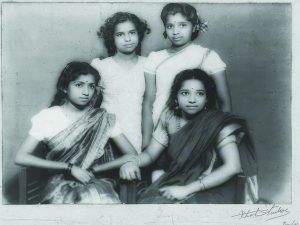
Asha Bhosle was born on 8 September 1933 in Sangli, Maharashtra, into a family deeply connected with Indian classical music and theatre. Her father, Deenanath Mangeshkar, was a respected classical singer and stage performer. His early death left the family in financial and emotional difficulty, and the responsibility of raising the children fell on her elder sister Lata Mangeshkar, who later became one of India’s greatest playback singers.
Asha Bhosle grew up in Pune and later moved to Mumbai, where the Mangeshkar family struggled to establish themselves in the film industry. Surrounded by music from childhood, she received informal training and early exposure to classical ragas and performance techniques. She entered the film industry as a child artist and made her playback singing debut in 1943 with the Marathi film Majha Bal. This marked the beginning of a long and extraordinary journey in Indian cinema.
Early Career and Struggles for Recognition
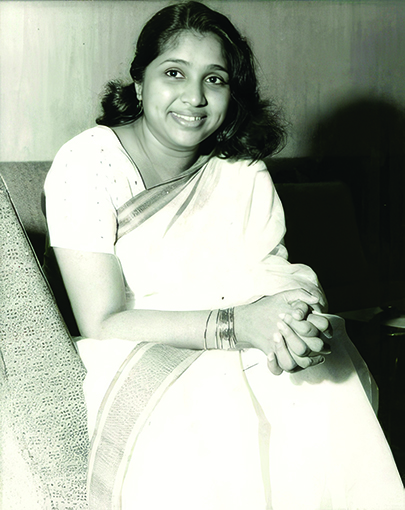 The early years of Asha Bhosle’s career were marked by difficulty and constant comparison. The Indian film music industry in the 1950s was dominated by strong playback singers, especially Lata Mangeshkar. Because of this, Asha was often given fewer opportunities and was typically assigned cabaret songs, supporting tracks, and experimental numbers rather than mainstream romantic or classical songs.
Despite these limitations, she refused to be defined by them. She focused on versatility, expression, and adaptability, gradually building a unique identity. Her voice carried a different texture compared to her sister, with more flexibility for bold, rhythmic, and contemporary compositions.
Her breakthrough came through her collaboration with music director O P Nayyar. This partnership proved to be a turning point in her career. Songs like Piya Tu Ab To Aaja, Yeh Hai Reshmi Zulfon Ka Andhera, Aaiye Meherbaan, and Kajra Mohabbat Wala became huge successes. These songs established her as a leading playback singer in her own right and not just in comparison to others.
Golden Era and Musical Innovation
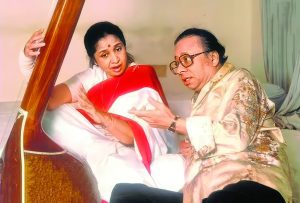
 The 1970s and 1980s are considered the golden period of Asha Bhosle’s career. During this time, she collaborated extensively with composer R D Burman, who later became her husband. Their partnership transformed Bollywood music by introducing modern arrangements, Western instruments, jazz influences, disco elements, and experimental sound design.
Together, they created iconic songs such as Dum Maro Dum, Chura Liya Hai Tumne Jo Dil Ko, Piya Tu Ab To Aaja, Hare Rama Hare Krishna, and Mehbooba Mehbooba. These songs became cultural landmarks and are still widely listened to today. Asha Bhosle’s ability to shift from soft romantic tones to high energy cabaret and experimental vocals made her one of the most versatile singers of her time.
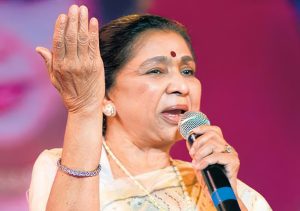 She also worked with nearly every major music composer in India, including S D Burman, Naushad, Shankar Jaikishan, Madan Mohan, Khayyam, Ilaiyaraaja, and A R Rahman. Her adaptability allowed her to remain relevant across changing musical eras, from classical based film music to modern electronic influenced compositions.
Asha Bhosle holds one of the highest recording records in the world, with thousands of songs recorded in more than 20 Indian languages including Hindi, Marathi, Bengali, Tamil, Telugu, Kannada, and others. This linguistic and stylistic range is one of the reasons she is considered unmatched in Indian playback history.
Achievements, Awards, and Global Reach
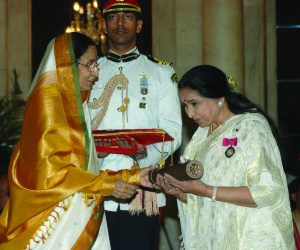 Asha Bhosle received numerous awards throughout her career, reflecting her immense contribution to music. She won several Filmfare Awards for Best Female Playback Singer and multiple National Film Awards. In 2000, she was honored with the Dadasaheb Phalke Award, the highest recognition in Indian cinema, for her lifetime contribution.
Her global recognition grew significantly in the 2000s. In 2008, her collaboration with the Kronos Quartet on the album You’ve Stolen My Heart earned international attention and a Grammy nomination. This project introduced her voice to a new global audience and highlighted the timelessness of her music.
She performed in concerts across the world, including in the United States, United Kingdom, Russia, the Middle East, and Southeast Asia. Her stage presence, energy, and ability to connect with diverse audiences made her a global cultural ambassador of Indian music.
Personal Life, Resilience, and Later Years
Asha Bhosle’s personal life included both challenges and strength. She was married at the age of 16, and her early married life was difficult. She later separated from her first husband and focused entirely on her music career while raising her children.
Her relationship with R D Burman became one of the most famous partnerships in Indian music history. Even after his death in 1994, she continued to perform and record music, showing remarkable resilience and dedication.
In her later years, Asha Bhosle remained active in music through live performances, collaborations with younger artists, remix projects, and television appearances. She adapted continuously to changing trends and remained relevant across multiple generations of listeners.
Asha Bhosle passed away on 12 April 2026 in Mumbai at the age of 92. Her death marked the end of an era in Indian music. She had been admitted to hospital due to age related health complications and respiratory issues. Her passing was mourned across India and internationally, with tributes from musicians, film personalities, and public figures honoring her extraordinary contribution to music.
Legacy of an Immortal Voice
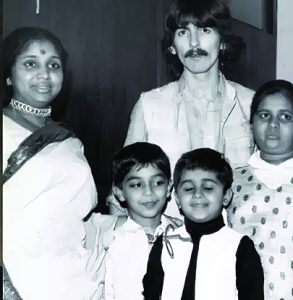 Asha Bhosle’s legacy is one of versatility, innovation, and endurance. She redefined the role of a playback singer in Indian cinema by proving that adaptability is as important as classical training. Her ability to perform across genres, emotions, languages, and decades makes her one of the most influential voices in world music history.
From classical inspired compositions to experimental fusion tracks, she continuously reinvented herself while maintaining her unique identity. Her songs remain deeply embedded in Indian culture and continue to inspire new generations of singers and musicians.
Even after her passing, Asha Bhosle’s voice lives on through her vast musical legacy. She remains a symbol of artistic courage, evolution, and timeless excellence in Indian cinema.
About the Author
 Tanya Narayan, a Senior Journalist at Desh-Videsh Media Group, brings stories to life with deep insight and on-theground reporting. With a passion for uncovering cultural and human narratives, she explores India’s most significant events and traditions.