Editorial April 2026

Moments That Forced the Trump administration to Recalculate India
Dear Readers,
As you open this issue of Desh-Videsh, you will encounter a powerful and timely cover story—“India Is Winning Under Trump 2.0—And Teaching the World” by Dr. Arvind Suresh. His analysis captures a profound global shift: in an era defined by tariffs, disruption, and transactional diplomacy under Donald Trump, India has not merely adapted—it has accelerated. But this transformation is not accidental. Narendra Modi’s clear strategic vision, executed with precision by External Affairs Minister Subrahmanyam Jaishankar, underpins this transformation. This editorial builds on that foundation to examine a critical question: what specific moments forced Washington to rethink India—not as a junior partner, but as a decisive global power?
In global politics, there are quiet shifts—and then there are defining signals. Over the past few years, India has delivered a sequence of such signals—each one reinforcing a new reality. Under Modi’s leadership, India articulated a bold doctrine: engage with all, depend on none. Under Jaishankar’s direction, that doctrine was translated into actionable diplomacy—measured, disciplined, and unapologetically aligned with national interest.
The result? A series of moments that made it impossible for the Trump administration to ignore, pressure, or sideline India.
The Oil Decision That Redefined Independence
The Ukraine conflict triggered Western sanctions on Russia, causing many countries to comply. India did not.
Instead, it increased imports of discounted Russian oil—protecting its economy and ensuring energy security for its citizens. This was not defiance for optics; it was strategy in action. Modi’s vision of strategic autonomy met Jaishankar’s calibrated diplomacy, ensuring that India maintained relationships without compromising interests.
President Trump viewed the bold actions taken by PM Modi’s administration as a pivotal moment. India was not a country that would follow—it was a country that would decide.
Modi–Putin Optics: A Clear Strategy
The informal and widely publicized interactions between Narendra Modi and Vladimir Putin sent a powerful global signal.
These moments were not accidental. They reflected a deliberate approach—maintaining engagement even under pressure. Modi’s leadership projected confidence; Jaishankar’s diplomacy ensured balance.
For the Trump administration, the takeaway was clear: India was not drifting—it was navigating, with intent.
BRICS: From Participation to Leadership
The evolution of BRICS into a more assertive global platform further demonstrated India’s rising influence.
India shaped the direction of the bloc—advocating for inclusivity, balance, and reform—rather than allowing others to dominate it. This transformation reflects Modi’s broader vision of India as a global agenda-setter, supported by Jaishankar’s ability to negotiate across competing interests.
For the Trump administration, the outcome signaled a shift: India was no longer just present in global forums—it was influencing them.
Europe Turns to India—And Washington Watches
When leaders like Ursula von der Leyen, President of the European Commission, accelerated engagement with India, it reinforced India’s growing centrality in global economics.
The India–EU trade momentum did not emerge in isolation. It was the result of sustained diplomatic outreach and strategic positioning. Modi’s vision created opportunities, while Jaishankar’s execution transformed them into partnerships.
For the Trump administration, the development raised a strategic concern: India was no longer being courted—it was being competed for.
Multi-Alignment as a Strategic Doctrine
India’s participation in forums such as the Shanghai Cooperation Organization illustrates a defining feature of its foreign policy: multi-alignment.
This is not passive neutrality. It is active engagement across multiple power centers. Modi articulated this approach clearly—India will engage widely but commit selectively. Jaishankar ensured its disciplined implementation across global platforms.
Again for the Trump administration, this approach required a shift in mindset. India could not be placed within traditional alliance frameworks—it operates beyond them, as it seeks to establish its own unique partnerships and collaborations that reflect its strategic interests and global aspirations.
Supply Chains and Strategic Leverage
As global companies began shifting away from China, India positioned itself as a reliable alternative. This was not a coincidence—it was a preparation meeting opportunity.
Policies, partnerships, and infrastructure investments created an environment where global capital could move with confidence. Modi’s economic vision aligned with Jaishankar’s international outreach, turning disruption into advantage.
For the Trump administration, this created a new reality: India was no longer optional—it was essential.
Strategic Autonomy, Consistently Executed
Across crises and conflicts, India’s responses have reflected consistency and clarity. It engages when beneficial, abstains when necessary, and decides independently.
This is where leadership matters most. Vision without execution remains a theory. Execution without vision lacks direction. India’s strength lies in the combination—Modi’s strategic clarity and Jaishankar’s diplomatic precision.
For the Trump administration, this consistency has forced a recalibration. India is predictable in one way: it will always act in its interest.
A Pattern That Cannot Be Ignored
Taken together, these moments form a clear pattern:
India resisted pressure.
India shaped global platforms.
India expanded economic influence.
India engaged across rival blocs.
India attracted competing global powers.
This is not a country adjusting to global change. This is a country driving it.
And at the center of this transformation are two critical forces: vision and execution.
The Diaspora Dimension
If Modi’s vision and Jaishankar’s execution have elevated India globally, Indian-Americans must now rise to shape outcomes domestically.
Economic success has built credibility. Cultural strength has built identity. Now, political engagement must build influence.
Enter Politics—Don’t Just Observe It
Run for local offices and build a leadership pipeline toward higher positions. Encourage younger generations to pursue public service. Leaders like Nikki Haley and Vivek Ramaswamy prove success is possible—but scale is essential.
Vote Consistently, Not Occasionally
Increase voter registration, educate first-generation immigrants, and mobilize youth participation. Focus on primaries as well as general elections. Consistent voting creates visibility—and exposure drives political relevance.
Fund Political Campaigns—Strategically
Support candidates aligned with key issues and engage across party lines. Build community-level fundraising networks. Financial strength must translate into political access.
Build Advocacy Groups and Networks
Create and strengthen organizations that represent Indian-American interests. Develop think tanks and policy platforms. Organized communities shape policy outcomes.
Engage Both Parties—Avoid Political Isolation
Maintain relationships across Republicans and Democrats. Focus on issues over identity. Influence both sides—so access remains regardless of political shifts.
Shape the Narrative Through Representation
Increase presence in media, policy roles, and government positions. Encourage internships in Washington, D.C. Representation changes perception—and perception influences policy.
Invest in Political Education
Educate communities about civic engagement and the importance of local elections. Use platforms like Desh-Videsh to inform and mobilize. An informed community is an empowered community.
Build Long-Term Institutional Influence
Develop PACs, mentorship programs, and leadership pipelines. Focus on long-term systems, not short-term wins. Sustainable influence requires institutional strength.
The Final Word
What we are witnessing today is not accidental momentum. It is the result of clear leadership, disciplined execution, and strategic confidence.
For the Trump administration, the lesson is now undeniable:
India is not a country you pressure.
India is a country you partner with.
And for Indian-Americans, the message is equally powerful:
You are no longer just participants in the American story.
You are positioned to shape it.
Because when vision meets execution—as it has under Modi and Jaishankar—change is not gradual.
It is decisive.
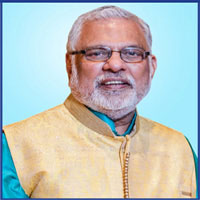
Raj Shah,
Managing Editor,
Deshvidesh Media Group.