Editorial August 2026
Satire Is Not a Substitute for Truth
A Direct Response to Khabar Magazine’s “Om Namah Modi” so called Satire
By Raj Shah
This editorial is a direct response to “Om Namah Modi,” published in Atlanta-based Khabar Magazine. The article appears under the name “Shriman Chanakya Atichatur,” but its concluding disclaimer acknowledges: “Shriman Chanakya Atichatur is a fictional character whom editor Parthiv N. Parekh had to channel to pen this article.”
The use of a fictional character may provide a satirical voice, but the disclaimer does not separate the editor from the arguments, insinuations, and accusations expressed through that character. A pen name may be a literary device, but it cannot shield a writer or publication from responsibility for what is presented to readers. Satire deserves creative freedom, but when it addresses serious matters—including student suicides, constitutional freedoms, police conduct, unemployment, and India’s international standing—it should still be examined for accuracy, fairness, and intellectual honesty.
Satire is most effective when it exposes uncomfortable truths through wit. When it relies on selective information, unsupported assumptions, personal ridicule, and contempt for people with different political opinions, it stops illuminating public life and begins distorting it.
Prime Minister Narendra Modi is not above criticism. No elected leader should be. India’s examination system, youth unemployment, policing of demonstrations, political communication, and foreign policy all deserve serious scrutiny. Citizens have every right to ask whether the government acted quickly enough, whether students were treated fairly, and whether major promises have produced the expected results.
Responsible criticism, however, requires context and consistency. “Om Namah Modi” takes legitimate concerns and buries them under so much sarcasm that facts become almost incidental.
The Examination Crisis Deserved Accountability
The examination paper leak was undeniably serious. Nearly two million students and their families faced anxiety, financial hardship, and uncertainty. For many Indian families, a competitive examination represents years of preparation, sacrifice, and hope. A paper leak is not a minor administrative error. It damages merit, destroys confidence in public institutions, and can change the course of young lives.
Students were justified in demanding answers, accountability, and meaningful reform. The government must answer why recurring irregularities were not prevented and whether the agencies responsible for conducting examinations had adequate safeguards.
But the article leaves readers with the impression that the Modi government did little more than lecture young people about their language. That is an incomplete account.
The examination was conducted again. The government announced plans for fast-track courts and stronger penalties for those involved in paper leaks. It accepted demands for broader reforms, and the education minister ultimately resigned. The protesters themselves ended their demonstrations after announcing that their demands had been accepted.
One may reasonably argue that these actions came too late or that the government moved only after sustained public pressure. That would be fair criticism. Public pressure is one of the ways democracy produces accountability. But suggesting that the government simply ignored the crisis is a half-truth.
The students’ anger was legitimate, but the political use of that anger also deserves scrutiny. Opposition parties attempted to transform the agitation into a broader campaign against the Modi government, while similar examination controversies in non-BJP-ruled Jharkhand, governed by the JMM-Congress alliance, and Punjab, governed by AAP, initially received far less national attention and parliamentary pressure.
Students protested in both states, and political parties demanded accountability. Yet national opposition leaders appeared to reserve their strongest criticism and most persistent resignation demands for central BJP officials. Examination integrity should never depend on which political party is in power. The same standards of media coverage, investigation, outrage, and accountability must apply in Delhi, Jharkhand, Punjab, and every other state.
The complete examination story is therefore more complicated than the article suggests. There was a serious administrative failure, justified student anger, political involvement, prolonged demonstrations, a government response, ministerial accountability, and a commitment to corrective measures. Leaving out most of that context produces more dramatic satire, but not a more honest account.
The Right to Protest Does Not Excuse Every Action
The right to peaceful protest is fundamental to democracy. Young Indians have every right to question the government, challenge elected leaders, and demand reforms. Police should not use excessive force against peaceful demonstrators, and every credible allegation of brutality should be independently investigated.
At the same time, describing every participant as peaceful and every police action as authoritarian is equally irresponsible. Available reports indicate that clashes took place and that police personnel were also injured. The Supreme Court appropriately protected minors and protesters without criminal histories while permitting an investigation into alleged police excesses and violence during the demonstrations.
That is how constitutional accountability should work: protect peaceful dissent, examine police conduct, and investigate violence regardless of who committed it.
The article, however, has already delivered its verdict. Every demonstrator is portrayed as innocent, every police action as brutality, and every government response as an assault on democracy. Such certainty may satisfy readers who already share the writer’s conclusions, but it does not encourage a fair examination of events.
Modi’s Supporters Are Citizens, Not “Andh Bhakts”
The article repeatedly mocks Modi’s supporters as “andh bhakts.” This dismissive label has become a convenient substitute for understanding why millions of Indians continue to vote for him.
Modi’s supporters are not a single, mindless group. They include urban professionals, rural women, small-business owners, farmers, members of historically disadvantaged communities, young entrepreneurs, religious Hindus, and former supporters of other political parties. Some support him enthusiastically; others support him while disagreeing with particular policies.
Many value improvements in infrastructure, digital governance, welfare delivery, national security, India’s global visibility, and the recognition of Hindu civilization. Others believe his administration has offered greater political stability or more decisive leadership than the alternatives.
Citizens may be right or wrong in these judgments, but they deserve to be treated as thinking participants in democracy. Reducing them to blind worshippers displays the same political intolerance the article claims to condemn.
A serious evaluation of the Modi years must acknowledge both achievements and failures. Expanded digital payments, financial inclusion, direct-benefit transfers, infrastructure construction, sanitation programs, renewable-energy development, and India’s digital public infrastructure are not imaginary. One may debate their implementation, reach, political marketing, or uneven results. But pretending that slogans are the government’s only legacy is not credible.
India’s Market Matters—But Diplomacy Matters Too
The article sarcastically concedes that nations are lining up to do business with India, only to dismiss this interest as the inevitable result of India’s enormous consumer base. It implies that Modi’s diplomatic efforts deserve no credit.
Yes, India’s massive market is a major reason countries want to do business with it. Nations are not doing business with Modi personally. But India’s market existed long before he became prime minister, while many potentially valuable relationships remained neglected or underdeveloped.
Under Modi, an Indian prime minister visited Israel, Rwanda, Bahrain, Croatia, Ukraine, and Slovakia for the first time. His administration also renewed prime-ministerial engagement with the United Arab Emirates after 34 years, Fiji after 31 years, Australia after 28 years, Poland after 45 years, Austria after 41 years, Norway after 43 years, and New Zealand after 40 years.
These visits involved more than ceremonial welcomes and red carpets. They reopened diplomatic channels and expanded discussions involving trade, investment, defense, energy, technology, agriculture, education, connectivity, and the Indian diaspora.
A large population creates economic potential, but potential does not automatically become investment, trade, or strategic cooperation. Government policy, diplomatic engagement, regulatory confidence, and sustained relationships help convert market size into actual partnerships.
The fair conclusion is not that Modi alone created international interest in India. Nor is it fair to say that his diplomatic outreach made no difference. India’s underlying economic importance and the Modi administration’s active diplomacy have worked together to expand the country’s global engagement.
Pakistan’s New Influence Deserves Closer Examination
The article ridicules India for supposedly being “overshadowed” by Pakistan during efforts to defuse a recent West Asian crisis. It mocks External Affairs Minister S. Jaishankar’s statement that India is “not a dalal nation,” while presenting Pakistan’s intermediary role as proof of superior diplomatic influence.
That interpretation is far too convenient.
Pakistan’s sudden prominence in Washington should also be examined alongside its expanding commercial relationship with interests associated with President Donald Trump’s family. Pakistan signed a government-backed agreement with an affiliate of World Liberty Financial, the cryptocurrency venture connected to the Trump family, to explore using its USD1 stablecoin for cross-border payments. India did not enter into an equivalent arrangement.
This agreement was followed by visibly warmer engagement between Trump and Pakistan. The timing alone does not prove that the commercial arrangement caused the diplomatic shift, and it would be irresponsible to present such a connection as established fact without direct evidence. Nevertheless, the potential conflict of interest deserves scrutiny.
A fair-minded analysis cannot ridicule India for failing to secure Trump’s favor while ignoring the possibility that Pakistan’s growing access coincided with a business opportunity involving the American president’s family. India should not be blamed for refusing to combine national policy with commercial opportunities that could financially benefit the family or associates of a foreign head of state.
If experts wish to examine why Pakistan obtained greater access to the Trump administration, they should consider the complete context—geography, military relationships, Iran, Afghanistan, China, Pakistan’s leadership, and these unusual commercial ties. Selecting only the explanation most damaging to Modi is not serious foreign-policy analysis.
India Was Not Isolated During Operation Sindoor
The article also claims that “almost no country” supported India during Operation Sindoor and suggests that Pakistan found more international supporters than the world’s largest democracy. That assertion is factually misleading.
Israel explicitly supported India’s right to self-defense. France, the United Kingdom, the United States, the Netherlands, Russia, Saudi Arabia, the United Arab Emirates, and Qatar condemned terrorism or expressed support for India’s security concerns and anti-terrorism position. The European Union and its 27 member states issued a unified statement condemning the Pahalgam terrorist attack.
Some of these governments also urged India and Pakistan to exercise restraint. But calling for de-escalation between two nuclear-armed neighbors is not the same as supporting Pakistan. A country can condemn terrorism, recognize India’s security concerns, and still urge both sides to prevent a wider war.
Only a small number of countries—notably Turkey, Azerbaijan, and China—adopted positions broadly favorable to Pakistan. Therefore, portraying India as internationally abandoned may strengthen the article’s sarcasm, but it does not reflect the documented diplomatic response.
International support also does not always arrive in the form of a dramatic public declaration endorsing military action. Diplomatic backing may include condemnation of terrorism, recognition of a country’s right to defend itself, intelligence cooperation, private discussions, or a refusal to endorse the opposing side’s narrative. Measuring international support only by the loudest public statements is simplistic.
Foreign Policy Is Not a Popularity Contest
Countries are not chosen as mediators as rewards for good behavior. They are selected according to geography, access, security relationships, and the willingness of the conflicting parties to communicate through them.
Pakistan’s role in a particular diplomatic channel does not automatically make it more influential, prosperous, trusted, or internationally important than India. Nor does India’s decision not to serve as a broker prove that it was diplomatically “overshadowed.”
India may be criticized for missed diplomatic opportunities, inconsistent messaging, or relationships that did not deliver the expected support. Those are legitimate subjects for discussion. But one diplomatic episode cannot erase India’s role in the Quad and G20, its growing partnerships with the United States, Europe, Japan, Australia, Israel, and the Gulf nations, or its continuing engagement with Russia and the Global South.
The article’s reference to the 2019 “Howdy Modi” event also deserves context. Modi’s use of the phrase “Ab ki baar, Trump sarkar” was politically unwise because an Indian prime minister should avoid appearing to endorse a candidate in another country’s election.
But India–United States relations do not depend solely on the personal friendship between Modi and Trump. They are built on defense, trade, technology, education, energy, diaspora connections, and shared strategic interests. Leaders change, but national interests endure.
Personal relationships can support diplomacy, but they cannot guarantee that another leader will always place India’s interests ahead of his own political, commercial, or strategic calculations. Trump’s subsequent decisions should remind India that foreign policy must be founded on national interests, not personal friendship.
Promises Should Be Judged Fairly
The article lists “Make in India,” two crore jobs annually, 100 smart cities, the return of black money, and achhe din as if each can be dismissed through a sarcastic one-line verdict.
Some promises were clearly overstated or insufficiently fulfilled. India did not create two crore formal jobs every year in the simple way many voters understood the promise. Demonetization caused considerable hardship, and its long-term benefits remain contested. The Smart Cities Mission did not produce 100 entirely new futuristic cities. Farmers continue to face economic difficulties, and manufacturing has not reached every declared ambition.
These are valid grounds for criticism.
Fairness, however, also requires recognizing what did occur. The Smart Cities Mission funded thousands of urban-development projects rather than constructing 100 brand-new cities. Digital transactions and economic formalization expanded. Roads, railways, airports, public infrastructure, and renewable-energy capacity grew. India also remained one of the world’s major growing economies.
A promise may be partially fulfilled, delayed, poorly designed, or overtaken by unforeseen circumstances. Political reality cannot always be reduced to either a miracle or a fraud.
Criticism Should Inform, Not Merely Insult
The greatest weakness of “Om Namah Modi” is not that it criticizes Narendra Modi. Its weakness is that it repeatedly substitutes sneering for reasoned argument.
Expressions such as “56-inch chest,” “non-biological, divinely ordained one,” “Godi Media,” “Hugplomacy,” and “Om Namah Modi” are designed to humiliate rather than persuade. Hindu devotional expressions are repeatedly turned into political punchlines. Criticism of the political use of religion is legitimate, but using sacred language to ridicule believers is unnecessary and alienating.
India needs a strong opposition, an independent press, accountable police, courageous courts, and young citizens willing to question authority. It also needs journalists who distinguish facts from allegations and accountability from contempt.
Holding Modi accountable does not require dehumanizing his supporters. Defending Modi does not require denying the suffering of students. Condemning possible police excesses does not mean ignoring violence against police officers. Respecting young people does not require celebrating obscene abuse.
The examination crisis revealed genuine failures. The students who demanded reform performed an important democratic function, and the government was compelled to respond. That complete story includes administrative failure, public anger, political mobilization, possible police excesses, government concessions, ministerial accountability, and promised reforms.
Prime Minister Modi should be judged by his decisions, achievements, failures, and response to public criticism. Protesters should be treated fairly as citizens—not dismissed as troublemakers, but also not romanticized as incapable of wrongdoing. Police conduct should be investigated where force may have been excessive, while violence against officers should also be examined. A minor caught in a political storm should be protected rather than turned into a weapon by either side.
Satire can challenge power and expose hypocrisy. But when sarcasm replaces evidence, insinuation replaces context, and mockery replaces argument, satire becomes another form of propaganda—cleverly written, perhaps, but propaganda nevertheless.
 India deserves criticism courageous enough to tell the whole truth, including the parts that do not fit the writer’s preferred political narrative.
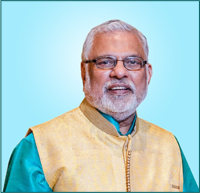
Raj Shah,
Managing Editor,
Deshvidesh Media Group.