
Immigration News
By Anjali V. Deshmukh
Expanded Public Charge Policy Guidance
 Starting September 18, 2026, U.S. Citizenship and Immigration Services (USCIS) is implementing expanded public charge policy guidance, significantly broadening the scope of government benefits considered during green card evaluations. The updated framework replaces narrower standards to ensure that applicants seeking adjustment of status demonstrate long-term financial self-sufficiency.
Under the expanded rules, immigration officers will weigh non-cash safety net programs alongside traditional public assistance when determining whether an applicant is likely to become dependent on government support. Key benefits now subject to scrutiny include Supplemental Nutrition Assistance Program (SNAP) food benefits, housing vouchers, Section 8 rental assistance, and non-emergency Medicaid. Adjudicators will evaluate these programs as part of a comprehensive “totality of circumstances” review, considering an individual’s age, health, household size, income, skills, and overall financial history.
This policy shift creates tighter requirements for permanent residency applicants. Because receiving public assistance can weigh heavily against an applicant, unexpected benefit histories could lead to application delays or rejections under the newly tightened standards.
Immigration experts advise individuals planning to file adjustment of status paperwork on or after September 18 to thoroughly review their benefit history prior to submission. Evaluating past and current enrollment in state or federal aid programs allows applicants to assemble supporting financial documentation—such as evidence of steady income, assets, or sufficient sponsor support—to demonstrate financial independence before USCIS adjudicates their case.
Birthright Citizenship & Tourism Orders:
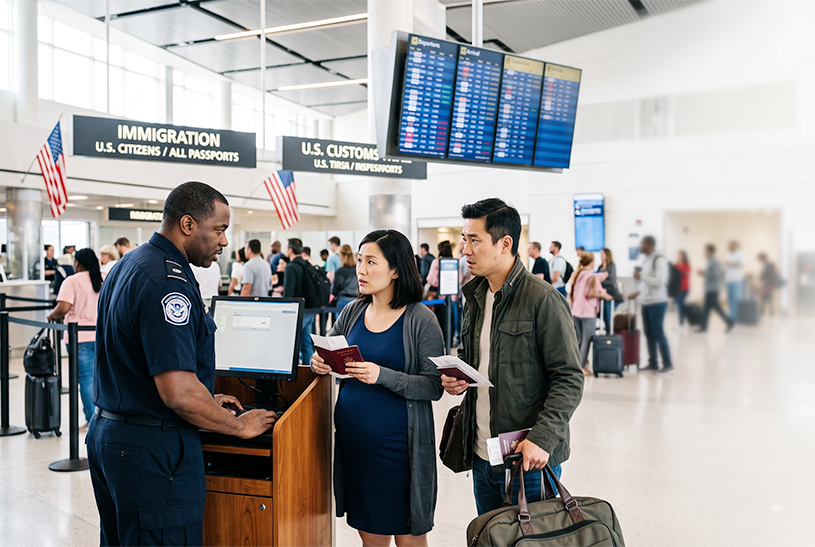 Recent executive actions targeting birth tourism mark a pivotal shift in executive immigration strategy. By focusing on administrative mechanisms rather than direct constitutional broadsides, these directives restrict access to connected federal immigration benefits and narrow agency guidelines for recognizing citizenship.
The primary tool of these actions delegates enhanced screening authority to the State Department and Homeland Security. Consular officials are instructed to deny nonimmigrant visas—or revoke existing ones—if there is reason to believe the primary purpose of travel is to give birth on U.S. soil. By framing birth tourism as an exploitation of temporary visitor visas, the policy seeks to disrupt commercial birth-tourism networks before individuals arrive at ports of entry.
Rather than attempting to formally repeal birthright citizenship under the Fourteenth Amendment, the executive directives narrow federal recognition guidelines for agency documentation. Federal agencies are instructed to apply stricter interpretations regarding who falls under U.S. jurisdiction at birth. Consequently, children born to temporary visitors traveling specifically under these circumstances face hurdles in obtaining U.S. passports, Social Security numbers, and secondary family reunification benefits down the line.
Immigration advocacy groups warn that the heightened scrutiny may lead to arbitrary enforcement against pregnant international travelers. Furthermore, because the Fourteenth Amendment establishes a broad territorial rule for birthright citizenship, these federal guidelines face swift constitutional challenges in federal courts. Nevertheless, the orders fundamentally alter visa processing, signaling a far stricter framework for nonimmigrant entry and federal benefit eligibility.
Court Limits Immigration Enforcement Near Houses of Worship
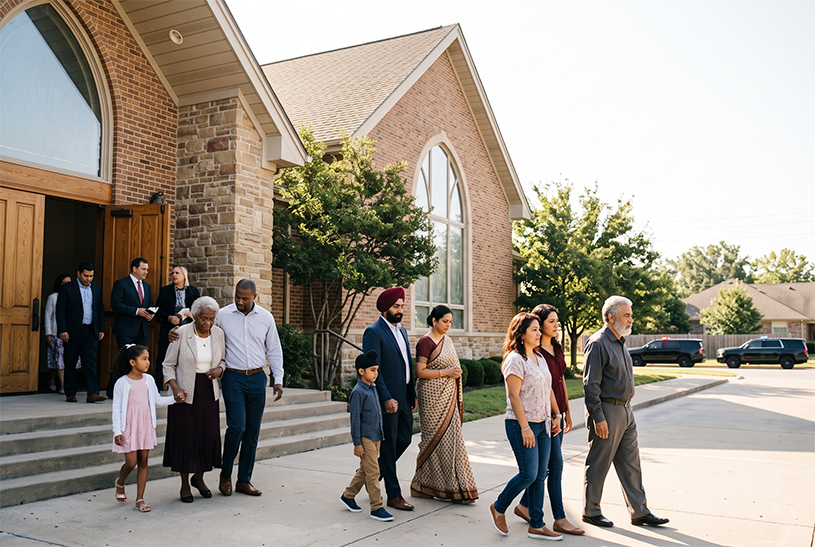
A federal appeals court has upheld restrictions on immigration enforcement operations near select houses of worship, ruling that the federal government’s policy creates an unconstitutional burden on religious freedom.
The decision centers on a lawsuit brought by a diverse coalition of faith groups, including Quaker organizations, the Sikh Temple Sacramento, and the Cooperative Baptist Fellowship. The plaintiffs argued that the presence or threat of armed federal agents at sacred sites deters undocumented immigrants and mixed-status families from attending services, receiving pastoral care, or engaging in community outreach programs.
In its ruling, the court found that the government’s enforcement strategy suppresses church participation and infringes upon congregants’ First Amendment rights to freely exercise their faith. Evidence presented in the case demonstrated a noticeable drop in attendance at worship services and church-led educational programs following increased enforcement efforts nearby. Judges determined that forcing individuals to choose between practicing their religion and risking deportation imposes a substantial, unlawful chilling effect on sacred communities.
Crucially, the legal scope of the decision remains narrow. The appellate panel emphasized that the ruling applies strictly to the specific congregations, meetinghouses, and temples named in the lawsuit rather than establishing a sweeping, nationwide sanctuary standard for all places of worship. While the injunction offers immediate relief and legal safeguards for the participating Quaker, Sikh, and Baptist communities, houses of worship outside the litigation remain subject to existing federal immigration policies
Immigration news in brief

USCIS Revises Forms I-539 and I-765
USCIS will publish new editions of Form I-539 and Form I-765 on September 15, 2026. Form I-539 is generally used to extend or change nonimmigrant status, while Form I-765 is used to apply for employment authorization. Beginning on that date, USCIS says it will reject older editions of both forms. Applicants and attorneys should verify the form’s edition date immediately before submitting an application.
New Admission Rules for International Students
A new Department of Homeland Security rule establishing fixed admission periods for certain international students and exchange visitors is scheduled to take effect on September 15, 2026. The rule replaces the traditional “duration of status” framework with a defined period of authorized stay and an extension procedure. This could create additional filing deadlines and compliance responsibilities for students and educational institutions. International students should speak with their designated school officials before making decisions about enrollment, travel or extensions.
More Than 175,000 U.S. Visas Revoked
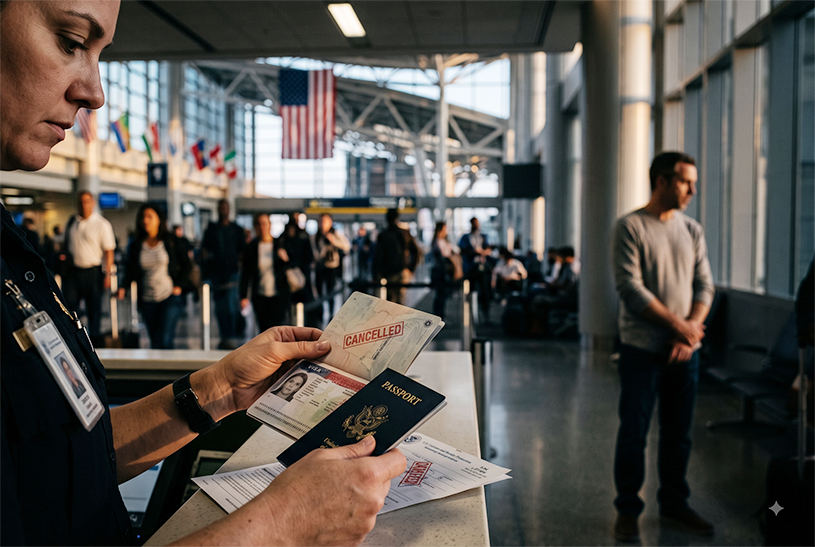 The State Department has reportedly revoked more than 175,000 visas since President Trump returned to office in January 2025. Government officials have cited criminal activity, immigration violations, fraud and national-security concerns among the reasons for these actions. Some revocations have also drawn criticism over the government’s consideration of political speech and social-media activity. Visa holders with arrests, criminal charges or other concerns should seek legal advice before traveling internationally.
USCIS Tightens Evidence Standards
USCIS has announced that it is reinforcing evidentiary standards to reduce what the agency describes as frivolous immigration-benefit requests. The policy took effect immediately and generally applies to qualifying applications that were pending or filed on or after August 5, 2026. Applicants may face greater scrutiny of supporting documents and claims made in their petitions. Carefully prepared evidence and accurate, consistent information will therefore be increasingly important.
August 2026 Visa Bulletin Released
The State Department has released its August 2026 Visa Bulletin, which determines when many family- and employment-based green-card applicants may proceed with their cases. Applicants must compare their priority dates with the applicable Final Action Dates or Dates for Filing chart. USCIS separately determines which chart adjustment-of-status applicants may use during the month. Because cutoff dates can advance, remain unchanged or move backward, applicants should review the official bulletin carefully.
DHS Reports 15 Months Without Border Releases
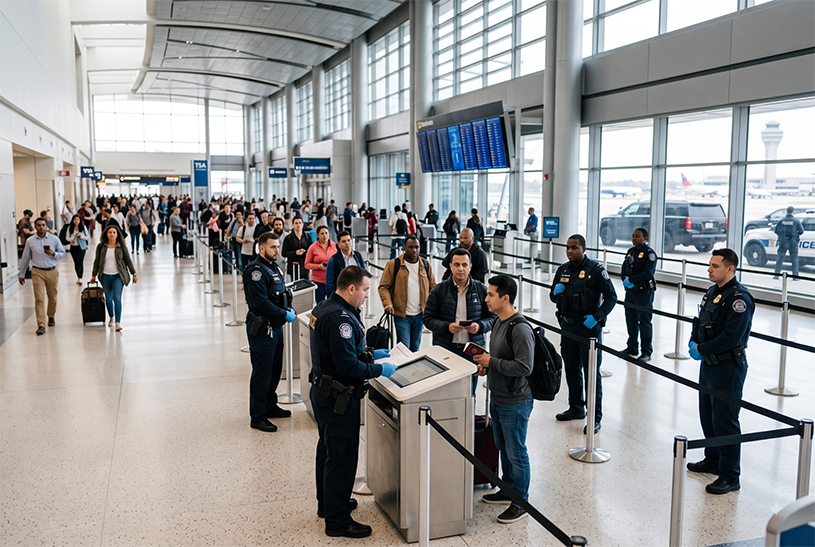 The Department of Homeland Security says the United States has completed 15 consecutive months without releasing migrants encountered at the southern border into the country. DHS presents the figure as evidence of stronger detention, removal and border-enforcement policies. The department also reported changes in border encounters and fentanyl seizures during the latest reporting period. Because these figures represent the administration’s official account, they should be attributed to DHS when used in a news article.
Mandatory Electronic Filing: DHS issued an interim final rule granting USCIS the authority to mandate e-filing for specific immigration forms that have had online options available for over
Increased Denaturalization Filings: The Department of Justice filed multiple high-profile denaturalization cases against naturalized citizens accused of severe crimes or naturalization fraud.
Ramped-Up ICE Operations & Detentions: ICE internal metrics reflect record monthly enforcement numbers and increased interagency coordination at transport hubs like domestic airports.
About the Author
 Anjali V. Deshmukh is an immigration lawyer in Washington, D.C. who has been working in the field for more than 15 years. She focuses on employment and religious worker visas. She graduated from Georgetown University Law Center and has spent her career helping South Asian non-profits and cultural institutions understand the complicated rules and regulations that govern immigration in the United States. Anjali speaks at national legal forums a lot, and she cares deeply about giving the Indian-American community the legal clarity it needs to protect its rich spiritual and cultural traditions. You can reach her by email at anjali@deshvidesh.com.