India is Winning Trump 2.0 The World is Watching and Learning
By Dr. Arvind Suresh
When Donald Trump returned to power, much of the world reacted with unease. Allies worried about unpredictability. Multilateral institutions braced for disruption. Economies prepared for volatility driven by tariffs, bilateral deal-making, and a retreat from long-standing global frameworks.
But India did not panic. It did not retreat. Instead, it recalibrated—quickly, quietly, and strategically.
What followed was not merely adaptation. It was an acceleration.
India moved ahead—and began winning.
At the center of this transformation stands Narendra Modi, whose leadership has elevated India from a balancing power to a platform-shaping force across global institutions such as BRICS and the G20.
A compelling discussion on the Grand Tamasha podcast by the Carnegie Endowment for International Peace offers a crucial insight: India’s success in this turbulent environment is not accidental. It is strategic, deliberate, and increasingly, it is becoming a model the world is beginning to notice.
From Rules-Based Order to Power-Based Reality
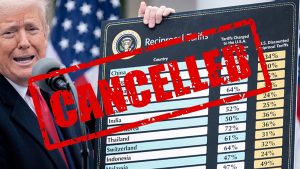 For decades, the so-called “rules-based international order” was presented as neutral and fair. In reality, it reflected Western priorities, applied selectively, and often constrained emerging powers like India.
Trump did not create this reality—he exposed it.
By sidelining institutions such as the World Trade Organization and NATO in favor of bilateral negotiations, Trump accelerated a shift already underway. The global system moved away from predictable frameworks toward a more fluid, transactional order defined by three principles:
Power matters more than process.
Deals matter more than doctrine.
National interest outweighs global consensus.
Many nations found themselves uncomfortable in this environment, struggling to adjust to a system where relationships were conditional and influence had to be negotiated continuously.
India, however, was uniquely prepared.
Why India Is Thriving in a Transactional World
 Unlike many countries that became deeply dependent on rigid alliances, India historically maintained strategic flexibility. Even during the height of globalization, it avoided overcommitment to any single power bloc.
This instinct—once seen as cautious or even indecisive—now appears remarkably prescient.
Under Modi’s leadership, this philosophy has evolved into a clear and confident doctrine: engage widely, but depend on no one.
India did not fundamentally reinvent its foreign policy under Trump 2.0. Instead, it refined and scaled an approach already in motion—multi-alignment backed by strategic autonomy.
In practical terms, this means India can simultaneously:
- Collaborate with the United States on defense and technology
- Engage with Russia on energy and security
- Compete and cooperate with China where necessary
- Lead coalitions across the Global South
This is not a contradiction. It is a calculated design.
In a world where alliances are fluid and interests shift rapidly, India’s ability to operate across multiple geopolitical spaces has become a decisive advantage.
The Modi Doctrine: Leadership Without Dependence
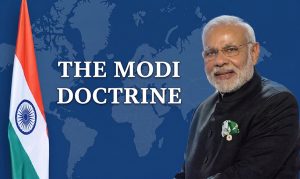 Under Narendra Modi, India has moved beyond passive participation in global affairs. It has become an active shaper of outcomes.
This transformation rests on three pillars.
1. Assertive Global Presence
India no longer hesitates to articulate its position on critical issues—from trade and technology to climate and conflict. Its voice is clear, confident, and increasingly influential.
2. Platform Leadership
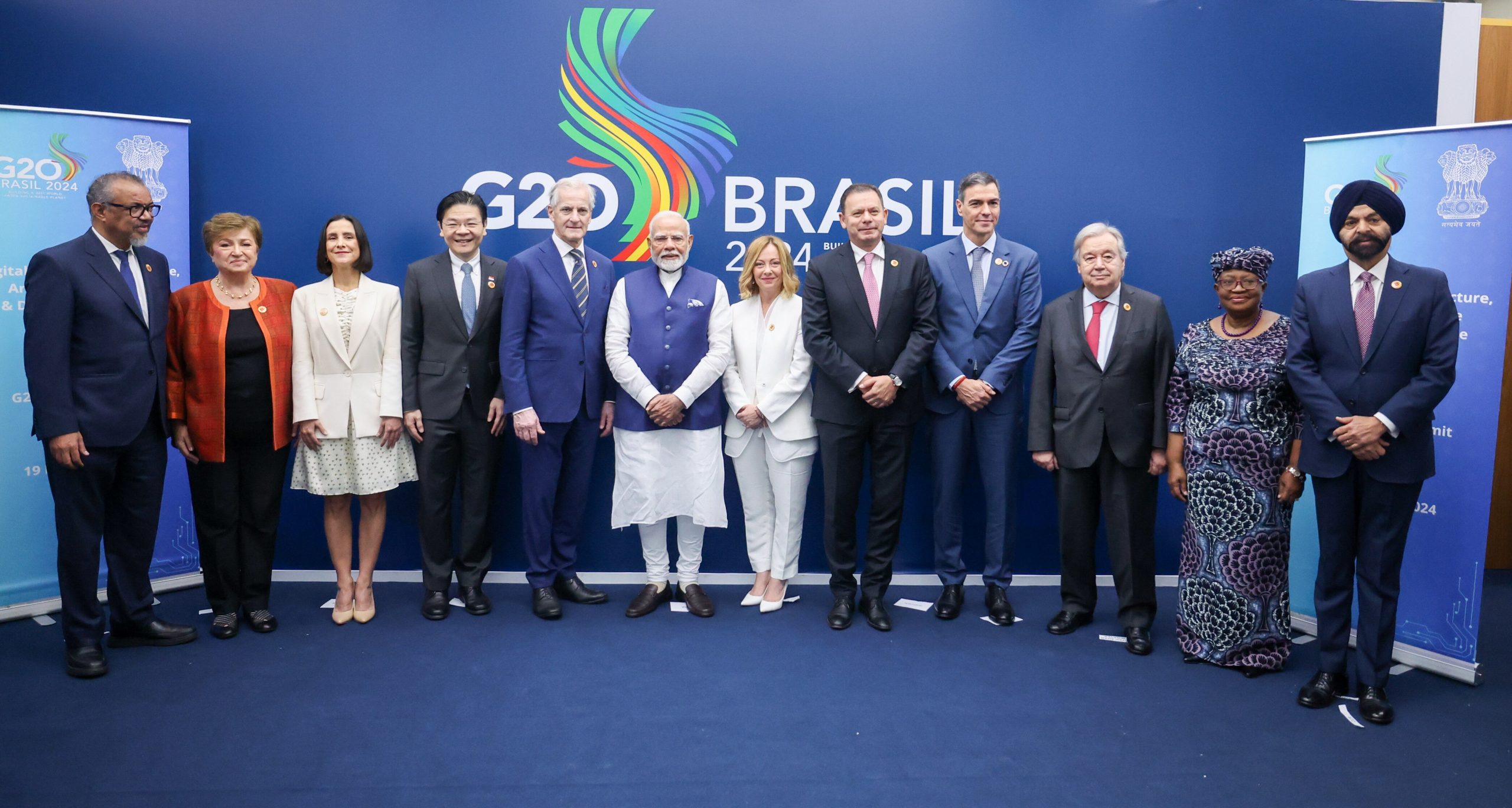
India is not merely present in global forums—it shapes their agenda. Whether through G20 leadership or its active role in BRICS, India has demonstrated its ability to influence outcomes across diverse coalitions.
3. Strategic Confidence
India engages major powers on its own terms. This confidence is rooted not in rhetoric, but in economic growth, demographic strength, and geopolitical relevance.
In a world increasingly driven by strong leaders and direct engagement, Modi’s leadership style has proven not just effective—but aligned with the times.
Jaishankar: Precision Behind the Vision
While Modi provides strategic direction, Subrahmanyam Jaishankar ensures execution with precision.
His diplomacy has been instrumental in:
- Translating vision into actionable strategy
- Managing complex negotiations across global platforms
- Articulating India’s position with clarity and confidence
- Building coalitions that support India’s initiatives
Jaishankar’s approach is pragmatic, flexible, and sharply focused on national interest—perfectly aligned with the demands of a transactional world.
Together, Modi and Jaishankar represent a leadership model that combines vision with execution.
BRICS: From Bloc to Strategic Platform
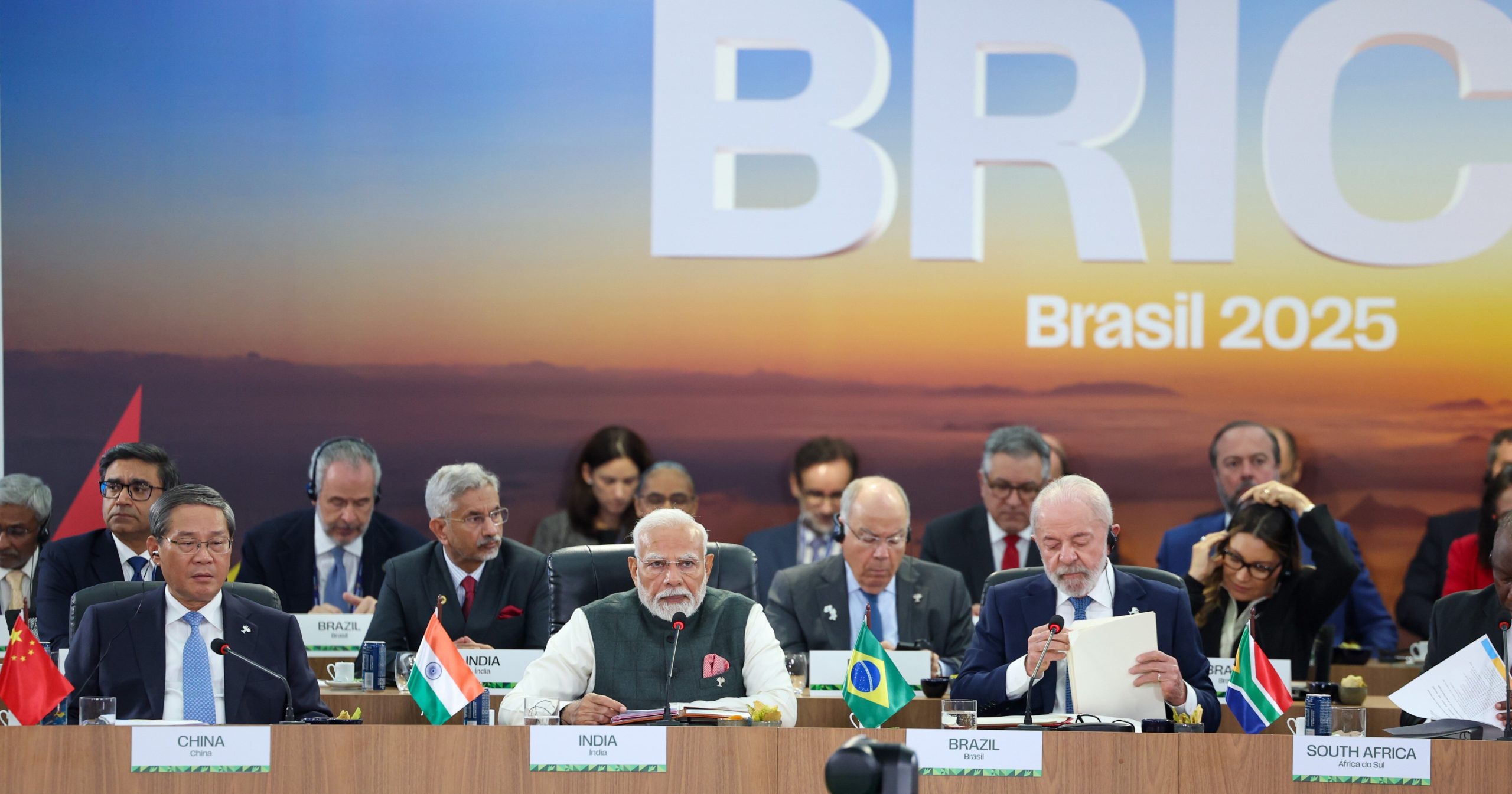
India’s performance within BRICS illustrates how it has turned potential constraints into strategic advantages.
Traditionally viewed as a grouping dominated by China and Russia, BRICS could have limited India’s influence. Instead, India reshaped its role within the bloc.
It asserted its independent voice.
It championed Global South priorities.
It pushed for reform in global financial systems.
It ensured no single country monopolized the narrative.
Rather than treating BRICS as a challenge, India transformed it into a platform—one that amplifies its voice across emerging economies.
Even discussions around BRICS expansion, initially seen as a potential dilution of influence, were approached with calculated pragmatism. India supported a broader, more inclusive framework while safeguarding its strategic interests.
This is diplomacy not as reaction—but as design.
G20 Leadership: Bridging a Divided World
 India’s leadership in the G20 further reinforces its growing global stature.
At a time when geopolitical tensions threatened to paralyze global cooperation, India delivered results. It achieved consensus where others saw deadlock.
Under Modi’s leadership, the G20:
- Produced a unified declaration despite deep divisions
- Elevated the voice of the Global South
- Facilitated the inclusion of the African Union
- Promoted digital public infrastructure as a global model
- Advocated for climate equity and sustainable development
This was more than a diplomatic success. It demonstrated capability.
India showed that it could bridge divides—not by imposing dominance, but by building consensus across competing interests.
That is leadership of a different kind.
Managing the U.S. Relationship—Without Dependence
 Trump’s approach to global relations is fundamentally transactional. Partnerships are evaluated based on outcomes, reciprocity, and immediate benefit.
Many traditional allies struggled to adapt to this shift.
India did not.
Instead, it approached the relationship with the United States pragmatically:
- Strengthening defense and technology cooperation
- Engaging in tough but constructive trade negotiations
- Avoiding overdependence on U.S. policy direction
India works with the United States—but it does not rely solely on it.
This distinction is critical. It allows India to benefit from partnership without being constrained by it.
Europe Turns to India—And Washington Takes Notice
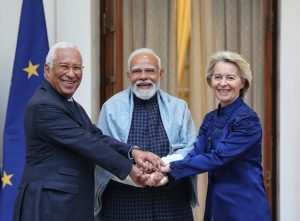
 As global trade tensions intensified under Trump-era tariff disruptions, Europe made a decisive strategic pivot toward India. Leading this shift was Ursula von der Leyen—the head of the European Union’s executive body responsible for shaping trade policy across all member states. During her high-profile visit to New Delhi in January 2026, she elevated the India–EU relationship to a historic level by describing the proposed Free Trade Agreement as the “mother of all deals.” In her words, this was a “tale of two giants”—India and the European Union—choosing a win-win partnership at a time when global trade systems were under strain.
Von der Leyen’s visit was not an isolated event—it was part of a broader wave of European outreach to India. Leaders such as Emmanuel Macron and Olaf Scholz had also engaged directly with Narendra Modi through state visits and strategic dialogues, reinforcing Europe’s intent to deepen economic and geopolitical ties with India. The India–EU Free Trade Agreement—finalized in principle after nearly two decades of on-and-off negotiations—aims to create one of the largest economic partnerships in the world, connecting nearly two billion people and accounting for approximately 25% of global GDP. Designed to reduce tariffs, remove trade barriers, and strengthen cooperation across sectors such as manufacturing, digital trade, and supply chains, the agreement represents far more than commerce—it is a strategic realignment. That this breakthrough was achieved during von der Leyen’s visit—where she also participated as a chief guest at India’s Republic Day celebrations—sent a clear message: in a fractured global economy, Europe is not retreating inward. It is turning toward India as a central pillar of its future growth and stability.
What makes this moment particularly significant is what followed. Almost immediately after the momentum around the India–EU deal became evident, the United States under Donald Trump signaled a softening stance toward India on tariffs and trade friction. Whether coincidental or strategic recalibration, the sequence was unmistakable: as Europe moved aggressively to secure deeper economic ties with India, Washington adjusted its posture. This was not just about trade—it was about influence. The message was clear: India is no longer a secondary player reacting to global power shifts. It is now a central actor shaping them. When two major global powers begin recalibrating their economic strategies in response to India’s positioning, it reflects a deeper transformation—India is not waiting to be chosen; it is being competed for.
Modi–Putin Optics goes viral
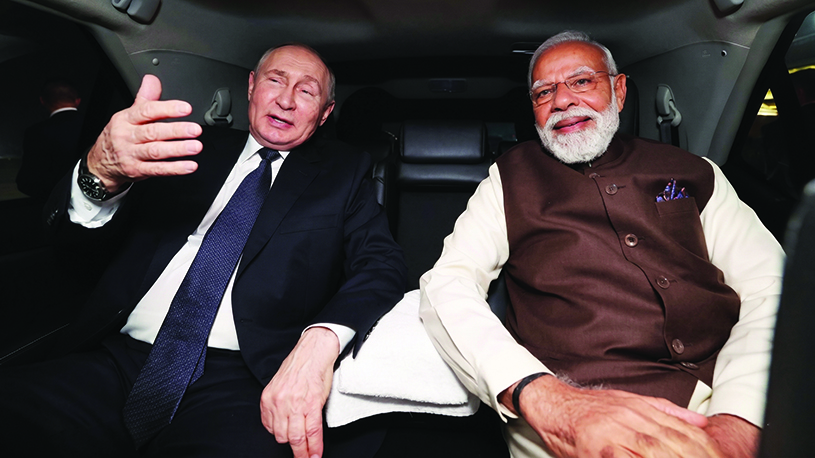
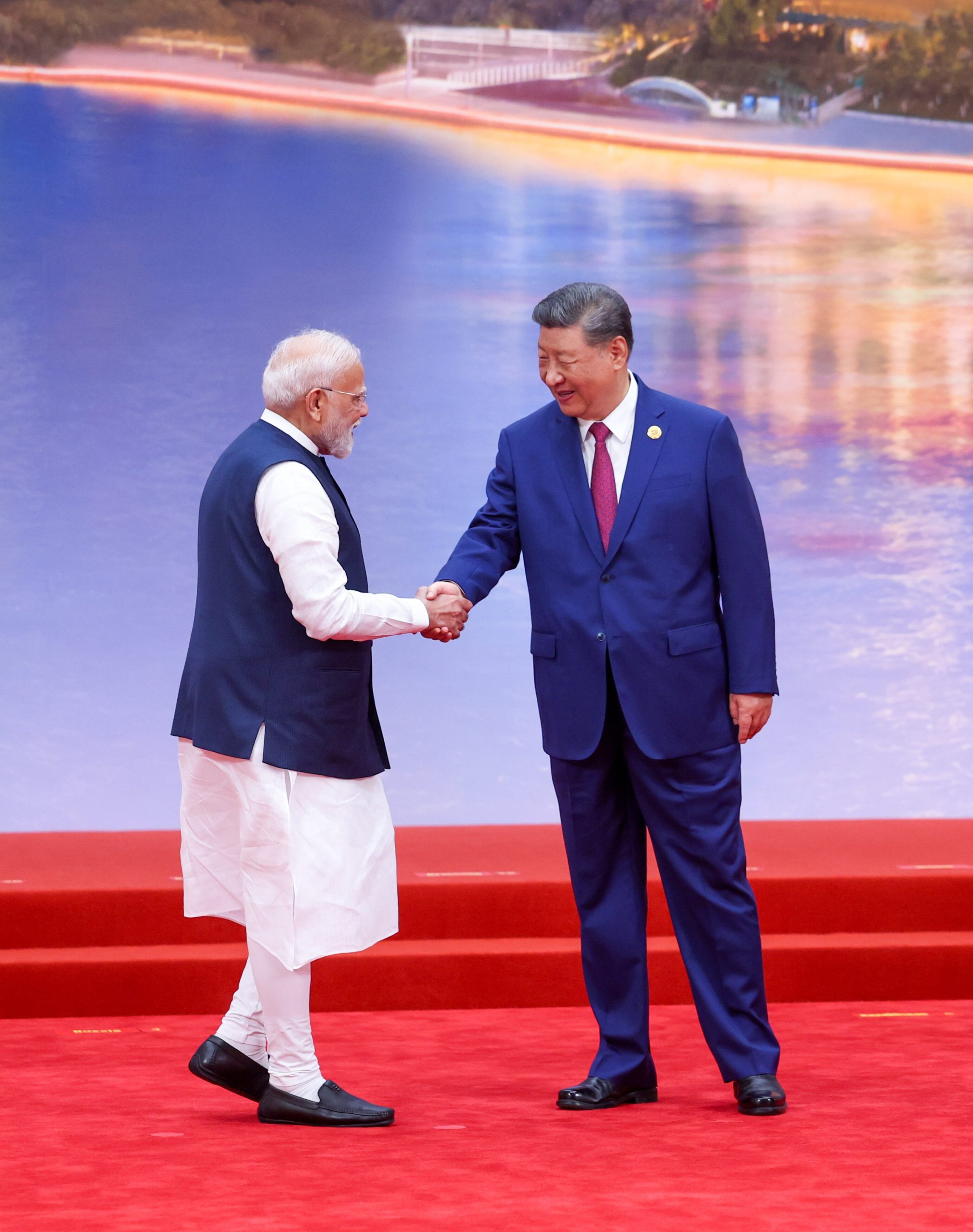 If there was any doubt that India’s multi-alignment strategy was sending shockwaves across global capitals, it was erased during the high-profile BRICS summit held in China in 2025, where Narendra Modi met with Vladimir Putin and Xi Jinping. While the formal meetings focused on BRICS expansion, Global South coordination, and reshaping financial systems outside Western dominance, it was an unscripted moment that captured the world’s attention—and triggered quiet concern in Washington. Modi and Putin were seen riding together in a single car, without visible aides or diplomatic entourages from either side. In the rigid world of high-security diplomacy, this was not just unusual—it was a statement.
The visuals went viral within hours. Analysts across global media interpreted the moment as a powerful signal of personal trust and strategic comfort between India and Russia—despite intense Western pressure to isolate Moscow. But the implications went far beyond optics. This was happening within the broader framework of BRICS and overlapping alignments with the Shanghai Cooperation Organization—platforms increasingly seen as counterweights to Western-led institutions. For policymakers in Washington, including those around Donald Trump, the message was unmistakable: India was not drifting into any camp—it was confidently operating across all of them. At a time when the U.S. was attempting to recalibrate global influence through tariffs and pressure tactics, India was demonstrating that it could engage simultaneously with the West, Russia, and China—on its own terms. The takeaway was clear, and it likely did not go unnoticed: isolating India was not an option. Competing for India had become a necessity.
China: Competition Without Escalation
India’s relationship with China remains complex, but its approach reflects maturity and discipline.
Rather than reacting emotionally, India has adopted a balanced strategy:
- Strengthening its security posture
- Reducing economic and strategic vulnerabilities
- Building partnerships to counterbalance influence
At the same time, it has avoided unnecessary escalation.
This ability to compete without overreacting provides India with flexibility—an essential asset in an unpredictable global environment.
Economic Strategy: Turning Disruption into Opportunity
 Trump-era trade policies disrupted global supply chains, forcing companies to reconsider their dependence on China.
India recognized the opportunity.
Under Modi, India has positioned itself as a viable alternative manufacturing hub. Initiatives such as “Make in India,” combined with expanding trade agreements and infrastructure investment, have attracted global capital seeking diversification.
What could have been a global challenge became a national opportunity.
India’s economic strategy reflects a broader pattern: it does not merely respond to change—it leverages it.
Outperforming the World Despite Global Disruptions
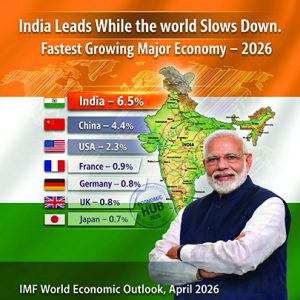
India’s economic performance under these turbulent global conditions further reinforces why it is not just surviving—but winning. According to the International Monetary Fund, India is projected to grow at approximately 6.5% in 2026, making it the fastest-growing major economy in the world . This is not a marginal lead—it is a structural advantage. In comparison, the United States is expected to grow at around 2.3%, while the Eurozone struggles near 1.1% growth, weighed down by energy shocks and geopolitical instability . Even more striking, India alone is expected to contribute roughly 17% of global GDP growth, nearly double the U.S. contribution of about 9.9% . In a slowing global economy—where overall growth has been downgraded to around 3.1% due to geopolitical tensions and war disruptions—India stands out as a primary engine of expansion .
What makes this performance remarkable is the context. This growth is happening despite Trump-era tariff disruptions, global supply chain shifts, and the economic shockwaves triggered by the ongoing Iran conflict, which has increased inflation and disrupted energy markets worldwide . While advanced economies are grappling with rising costs, slowing manufacturing, and policy uncertainty, India has maintained relative macroeconomic stability—with inflation projected at a manageable 4–5% range and strong domestic demand supporting growth . Its nominal GDP has already crossed $4.5 trillion, placing it among the world’s top economies . In simple terms, while much of the world is adjusting to disruption, India is converting that disruption into momentum—strengthening its position as one of the few economies driving global growth in an otherwise uncertain era.
Energy Strategy: Turning Crisis into Control
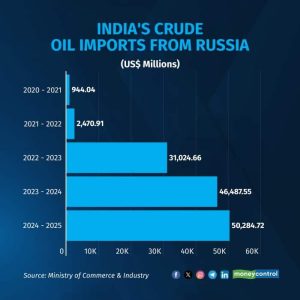
 India’s handling of the global oil and energy crisis is perhaps one of the clearest examples of strategic execution under pressure. Despite the Iran war disrupting nearly 20% of global oil and gas flows through the Strait of Hormuz and exposing India’s vulnerability—where 50–55% of its oil and LNG imports typically pass through that route —the country avoided a full-scale energy shock. Instead of depending on a single region, India rapidly diversified its supply chain. Russian crude alone now accounts for roughly 40% of India’s total oil imports, up dramatically from negligible levels just a few years ago . In fact, amid peak disruptions, India increased Russian imports by as much as 90% month-on-month, ensuring continuity of supply even as Middle Eastern shipments faltered . Simultaneously, India expanded sourcing across more than 40 global suppliers, including the U.S., Russia, and Australia, effectively insulating itself from regional shocks .
Even more impressive is how India managed domestic stability despite external chaos. While global markets faced shortages and price spikes, India secured up to 60 days of crude supply and maintained stable fuel availability across the country . It increased domestic LPG production by nearly 40%, offsetting sharp import declines caused by war disruptions . At a time when LPG imports were projected to fall by almost 50% due to the conflict , India proactively sourced alternative shipments and prioritized domestic consumption. The result: while much of the world struggled with energy insecurity, India maintained continuity, controlled inflationary pressure, and ensured that economic momentum was not derailed. This was not luck—it was a calculated strategy built on diversification, flexibility, and decisive policy action.
A Model the World Is Beginning to Follow
 The most significant shift is not just what India is doing—but how the world is responding.
Increasingly, global analysts and policymakers are recognizing that India offers an alternative path in a fragmented world.
India has demonstrated that it is possible to:
- Maintain strategic autonomy without isolation
- Expand influence without overdependence
- Lead without dominating
- Remain flexible without appearing weak
In a world where many nations feel forced into binary choices, India has shown that a third path exists.
This is why India is not just succeeding—it is becoming a model.
The Road Ahead: A Defining Decade
 India now stands at a pivotal moment. The coming decade will determine whether it consolidates its position as a leading global power or falls short of its potential.
Three factors will shape this outcome.
Economic Execution
Growth must translate into manufacturing strength, job creation, and global competitiveness.
Strategic Discipline
Multi-alignment must remain focused and intentional—not drift into inconsistency.
Domestic Reform
Internal reforms are essential to fully leverage external opportunities.
India—Built for the Present Moment
Trump’s world is unpredictable, competitive, and transactional. For many nations, this represents a crisis.
For India, it is an opportunity.
India’s strategy—anchored in multi-alignment, economic pragmatism, and geopolitical maturity—positions it uniquely in this evolving order.
Power today is not defined by geography alone. It is defined by networks, adaptability, and strategic clarity.
India has all three.
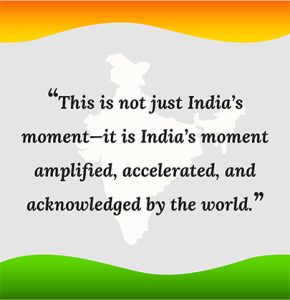
This is not just India’s moment.
It is India’s moment—amplified, accelerated, and increasingly acknowledged by the world.
About the Author
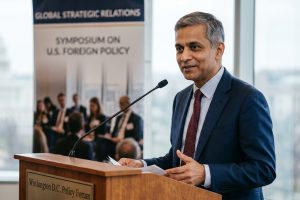 Dr. Arvind Suresh is an Indian-American scholar of international affairs, currently based in Washington, D.C. He earned his Ph.D. in political science with a focus on U.S. foreign policy and global strategic relations. Dr. Suresh specializes in analyzing America’s diplomatic, economic, and security engagements with major world powers.
He has served as an advisor to various government agencies and international organizations on matters of global diplomacy. His research explores shifting alliances, geopolitical risks, and the role of the U.S. in a multipolar world. Widely respected in academic and policy circles, he frequently participates in international forums and expert panels. Dr. Suresh is committed to fostering cross-cultural dialogue and developing policy solutions for global cooperation.