
India’s Historic Cricket World Cup Win: From Shadows to Spotlight
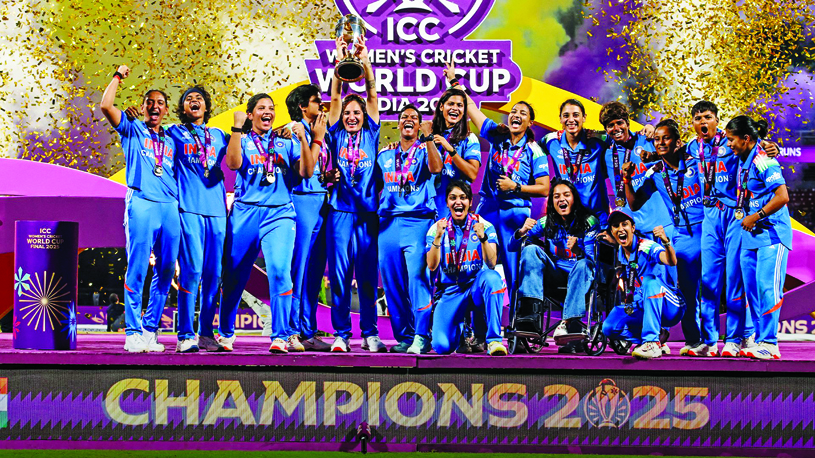
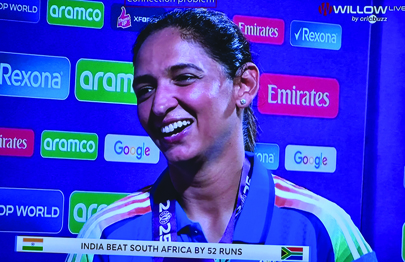
 It was just past midnight at Navi Mumbai’s DY Patil Stadium when history unfolded under the glowing floodlights. The chants of “Bharat Mata ki Jai” echoed through the stands as Harmanpreet Kaur and her team lifted the ICC Women’s World Cup trophy—India’s first ever. Tears, laughter, and disbelief filled the air. This was more than a victory; it was the culmination of decades of struggle, resilience, and belief by women who had long played in the shadows.
From the Shadows to the Spotlight
Not long ago, Indian women’s cricket existed in near anonymity. Matches were played in second-tier venues, press conferences attracted only a handful of reporters, and even international games often went untelevised. In 2018, when India toured South Africa, there was no live broadcast of their ODIs—the only updates came via scorecards on social media. When journalists protested, a live stream was hurriedly arranged, but the message was clear: women’s cricket was still an afterthought.
Back then, Snehal Pradhan, a former cricketer and now ICC manager for women’s cricket, famously tweeted an appeal asking for 22 more followers to help the BCCI Women’s Twitter account reach 1,000 followers. That account now boasts over a million—a reflection of how far the game has come. And nothing symbolizes that transformation more powerfully than what happened on November 2, 2025.
The Final: A Tale of Grit and Grace
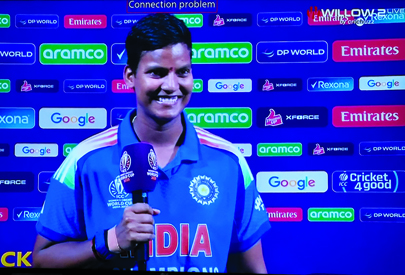
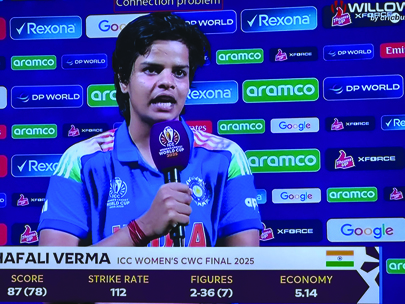
The final was more than a cricket match; it was an emotional rollercoaster that kept 39,555 fans at the stadium and millions watching across the globe on the edge of their seats. India’s 298 for 7 against South Africa was the second-highest total ever scored in a Women’s World Cup final. Shafali Verma, just 21 years old, lit up the night with a blistering 87 off 78 balls, while Deepti Sharma delivered an all-round masterclass—a run-a-ball fifty followed by five wickets for 39 runs.
Deepti’s feat was historic: she became the first player, male or female, to score a fifty and take a five-wicket haul in a World Cup knockout match. Her 22 wickets in the tournament placed her among the greatest all-rounders in women’s cricket history.
When South Africa began their chase, led by their prolific captain Laura Wolvaardt, tension filled the air. Wolvaardt’s majestic 101 nearly threatened to rewrite the script, but once she fell to Deepti’s clever variation, India’s destiny seemed written. The roar that followed the final wicket—caught by Harmanpreet herself—was not just for a game won, but for a generation redeemed.
 The Captain Who Dreamed Beyond Limits
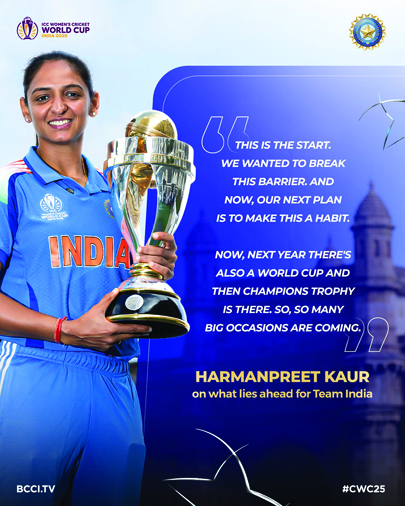
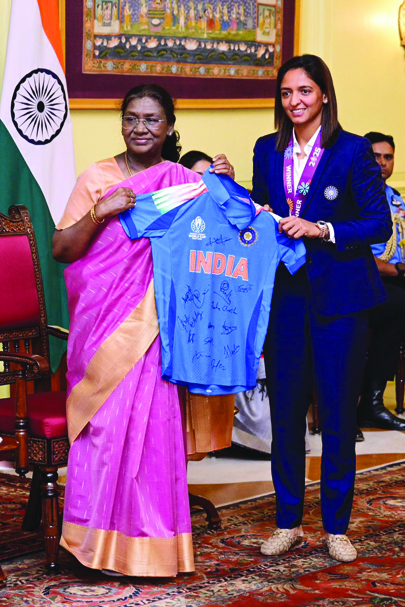
As the crowd erupted, Harmanpreet Kaur—India’s captain, trailblazer, and emotional anchor—stood motionless for a moment, absorbing the surreal sight. In the post-match press conference, she confessed, “I’m numb. I can’t even express what I’m feeling. There were so many ups and downs, but through everything, we had self-belief.”
Self-belief—that was the word she repeated over and over, because it was this quiet conviction that had carried the team through the storms of the past month. After early losses to Australia, South Africa, and England, India’s campaign seemed doomed. But a turning point came after their defeat to England. That night, the team huddled together and decided to change their approach—through visualization, meditation, and unshakable faith in each other. “We started seeing the trophy every day,” Harmanpreet said. “We played this tournament in our minds before we stepped onto the field.”
It showed. The semifinal win against Australia, inspired by Harmanpreet’s calm leadership and the collective fire of her players, was emotional enough to move even the stoic captain to tears. But the final brought pure, unfiltered joy. “I’ve played many World Cups with Smriti [Mandhana],” she said later. “Every time we lost, we went home heartbroken. This time, we said to ourselves, “From ball one, we’ll play like champions.”
Heroes of the Night
If Harmanpreet embodied belief, Shafali Verma represented fearless youth. Barely out of her teens, she became the youngest player ever to win the Player of the Match award in a World Cup final. Her 104-run opening stand with Smriti Mandhana laid the foundation for India’s triumph. Mandhana, India’s vice-captain and emotional heart of the team, described the victory as “bigger than a trophy—it’s a revolution for women in sports.”
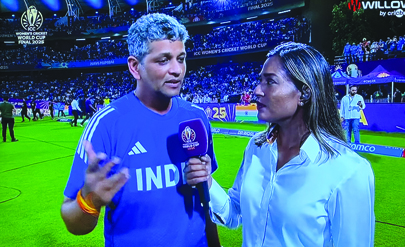
Deepti Sharma’s match-defining spell was the stuff of legend. Her accuracy, composure, and control under pressure reminded many of India’s greats. “She’s in a league of her own,” said coach Amol Muzumdar. “Every time we needed something special, Deepti delivered.”
And yet, it was the unity and humility of the team that won hearts. The sight of Jemimah Rodrigues and Radha Yadav hugging South Africa’s Marizanne Kapp after the match went viral. “Sabki victory hai—this is everyone’s victory,” smiled Mandhana as she congratulated journalists who had supported the team for years. It was a rare kind of sportsmanship—one that turned rivals into friends and fans into family.
Celebration with Dignity
As the players danced, laughed, and took selfies with the trophy, they made sure to share their moment with those who had paved the way. Mithali Raj, Jhulan Goswami, and Anjum Chopra—pioneers of Indian women’s cricket—were invited to the stage to lift the trophy alongside the team. Goswami, tears streaming down her face, hugged Harmanpreet tightly. “Jhulan di was my biggest support,” the captain said. “She was my leader when I was new to the team. To share this with her is beyond words.”
In the stands, fathers, mothers, and young girls waved the tricolor with pride. Outside the stadium, celebrations spilled into the streets. For once, India’s women athletes were not being compared to the men—they were being celebrated for who they were.
Messages from Legends
Congratulatory messages poured in from across the world. Virat Kohli called the team an “inspiration for generations to come.” Sachin Tendulkar drew a poignant parallel to 1983: “That victory inspired an entire generation. Today, our women’s team has done the same. They’ve shown millions of young girls that dreams do come true.”
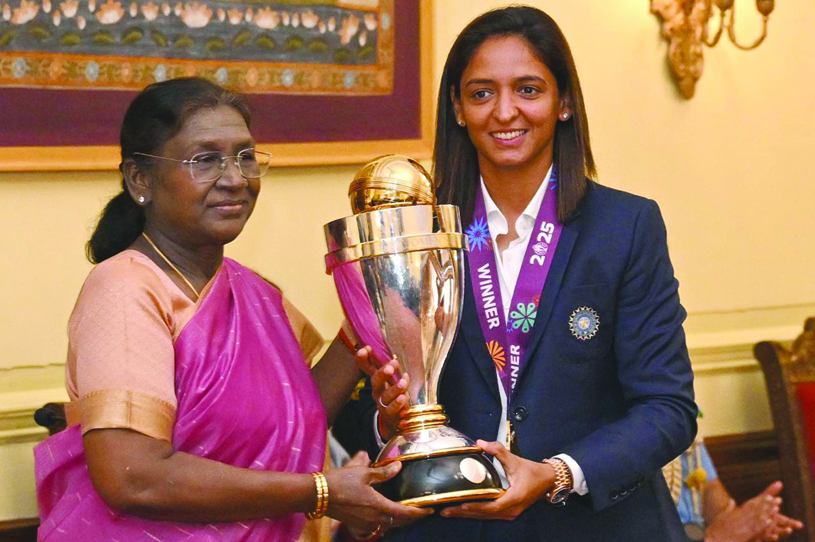
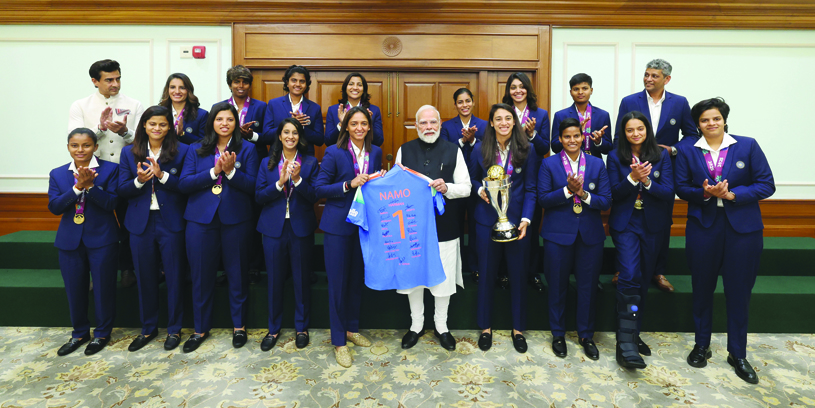
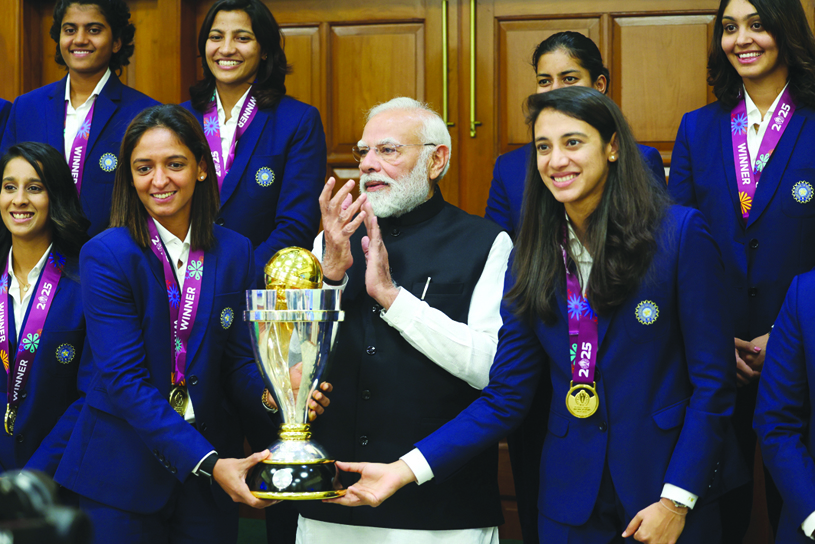
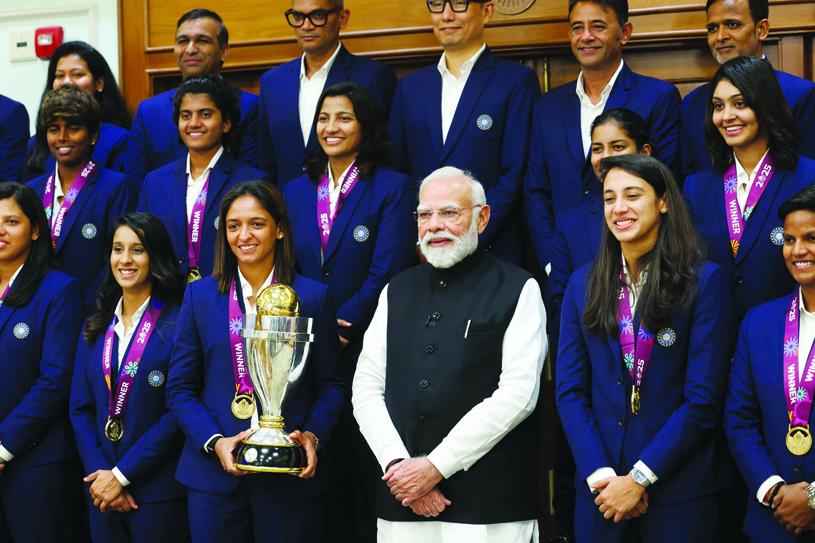
Prime Minister Narendra Modi met the players the next day, praising their resilience and poise: “You have rewritten India’s cricketing story. You’ve not just won a cup; you’ve won the heart of a nation.”
A Journey Written in Struggle
The victory meant more because of where they started. For years, India’s women cricketers played without media attention, training facilities, or fair pay. Even the 2013 Women’s World Cup in India was held in small club grounds, overshadowed by domestic men’s matches. Players like Mithali and Jhulan often had to buy their own gear and play in front of near-empty stands.
Equal pay was once a distant dream. Until 2022, women cricketers earned only a fraction of what their male counterparts made—both in match fees and annual contracts. Though recent reforms have introduced parity in match fees, a clear gap still remains in contracts. The highest women’s annual contract, valued at around $60,000, is still below the men’s lowest contract grade of $120,000. Yet these remarkable players continued to give their all—not for financial gain, but for the love of the game, their passion, and the pride of representing their nation.
 The Role of the Women’s Premier League
The launch of the Women’s Premier League (WPL) in 2023 changed everything. For years, officials dismissed the idea, claiming there wasn’t enough talent or financial viability. But the WPL’s massive success proved them wrong. Young stars like Shafali, Richa Ghosh, and Amanjot Kaur honed their skills in that high-pressure environment, learning how to handle expectations and the spotlight—experience that paid off handsomely in the World Cup.
As Harmanpreet said, “WPL gave us exposure and confidence. We learned to play fearless cricket because we played with and against the best.”
A Victory for Every Indian Woman
The final whistle at Navi Mumbai was more than the end of a match—it was the dawn of a new era. For decades, Indian women had fought stereotypes about what they could or could not do. This team—daughters, sisters, students, and athletes—shattered those ceilings with their bats and smiles.
The image of Harmanpreet dancing bhangra with her father after lifting the trophy, or of Smriti waving to fans shouting her name, captured a larger truth: these women had given the country not just a win, but a vision of equality and joy.
 A Shared Celebration
What made the victory even more remarkable was its inclusiveness. From the players to the journalists, from fans to former pioneers—everyone felt part of the journey. “They didn’t just win for themselves,” one reporter wrote. “They made us feel like we were part of their story.”
That generosity—seen when Indian players consoled their South African counterparts—was emblematic of this team’s character. In an age where sporting rivalries often breed toxicity, India’s women showed that greatness can coexist with grace.
Legacy Beyond the Trophy
This win isn’t just about silverware—it’s a movement. With record-breaking performances, rising stars, and the Women’s Premier League shaping fearless cricketers, India’s women have redefined the nation’s sporting legacy.
As fireworks lit the Navi Mumbai sky, one truth stood out: this was not just the night India won the World Cup. It was the night Indian women’s cricket truly came home.
 The Final Word
When the celebrations died down in the early hours, Harmanpreet and her teammates gathered on the field for one last photo. The trophy glistened in the floodlights, reflecting the faces of women who had carried the dreams of millions. “We’ve waited all our lives for this,” said Harmanpreet softly. “And it was worth every second.”
From forgotten fixtures to full stadiums, from unequal pay to unbreakable pride—the Indian women’s cricket team’s journey has been one of grit, grace, and glory. As fireworks lit up the Navi Mumbai sky, one truth became clear: this was not just the night India won the World Cup. It was the night Indian women’s cricket truly came home.
– Records and Stats
• Smriti Mandhana scored 434 runs at 54.25, breaking Mithali Raj’s 409 (2017) record for most runs in a Women’s World Cup edition. She made 1 century, 2 fifties, and 45 in the final.
• Shafali Verma scored 87 off 79 balls, the highest by an Indian opener in a World Cup final, surpassing Punam Raut’s 86 (2017) and Virender Sehwag’s 82 (2003). At 21 years 278 days, she became the youngest Player of the Match in a Women’s World Cup final.
• Harmanpreet Kaur set a record for most knockout runs (331), passing Belinda Clark’s 330.
• Deepti Sharma scored 215 runs and took 22 wickets, becoming the first cricketer (male or female) with 200+ runs and 20+ wickets in a single World Cup. She took 5/39 and scored 58* in the final, the first-ever fifty and five-for in an ODI knockout.
• Richa Ghosh hit 12 sixes, equaling Deandra Dottin’s record for most sixes in a Women’s World Cup.
• Mandhana–Verma’s 104-run stand was India’s highest opening partnership in a World Cup final and only the second century stand for the first wicket in final history.
• India’s 298/7 was the second-highest total in a Women’s World Cup final, behind Australia’s 356/5 (2022).
• India became the fourth team to win the Women’s World Cup, after Australia (7 titles), England (4), and New Zealand (1).
• Deepti’s 22 wickets rank joint second-highest in World Cup history (tied with Jackie Lord 1982; behind Lyn Fullston’s 23).