
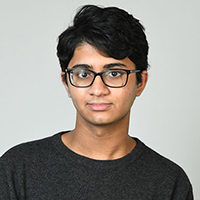
Pavan Subramani Wins $25,000 for AI Research
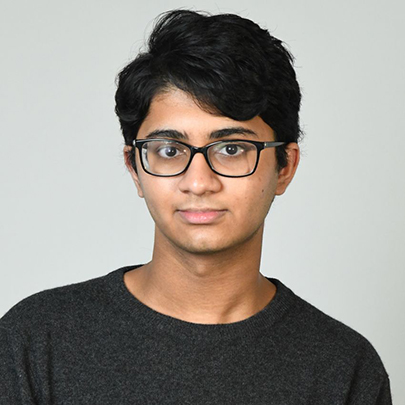
A 17-year-old Indian American student from West Virginia is gaining recognition for research that could help scientists investigate potential medicines more efficiently. Pavan Subramani, a senior at Morgantown High School, has been named a 2026 Davidson Fellow and awarded a $25,000 scholarship for developing an artificial intelligence-based technique designed to improve molecular simulations used in drug discovery.
According to his profile on the official Davidson Fellows website, Subramani’s research combines generative diffusion models with molecular dynamics simulations. His approach achieved a 68-fold improvement in sampling efficiency for a specific molecular measurement compared with conventional simulations. A related technique also reached equilibrium ligand-binding populations more than four times faster than an existing method in testing.
Subramani’s project, titled The Hybridization of Generative Diffusion Models with Molecular Dynamics Simulations: A Novel Method to Accelerate Drug Discovery, addresses a longstanding challenge in computational chemistry.
Scientists use molecular dynamics simulations to understand how proteins change shape and how potential drug compounds interact with biological targets. However, these calculations can demand substantial computing resources and may take considerable time to capture rare molecular events.
Subramani became interested in the problem while investigating potential inhibitors of the Receptor for Advanced Glycation End Products, a protein associated with several disease processes. When the computational demands exceeded what his laptop could comfortably handle, he began exploring techniques that could make the simulations more efficient.
His resulting method, called diffusion hybridized molecular dynamics, or dhMD, uses a generative diffusion model to propose changes in molecular structures. A Metropolis-Hastings acceptance criterion then helps maintain the statistical reliability of the simulation results.
In experiments involving alanine dipeptide, dhMD achieved 68 times greater effective sample size per GPU hour for a particular slow molecular motion than classical molecular dynamics. Effective sample size measures how efficiently a simulation produces statistically useful results.
Subramani subsequently developed diffusion hybridized BLUES, known as dhBLUES, to improve simulations of molecules binding to proteins. In tests involving T4 lysozyme and toluene, the method reached equilibrium ligand-binding populations more than four times faster than the existing BLUES technique.
An important aspect of the work was ensuring that AI-generated molecular changes did not introduce statistical bias. Subramani designed a framework that accounts for the probabilities of proposed molecular changes, helping preserve the validity of the simulations.
Beyond the Davidson Fellows scholarship, Subramani received a third-place Grand Award in Chemistry at the International Science and Engineering Fair and participated in the Massachusetts Institute of Technology’s Research Science Institute as a mentee.
He plans to study chemistry or applied physics and continue research in computational chemistry and biophysics, with an emphasis on improving human health through drug discovery.
Subramani has also founded The Substance Safety Project, a nonprofit focused on substance abuse education and advocacy. According to his Davidson Fellows profile, the organization has raised more than $10,000, distributed 750 drug disposal packets, and reached over 1,500 people through educational workshops.
His research offers a promising approach to improving computational methods, although further testing across a broader range of proteins and drug candidates will be necessary to establish its wider practical impact. The scholarship recognizes both his scientific achievement and his potential to contribute to future advances in medicine.