

Rema’s Ramblings – Thoughts and Musings from Mumbai to Miami
Two Leaders – Common Ideals
As a child growing up in Mumbai, getting my very first passport was an exciting event for me. It meant I could now travel the world. I opened the passport for the first time with significant anticipation, only to see the following words stamped on it – “Valid for all countries except South Africa.” Naturally, visiting South Africa became one of my travel goals from then on. Many years later, after moving to South Florida, that goal was finally fulfilled when we traveled to Cape Town, using it as the base for our family’s Southern African safari vacation.
While in Cape Town, I could not help but notice the far-reaching influence that Nelson Mandela has had on the city and the country as a whole. His quotes, photographs and statues are all over, not unlike how Mahatma Gandhi’s are throughout India. During our stay, we visited Robben Island, home to the prison where Nelson Mandela spent eighteen years of his 27-year incarceration.
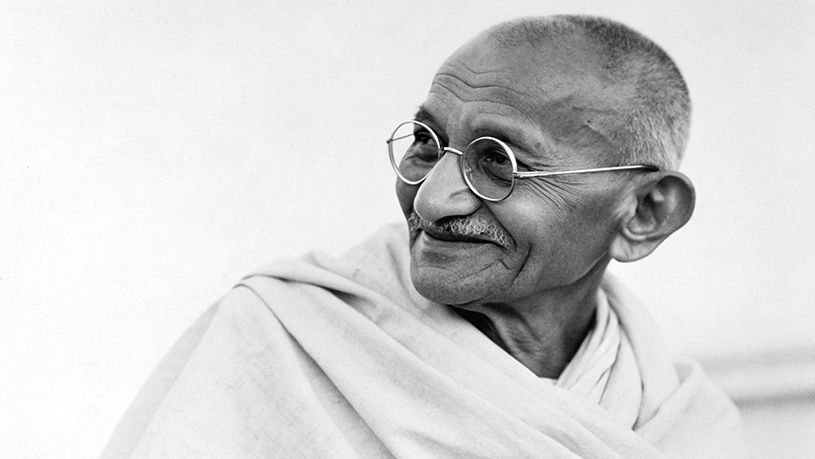 This visit to Robben Island was thought-provoking and led me to reflect on the similarities between Mahatma Gandhi and Nelson Mandela. Interestingly, the two never met. Gandhiji lived in South Africa for twenty-one years and left the country in 1914 – four years before Mandela (affectionately known by his Thembu clan name Madiba) was born. Yet Mandela often referred to Gandhiji as a role model and spoke frequently about the influence of his philosophy. While there were many similarities between the two leaders, there were some notable differences as well. For instance, Mahatma Gandhi considered non-violence (ahimsa) his core political strategy. Although Nelson Mandela initially promoted non-violence, his approach evolved after peaceful resistance failed to bring about change, and the African National Congress later established a military wing. In his book “Long Walk to Freedom”, Mandela specifically said that he viewed non-violence in the Gandhian model not as an inviolable principle but as a tactic to be used as the situation demanded.
Gandhiji viewed jail as a badge of honor and a strategic tool for political change rather than a punishment. Similarly, Nelson Mandela viewed going to jail as a battlefield rather than a place of defeat. Both were imprisoned multiple times in South Africa. Both were sentenced to hard labor and endured extremely harsh conditions as prisoners despite their status as political leaders. The South African government tried to undermine their dignity through humiliation and deprivation, but they continued to fight for freedom from their prison cells – writing extensively, challenging the authorities and inspiring others through their words.
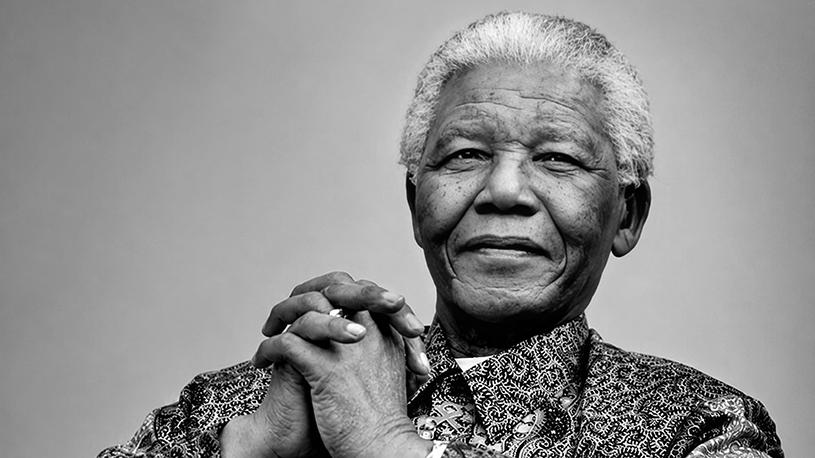 Mahatma and Madiba both believed deeply in the power of education to achieve social and political liberation through self-reliance. Madiba championed the philosophy embodied in the phrase “Each One, Teach One” while Gandhiji said that true Swaraj (self-rule) was impossible without mass literacy.
Gandhiji believed that forgiveness was a vital part of his non-violence (Ahimsa) strategy. As he said, “The weak can never forgive. Forgiveness is the attribute of the strong.” In a similar vein, Mandela, after his release from prison and the end of apartheid, came to believe that while armed resistance had become necessary during apartheid, forgiveness and reconciliation were essential if South Africa was to avoid a devastating civil war and build a united future. At Robben Island, our tour guide was himself a former political prisoner who had spent seven years incarcerated there. He told us that he had followed Madiba’s philosophy of forgiveness by showing mercy to the very prison officers who had mistreated him. Today, he said, those former prison guards are his friends. This statement just goes to show that the true legacy of great leaders lies in the values they leave behind. It was a lesson that stayed with me long after we left Robben Island.
About the Author:
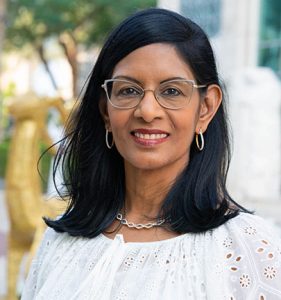 Rema is an IT professional whose experience includes cybersecurity consulting and implementing financial technology solutions in highly regulated environments. She lives in South Florida with her husband. A proud mother of twin boys, she is also an active member of the local Indian community. Rema enjoys traveling to different countries and meeting and working with people of different backgrounds and cultures. Rema is actively involved in the South Florida community and serves as a Board Member of the Indian Regional and Cultural Center, and has also served on the Board of Trustees of the North Broward Preparatory School.