The Art of Bouncing Back with Greater Success
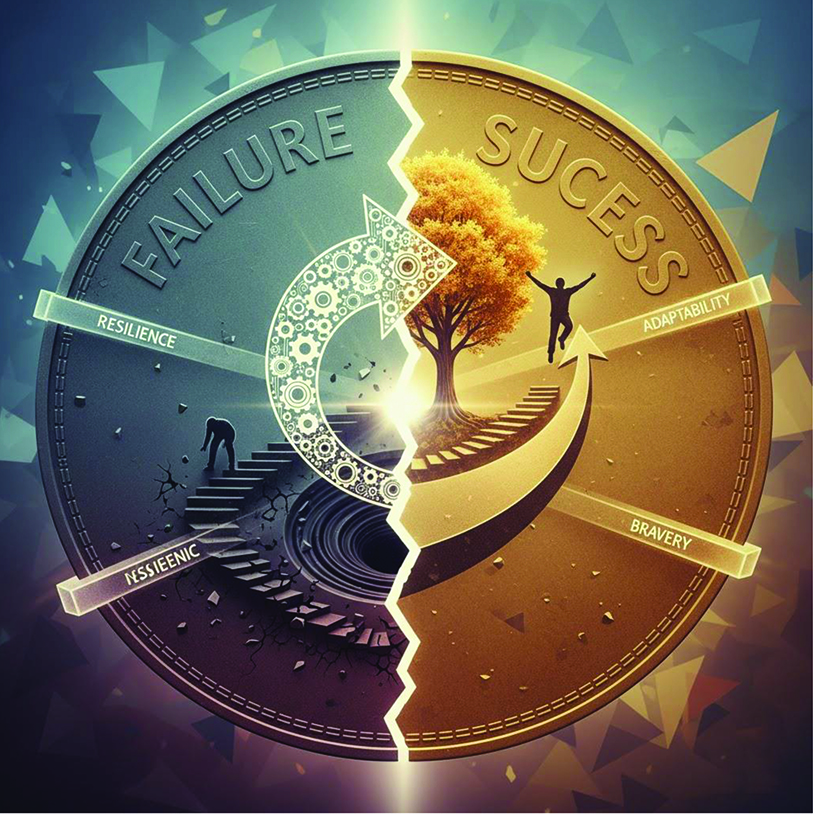
There are ups and downs in life; it is a crazy trip. Two sides of the same coin are failure and success; setbacks are inevitable in any effort. But the rebound—stronger, smarter, and more determined—defines a person more than the fall. The technique of rebounding with more success is a taught ability one may acquire and grow in. It calls for resiliency, adaptability, and the bravery of continuing in the face of difficulty.
Knowing the Character of Obstacles
Learning the skill of rebounding requires knowing first the nature of setbacks. Setbacks of a personal, professional, financial, or emotional nature abound in different shapes and degrees. Setbacks might result from external events or personal error. Whatever the cause, obstacles are stepping stones toward further achievement rather than a reflection on one’s value. The most successful people have at some time failed in their professions. The secret is to see setbacks as chances for growth rather than failures.
Using a Growth Mindset
“The first step to improving your bounce is to cultivate a growth mentality. Popularized by psychologist Carol Dweck, this theory holds that one’s intellect and ability are not fixed but rather may be grown with work, experience, and tenacity.” Those with a growth attitude see mistakes as beneficial feedback rather than as insurmountable challenges. Rather than moping over how things went wrong, they examine their experience, grow from their errors, and adjust their plan for the next project.
Developing Fortitude
Overcoming hardship mostly requires resilience. It is the capacity to resist pressure, recover from mistakes, and carry on with fresh vigor. Resilient people utilize failure as fuel to keep on, not let it define them. Resilience-building strategies include:
Acknowledging your feelings can help you to develop emotional toughness; do not let them rule you. While dissatisfaction is inevitable, avoid negative thoughts.
The skill of self-compassion involves treating oneself kindly. Rather than self-blame, understand that everyone blunders and that obstacles are inevitable in growth.
Ask a constructive support group—friends, mentors, or family members—who can provide direction and encouragement in trying circumstances.
Learning From Mistakes
 The insight that mistakes provide is among their finest teachings. See failure as a chance for learning rather than as something to be feared. Effective individuals examine their mistakes, find where they went wrong, and modify their approach. One of the many ways to grow from mistakes is to conduct a post-failure analysis: See the matter objectively.
doing a post-failure analysis: See the matter objectively. What were the contributing elements? What other actions might have taken place? Which learning has future transfer value?
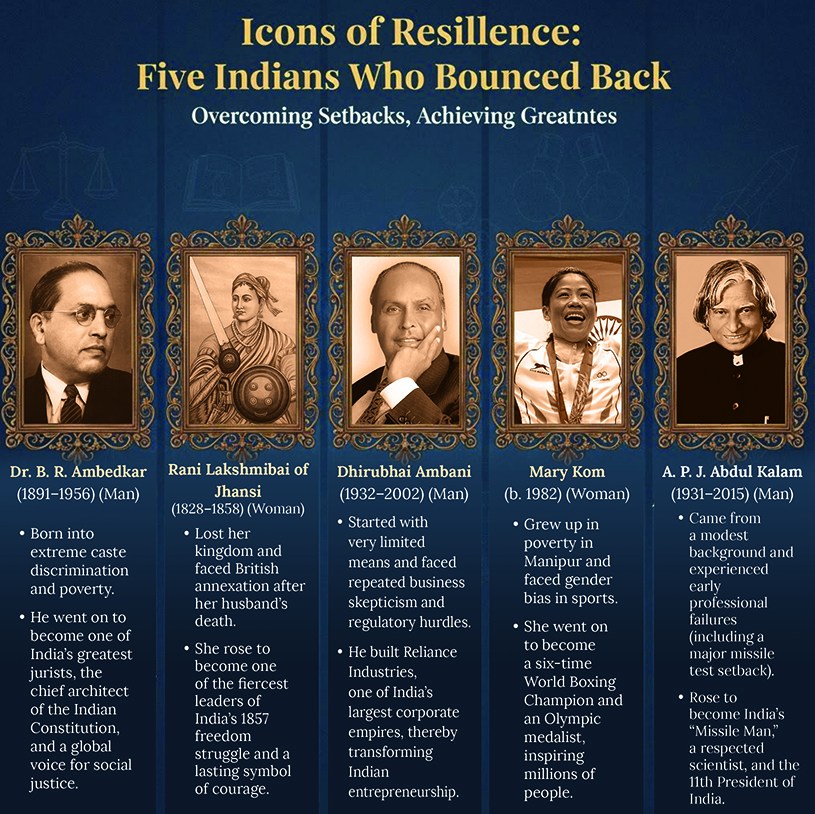
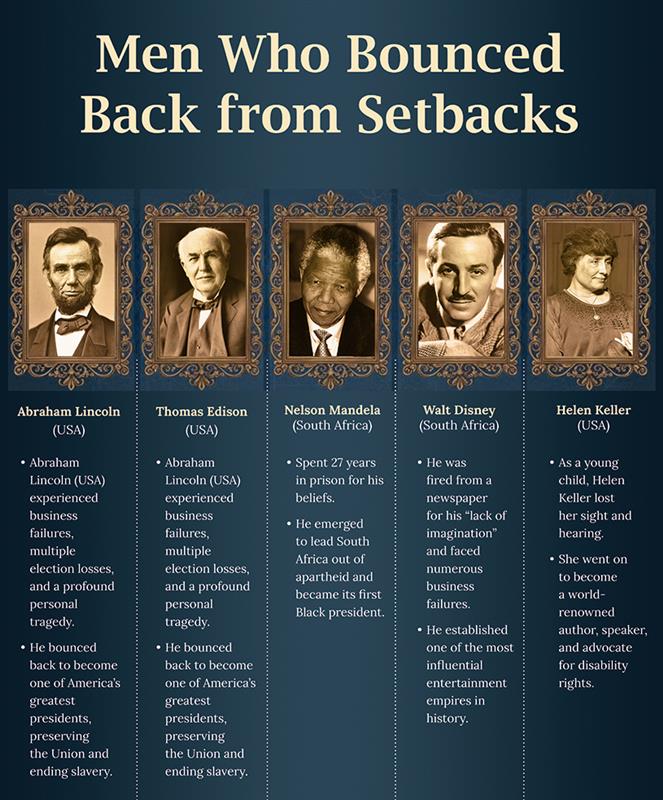
Adapting and innovating is turning mistakes into a chance for creativity. Occasionally, a subpar performance indicates a need for improvement. Many outstanding leaders and business owners have overcome mistakes and achieved far greater success.
Realizing achievement as a journey helps one control expectations. Divide projects into manageable chunks and celebrate little successes as you go.
Cultivating a Positive Outlook
A positive attitude is critical in coming back stronger. Optimism fuels motivation and leads individuals to see opportunity where others see obstacles. A positive attitude can be achieved by:
Practice Gratitude: Concentrate on the positive aspects rather than the negative ones. Gratitude transforms the focus from failure to possibility.
Visualizing Success: Visualizing success beforehand and imagining oneself succeeding in spite of adversity can enhance performance and confidence.
Continuing to Learn: Staying curious and open to new information encourages adaptability and prevents stagnation.
Acting with fresh resolve
Rebounding that works calls for action. Learning from mistakes is insufficient; one also has to apply fresh ideas with will. Some smart approaches are ahead:
Clearly define concrete objectives with direction and purpose in mind.
Creating a strategic plan can help you to outline possible obstacles and successful actions.
Accepting perseverance: Success usually finds those who are not ready to give up. Continue even if it is slow going.
Motivating Case Studies of Effective Rebounding
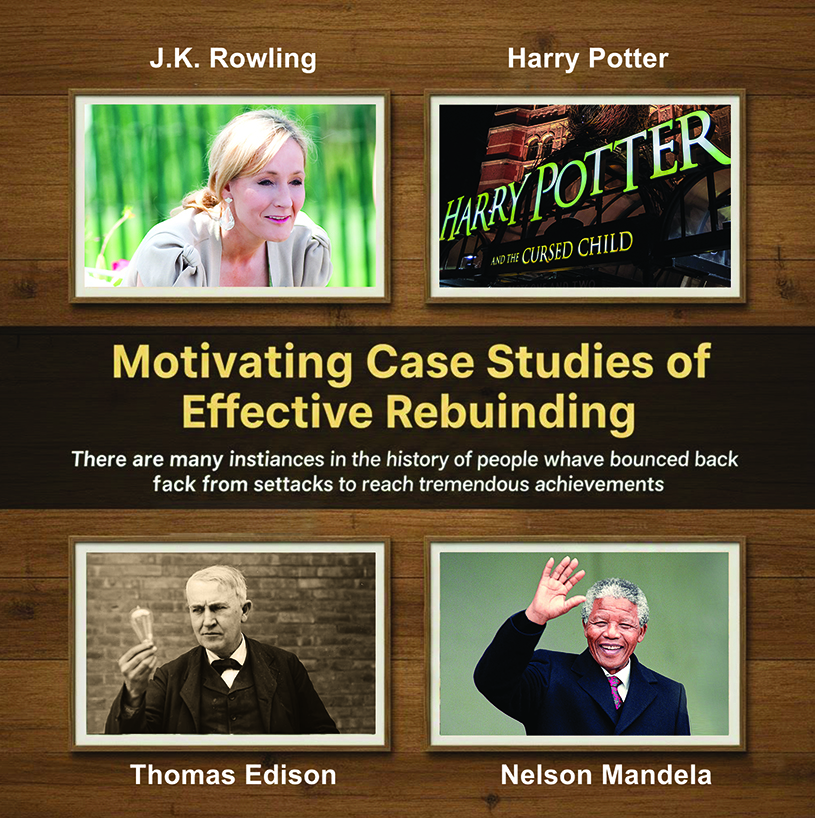 There are many instances in the history of people who have bounced back from setbacks to reach tremendous achievements. Think about the tale of Thomas Edison, who failed hundreds of times before coming up with the light bulb. Regarding his shortcomings, he famously stated, “I have not failed. I have now discovered 10,000 unworkable approaches.” One of the most important innovations in history sprung from his tenacity and rejection of failure.
Another outstanding person who had many rejections before her Harry Potter book may be J.K. Rowling. She is a top author in the world now, which indicates that one can reach wonderful heights by staying concentrated and believing in herself.
The capacity to return stronger defines individual resilience, flexibility, and a genuine drive for personal development. Setbacks are opportunities to recover, develop, and emerge even more powerful—not the conclusion of a journey.
Anyone may make failures stepping stones to success by using a growth mindset, resilience, failure learning, an optimistic attitude, and excellent action. Remember, being able to get up after every fall defines success rather than the lack of failure. The most victorious are those who rise after failure, not those who never fail.