Two Nations, Two Milestones, One Indian-American Story
By Raj Shah
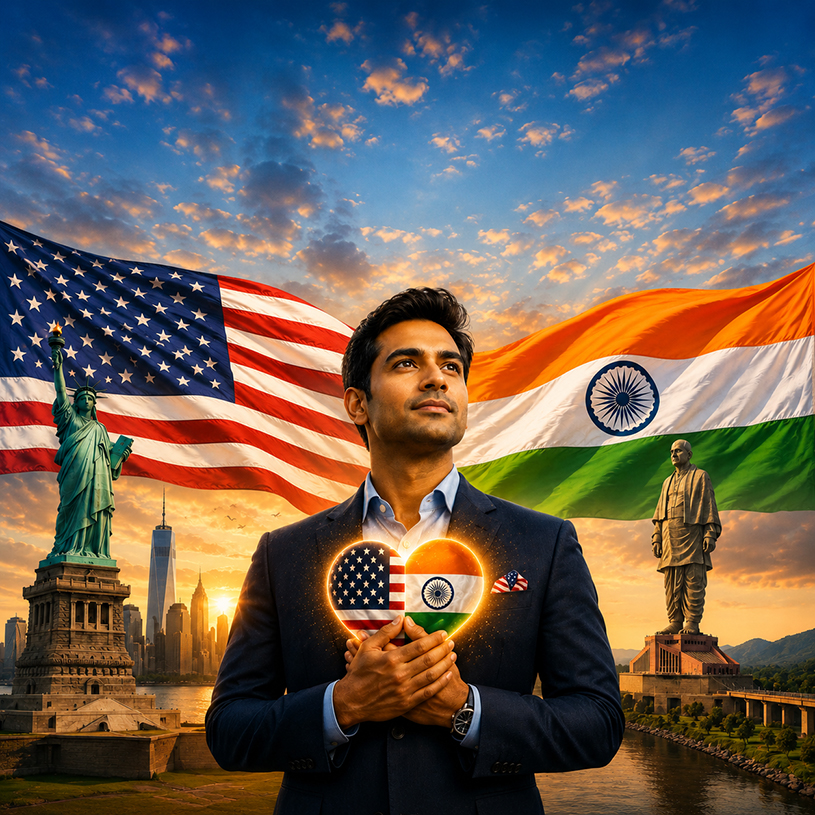
In the summer of 2026, two flags rise beneath the same sky.
On July 4, the United States celebrated the 250th anniversary of the Declaration of Independence. Six weeks later, on August 15, India will observe its 80th Independence Day. One nation looks back on two and a half centuries of an extraordinary democratic experiment. The other celebrates eight decades since the end of British rule and the birth of a sovereign nation.
For Indian Americans, these are not two unrelated anniversaries marked on different pages of the calendar. They are chapters of one deeply personal story.
We sing “Jana Gana Mana” with affection for the land that gave us our roots and “The Star-Spangled Banner” with gratitude for the country that gave us room to grow. “We celebrate India not because we have failed to become Americans. We celebrate America not because we have forgotten India.” We carry love for both because each has shaped a different part of who we are.
India is our mātrubhūmi—the motherland that gave us our traditions, languages, values, and spiritual inheritance. America is our karmabhūmi—the land of action where so many of us studied, worked, raised families, built businesses, and pursued opportunities that once seemed beyond reach.
Between these two homelands stands a community that has spent generations learning not merely how to live in two worlds but how to connect them.
Two Journeys Toward Freedom
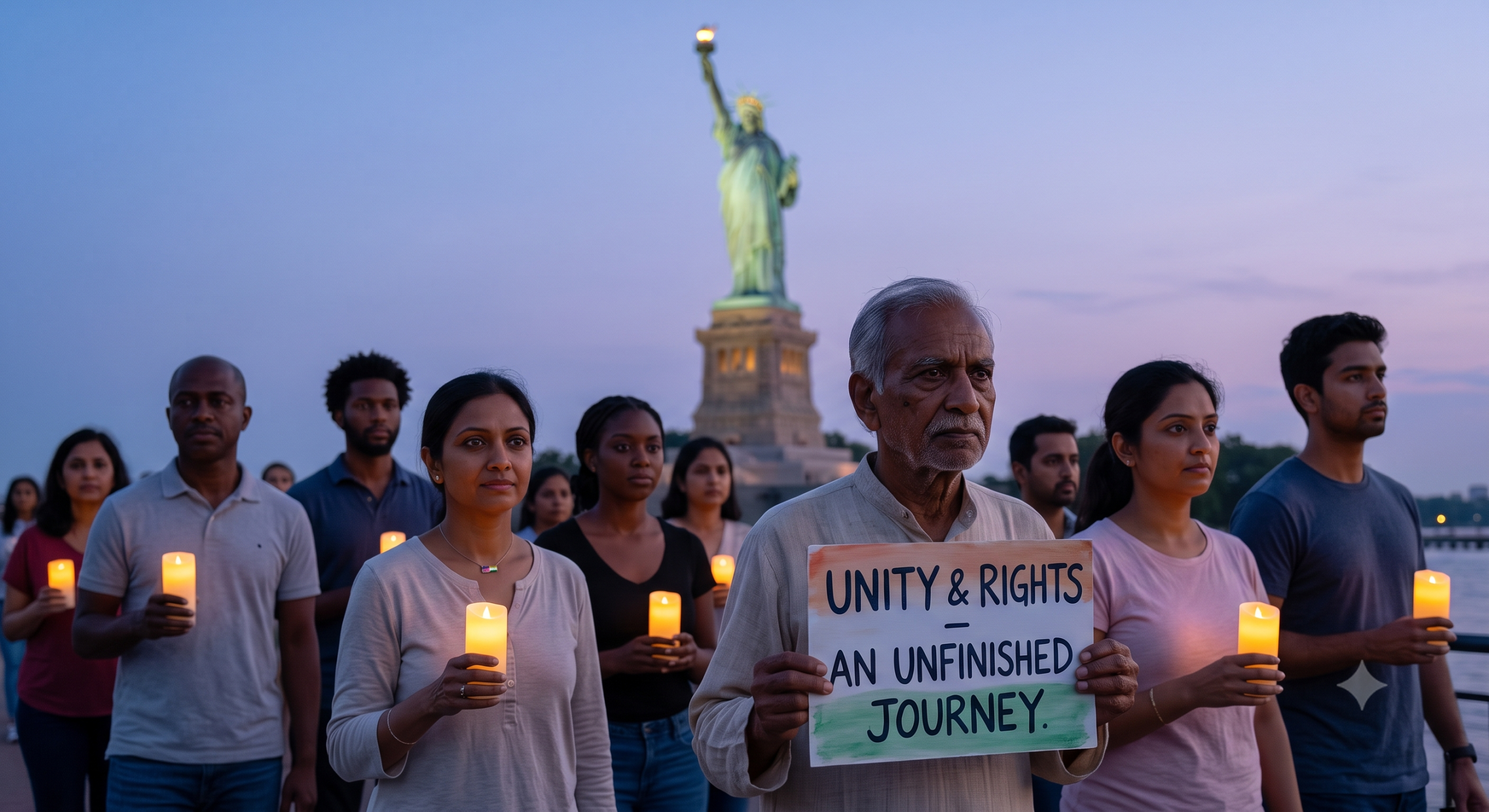 The American and Indian struggles for independence were separated by nearly two centuries, yet both arose from a shared conviction: people should not be governed without a voice in their future.
On July 4, 1776, representatives of thirteen colonies adopted the Declaration of Independence. Its assertion that all people are created equal and possess certain unalienable rights became one of history’s most influential political declarations.
The new nation, however, did not immediately live up to those words. Slavery continued. Native peoples were displaced and dispossessed. Women were denied political equality. Generations of Black Americans had to struggle for freedoms that had been promised but withheld. Immigrants encountered prejudice, exclusion, and suspicion.
American democracy did not arrive completely in 1776. It became—and remains—a continuing debate over who is included in the word “all.”
That unfinished journey does not diminish the American ideal. It reminds us that freedom must be protected, widened, and renewed by every generation.
India’s path was different, but its moral foundation was equally powerful. On August 15, 1947, after a long and painful struggle against colonial rule, India awakened to independence.
Mahatma Gandhi’s philosophy of satyāgraha showed the world that disciplined nonviolence could challenge an empire. Countless freedom fighters—famous and unnamed, men and women, students, farmers, laborers, poets, reformers, and spiritual leaders—sacrificed their comfort, security, and sometimes their lives for a nation many of them would never live to see.
Yet India’s freedom arrived amid the trauma of Partition. Independence brought celebration and sorrow together. Millions were uprooted. Families were divided. Communal violence claimed innumerable lives. The midnight of freedom carried both hope and grief.
India then faced the enormous task of building democratic institutions across a vast land of different religions, languages, castes, regions, and customs. Poverty was widespread. Literacy was limited. Infrastructure was inadequate. Many outside observers doubted that such a diverse country could remain united and democratic.
India did more than survive those doubts. It built and sustained the world’s largest democracy.
Neither the United States nor India has followed a perfect path. Both nations have faced injustice, division, political turmoil, and moments that tested their highest ideals. Yet both continue to return to one central belief: the authority of government ultimately comes from the people.
That belief is the bridge between July 4 and August 15.
What America Made Possible
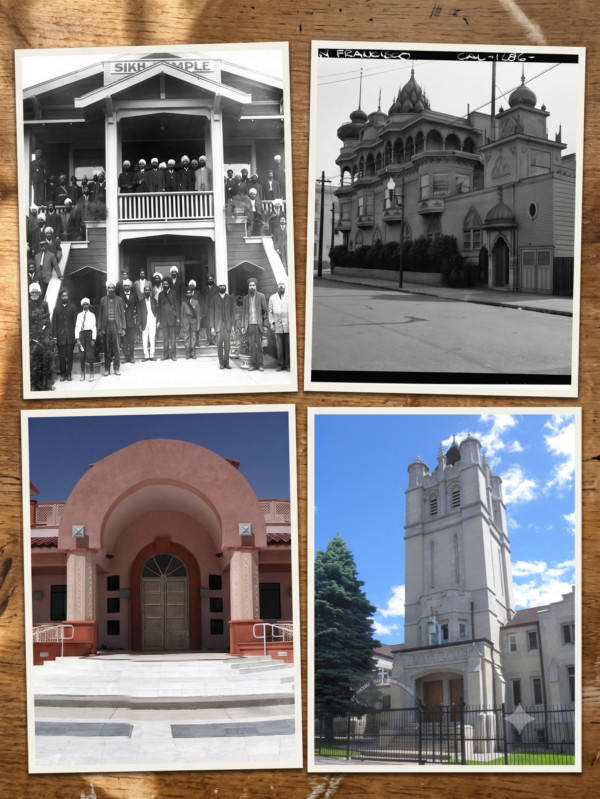
For the earliest Indian immigrants, America was not always welcoming.
Immigration laws once restricted Asian migration and citizenship. Indian laborers on the West Coast faced discrimination and violence. Bhagat Singh Thind, a U.S. Army veteran who served during World War I, fought unsuccessfully for the right to retain American citizenship. In 1923, the U.S. Supreme Court ruled that Indians were not eligible for naturalization under the racial classifications then embedded in American law.
That history forms part of the Indian-American experience, even if we rarely discuss it during our community celebrations.
The Luce-Celler Act of 1946 allowed a small annual quota of immigrants from India to enter the United States and made Indian immigrants eligible for naturalization. The Immigration and Nationality Act of 1965 significantly expanded immigration opportunities by replacing nationality-based quotas with a system that prioritizes family reunification and professional skills.
A new chapter began.
Doctors came to serve communities that desperately needed them. Engineers joined American industries during a period of rapid technological growth. Professors, scientists, and researchers entered universities and laboratories. Small-business owners opened motels, grocery stores, restaurants, and convenience stores, often working seven days a week with limited capital and little social support.
Many arrived with one or two suitcases, a few dollars, and the telephone number of a relative or friend.
There were no WhatsApp calls home, no Indian television channels in every household, and no convenient direct flights connecting American cities with Delhi, Mumbai, Ahmedabad, Hyderabad, or Bengaluru. Letters could take weeks. An international telephone call was expensive and reserved for important news. Finding familiar spices could require a long drive. Temples and cultural centers were few.
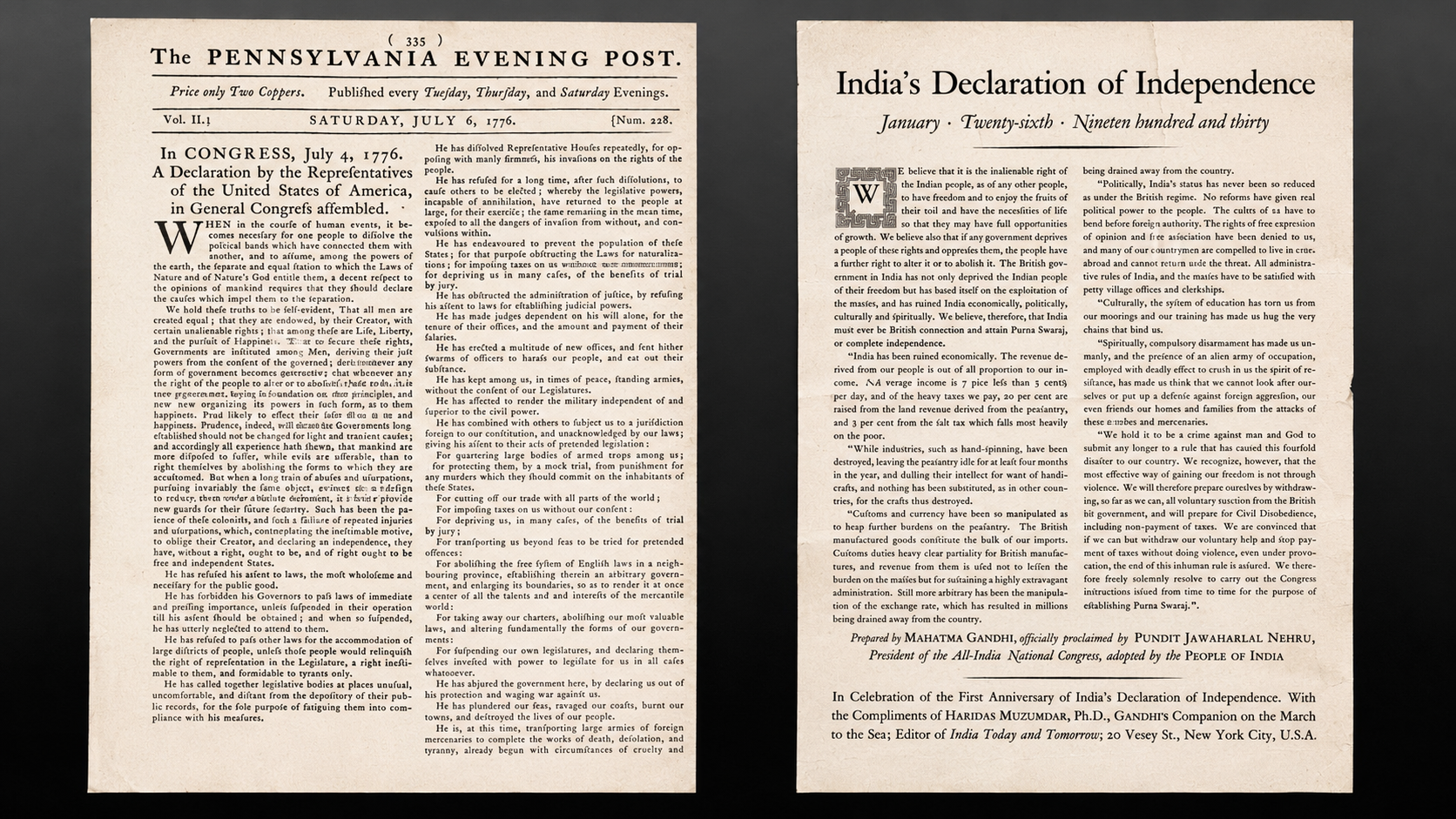
Two historical documents side-by-side: a 1776 edition of “The Pennsylvania Evening Post” containing the U.S. Declaration of Independence and India’s 1930 Declaration of Independence.
Those immigrants had to build a community from the ground up.
They organized associations in living rooms and rented halls. They established temples in former churches, warehouses, and modest suburban buildings. They opened language schools so their children could learn Gujarati, Hindi, Tamil, Telugu, Bengali, Punjabi, Malayalam, Marathi, and other mother tongues. They celebrated Diwali in school cafeterias and India’s Independence Day in public parks.
They also founded newspapers, magazines, and community media because mainstream publications often overlooked their achievements and concerns.
“The first generation was not merely seeking financial security. It was creating a cultural home.”
America made that home possible. Its universities welcomed talent. Its economy rewarded initiative. Its Constitution protected freedom of religion, speech, and association. Its entrepreneurial culture allowed newcomers to begin with little and build something meaningful.
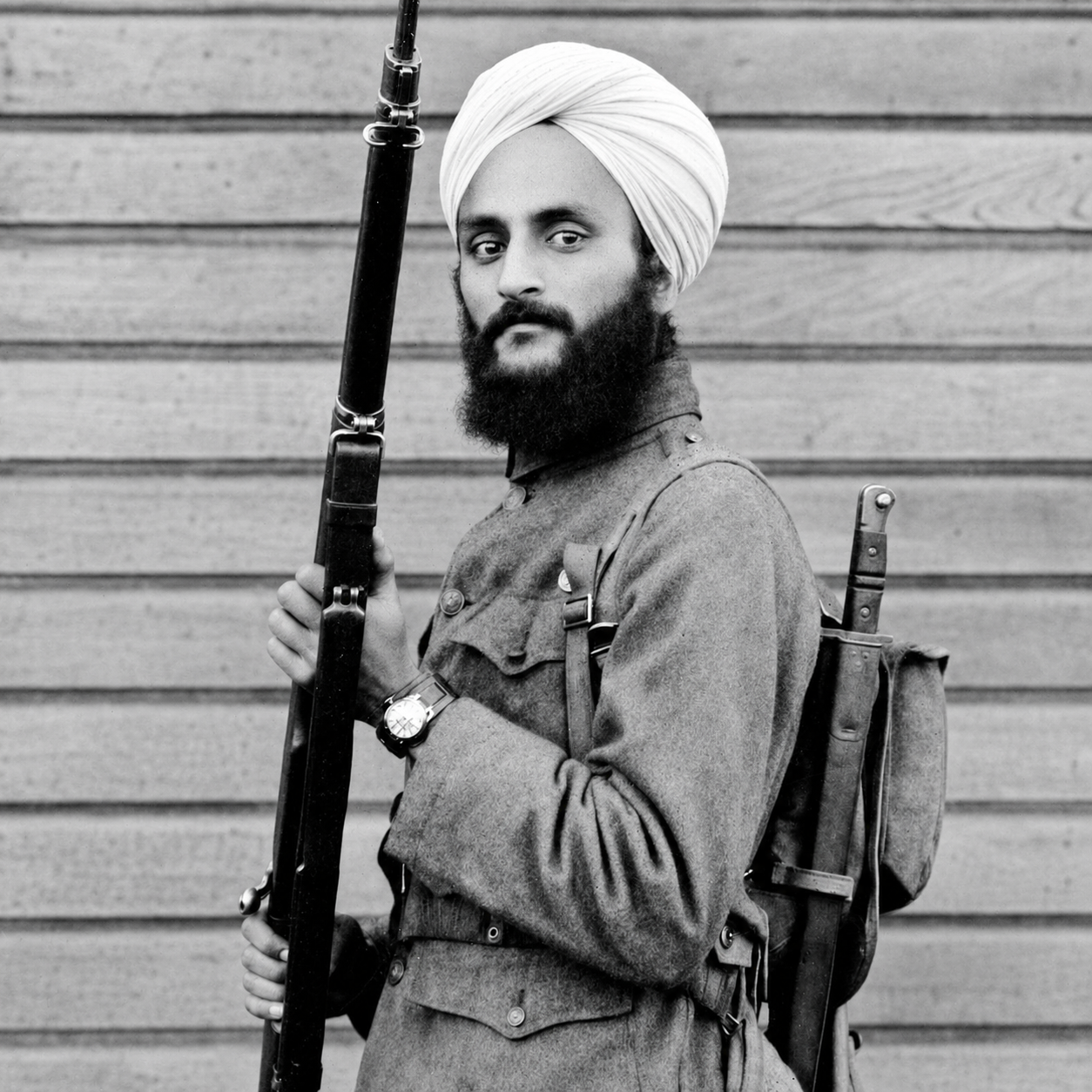
Bhagat Singh Thind, a U.S. Army veteran who served during World War I, fought unsuccessfully for the right to retain American citizenship.
Indian Americans did not succeed alone; no community does. We benefited from the civil rights struggles that came before us, particularly the sacrifices of Black Americans who challenged discriminatory laws and expanded the meaning of equal citizenship. The doors through which later immigrants walked were opened, in part, by people who marched, organized, suffered, and refused to accept exclusion as permanent.
Remembering that history should deepen both our gratitude and our responsibility to stand with others when their rights or dignity are threatened.
What India Gave Us
If America provided opportunity, India provided an inner compass.
Indian immigrants brought more than professional degrees: family photographs and recipes passed down through generations. They carried a civilizational inheritance: dharma, seva, respect for elders, devotion to family, reverence for knowledge, and the belief that success has meaning only when it serves something larger than oneself.
They brought the wisdom of the Vedas, Upaniṣads, Bhagavad Gītā, Rāmāyaṇa, and other sacred traditions. They brought Jain ahimsa, Sikh seva, Buddhist compassion, and the many devotional streams that have enriched Indian civilization. They brought music, dance, literature, philosophy, festivals, and regional customs shaped over thousands of years.
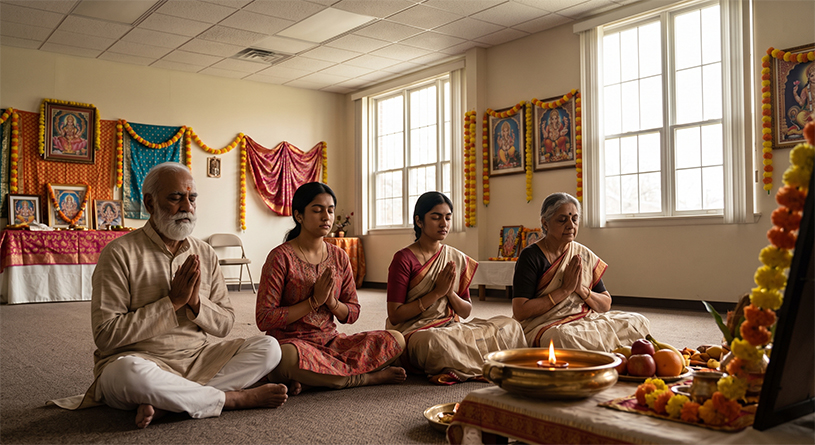
Not every Indian-American family practices these traditions in the same way. Some are deeply religious; others are cultural or secular. Some speak an Indian language fluently; others know only a few words. Some visit India every year; others know it mainly through stories told by parents and grandparents.
Still, certain values endure.
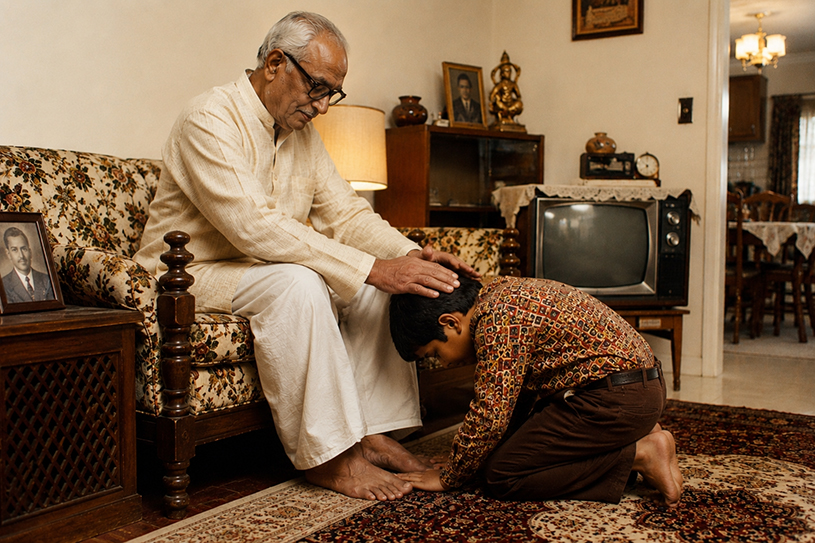
We see them when children touch the feet of their grandparents. We see them when families prepare meals for a neighbor facing illness. We see them in temple volunteers who serve without expecting recognition, physicians who offer free health screenings, students who tutor younger children, and business owners who quietly support community causes.
We also see them in the importance placed on education. For many immigrant parents, education was not simply a route to a good salary. It was a form of security that could not be confiscated at a border. Degrees, knowledge, and discipline were possessions no government could easily take away.
The results are visible throughout the United States. Indian Americans now serve as physicians, educators, engineers, scientists, entrepreneurs, attorneys, artists, journalists, public officials, and members of the armed forces. They lead corporations, universities, and nonprofit organizations. They conduct lifesaving research, create jobs, develop new technologies, and care for patients in large cities and small towns.
Yet numbers, titles, and salaries alone cannot measure the community’s contribution. Its real story is also found in everyday acts of service: the rural doctor answering a late-night call, the teacher encouraging a struggling student, the motel owner offering a newcomer a first job, or the young volunteer packing meals for families she may never meet.
These are not exclusively Indian values or American values. They are human values strengthened by both traditions.
“250 @ 250”: Recovering a History Too Often Overlooked
As the United States commemorates its 250th anniversary, Indiaspora—a nonprofit network of global Indian leaders—has launched an important initiative titled “250 @ 250: The Indian American Story.”
The project presents a curated collection of 250 moments illustrating the depth, diversity, and influence of Indians and Indian Americans in the United States. Together, these moments remind us that the Indian-American story did not begin with the highly skilled immigration wave that followed the 1965 Immigration and Nationality Act. Its roots extend much further into American history.
One of the earliest moments highlighted by Indiaspora dates to 1790, when an unnamed “man from Madras” arrived in Salem, Massachusetts. Documented by Reverend William Bentley, he became the first recorded direct, non-coerced commercial and cultural visitor from India to New England. His presence was connected to the growing maritime trade between New England and the Indian subcontinent.
Another little-known story is that of Conjee Rustomjee Couhujee Bey, who served in the U.S. Navy under the name Antonio Gomez during the Civil War. His service places a person of Indian origin in an American military uniform decades before large-scale Indian immigration began.

Three generations of Sikh-Americn medical professionals in a modern clinic.
The collection also remembers the Bengali peddlers, silk traders, and laborers who built lives in neighborhoods such as Harlem and the Lower East Side. Living within a racially divided America, some formed families with African American and Latina women, creating communities that crossed ethnic and cultural boundaries long before the term “Indian American” became familiar.
In 1886, Anandi Gopal Joshi graduated from the Woman’s Medical College of Pennsylvania, becoming the first Indian woman to earn a Western medical degree in the United States. She was only 21. Her accomplishment anticipated the profound role that Indian and Indian-American women would later play in American medicine.
The project also highlights Swami Vivekananda’s historic appearance at the 1893 World’s Parliament of Religions in Chicago. His message of religious tolerance and universal acceptance introduced Hindu philosophy to a large American audience and helped establish a lasting place for Vedanta and Hindu thought in this country.
Other moments document the contributions of early farmers and entrepreneurs; the establishment of Hindu temples, Sikh gurdwaras, and other houses of worship; the growth of Indian-American physicians’ organizations; the spread of Indian cuisine; the influence of artists and musicians; and the rise of Indian-origin leaders in corporate America.
Indiaspora’s collection performs an important service: it replaces a narrow success story with a fuller human history.
The Indian-American journey was not simply a straight line from immigrant student to doctor, engineer, or chief executive. It included sailors, soldiers, farmers, peddlers, cooks, religious teachers, writers, activists, and families whose names have largely disappeared from popular memory. It contained remarkable achievement but also discrimination, sacrifice, loneliness, and struggle.
 By gathering these stories, Indiaspora has created more than a commemorative timeline. It has helped place Indian Americans where they belong—not outside the American story, looking in, but inside it, participating in the country’s development across generations.
Full credit and acknowledgment: The historical moments and project description in this section are drawn from “250 @ 250: The Indian American Story,” researched, curated, and presented by Indiaspora. Desh-Videsh gratefully acknowledges Indiaspora for preserving and sharing this important history.
From Guests to Stakeholders
For many years, Indian immigrants behaved as though they were guests in America.
They worked hard, paid taxes, avoided controversy, and told their children to concentrate on their education. Politics was considered divisive or unsafe. Public advocacy was left to someone else. Some believed professional achievement alone would guarantee acceptance.
The second and third generations have begun to change that approach.
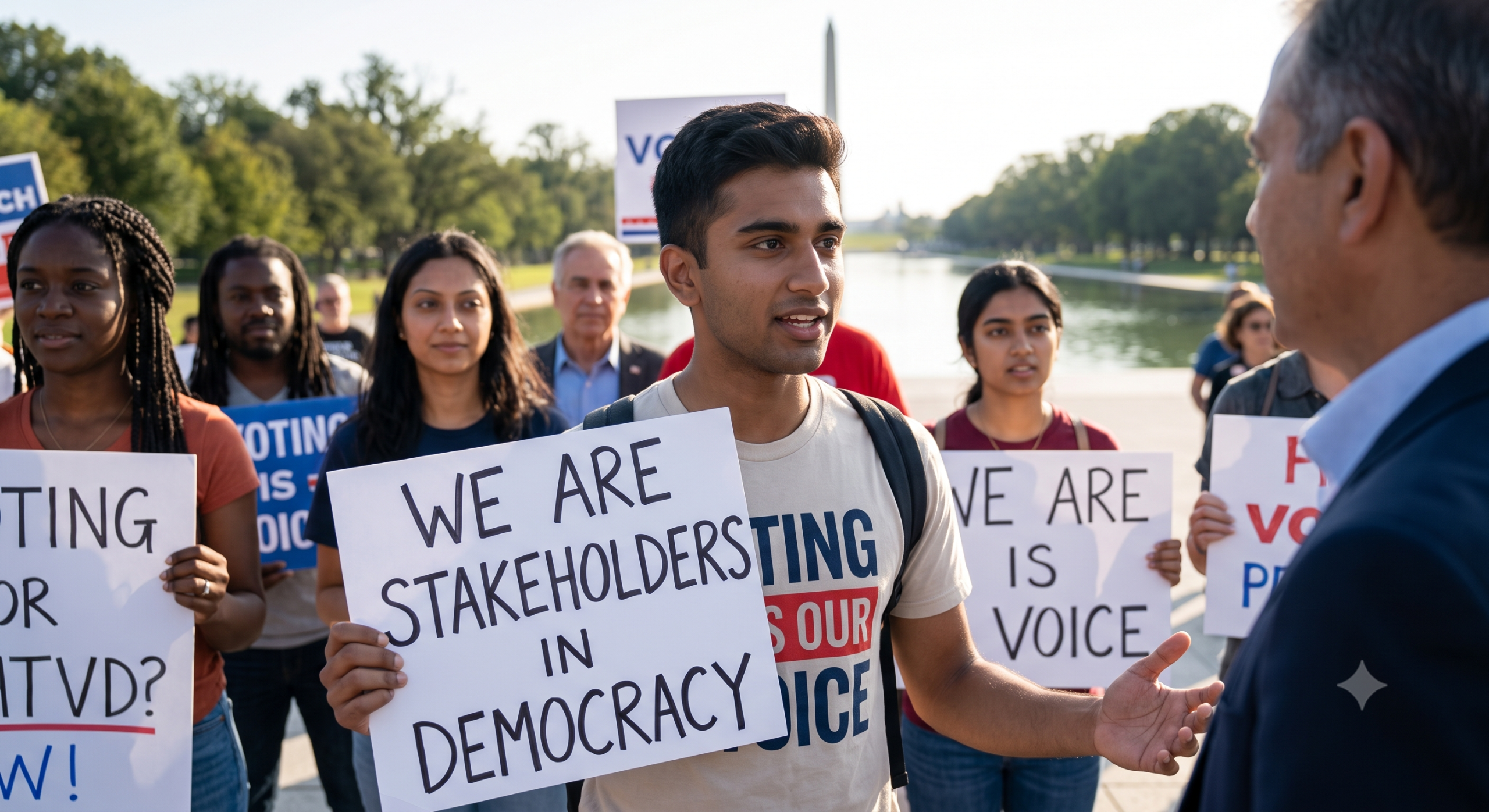
Young Indian Americans increasingly understand that citizenship requires participation. They vote, organize, run for public office, serve on school boards, join the military, advocate for policy changes, and speak openly about discrimination. They do not see themselves as temporary visitors. America is their country, and they expect to have a voice in shaping its future.
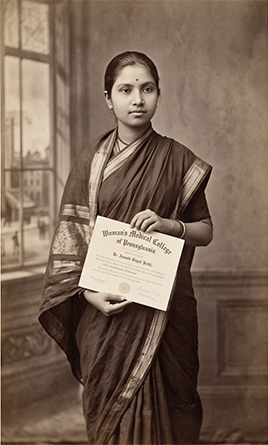
A historical portrait of Dr. Anandi Gopal Joshi with her degree, 1886
That confidence is healthy, but it brings a demanding question: What kind of voice will we bring?
Will Indian Americans participate only when an issue affects visas, taxes, business interests, or relations with India? Or will we defend democratic principles consistently, including when another community is under attack?
The true test of political maturity is not whether we can gain access to powerful people. It is whether we use our influence responsibly.
At a time when public debate is becoming increasingly hostile, Indian Americans must resist the temptation to import every political division from India into American institutions. We may disagree strongly about governments, political parties, religious questions, and social policies. But disagreement should not turn temples, associations, professional organizations, and family gatherings into permanent battlegrounds.
Our community is too diverse to speak with one political voice—and it should not try.
Indian Americans are Hindu, Muslim, Sikh, Christian, Jain, Buddhist, Jewish, Zoroastrian, and nonreligious. They trace their roots to every region of India and speak dozens of languages. They include recent immigrants, descendants of early settlers, professionals, laborers, entrepreneurs, students, and multiracial families.
That diversity is not a weakness to overcome. It is a democratic strength to preserve.
The Hyphen Is a Bridge
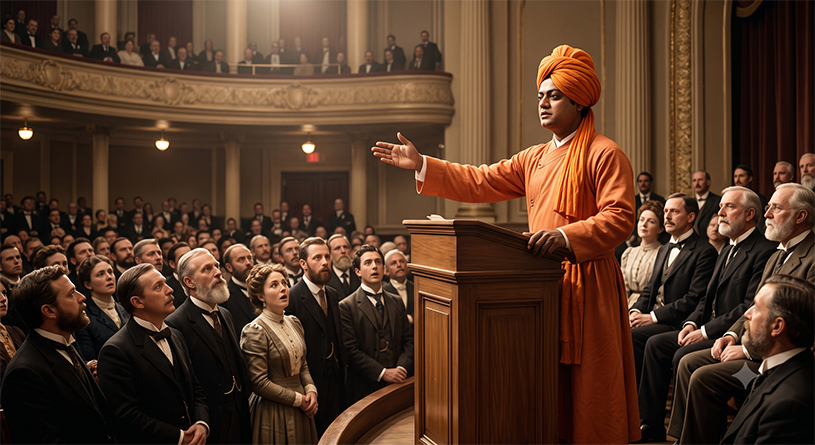
Swami Vivekananda addresses the World’s Parliament of Religions, 1893.
The term “Indian-American” is sometimes treated as though the hyphen represents divided loyalty. In truth, it represents connection.
“The hyphen does not ask us to choose between two countries. It tells the story of how one identity has enriched the other.”
An Indian-American child may eat pizza with friends on Friday, attend a pūjā on Saturday, volunteer at a food bank on Sunday, and begin Monday morning reciting the Pledge of Allegiance at school. She may enjoy Bollywood music and American football, speak English more comfortably than her parents’ language, and still feel a powerful connection to grandparents living thousands of miles away.
There is nothing confused about that identity. It is the natural experience of a multicultural America.
The first generation often worried that its children would become “too American.” The children sometimes felt they were not “Indian enough.” With time, many families discovered that identity is not a mathematical equation in which becoming more American requires becoming less Indian.
 A young person can honor Diwali and Independence Day, appreciate the Bhagavad Gītā and the U.S. Constitution, celebrate Holi and Thanksgiving, and feel entirely at home in both worlds.
Indian-American life has already changed both cultures. Yoga and meditation have entered the American mainstream. Indian food is found far beyond major cities. Diwali is recognized by schools, legislatures, and public institutions. Indian music, fashion, cinema, and literature have become part of America’s cultural landscape.
Influence also travels in the other direction. Indian families have absorbed American ideas about individual choice, gender equality, open debate, and civic participation. Younger generations are raising difficult but necessary questions about caste, patriarchy, mental health, marriage, and personal freedom. Some of these conversations make elders uncomfortable, but they are also helping our traditions respond to a changing world.
“A living culture does not survive by freezing itself in the past. It survives by carrying its deepest values into the future.”
Freedom Is More Than a Flag
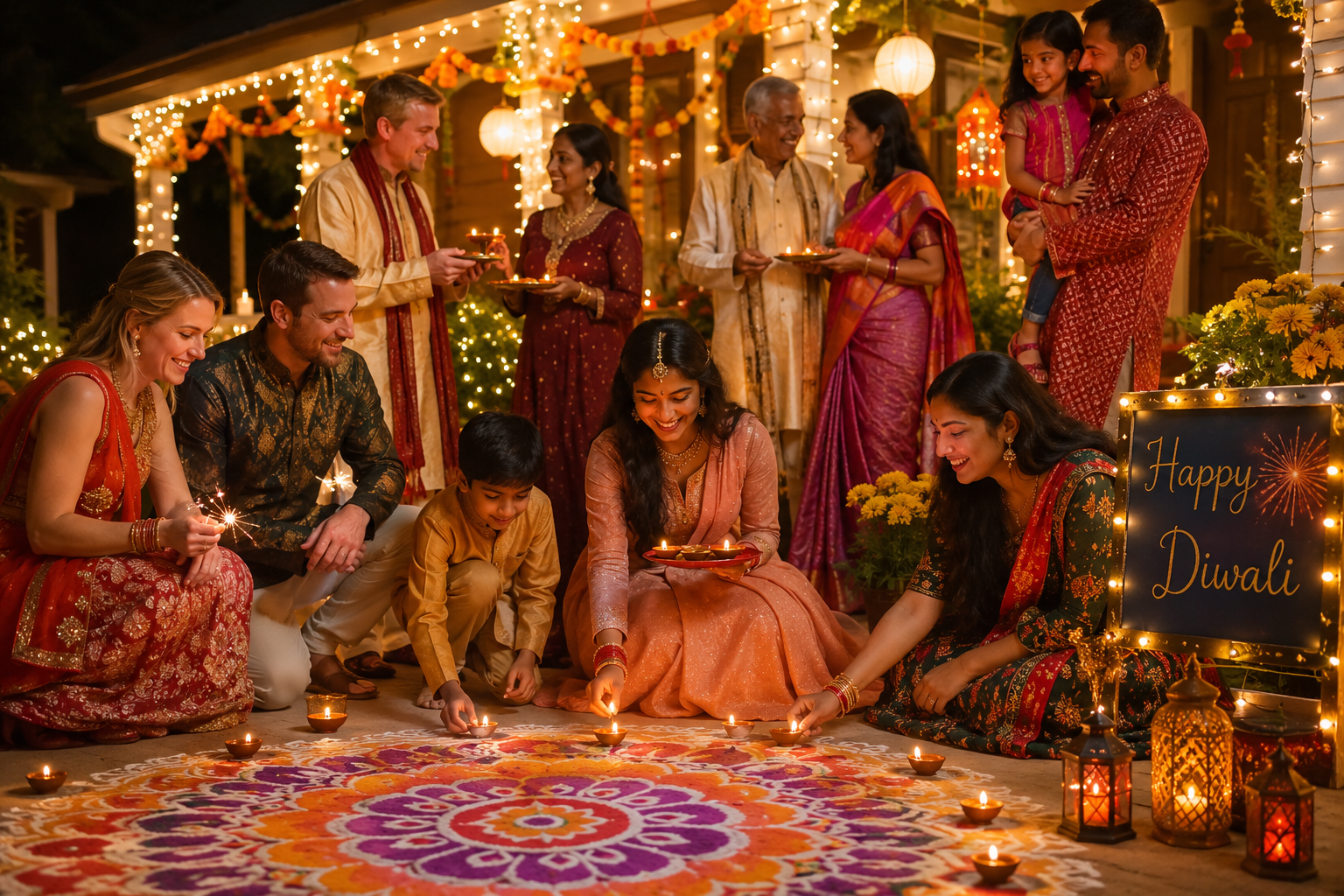 National anniversaries naturally invite celebration. There will be parades, patriotic songs, flag-hoisting ceremonies, fireworks, and speeches. These rituals matter. They give visible expression to our gratitude and belonging.
But freedom cannot be measured by the size of a flag or the volume of a slogan.
Freedom asks more of us.
It asks whether a child from a poor family receives a good education. It asks whether a woman can walk without fear and make decisions about her life. It asks whether religious minorities can worship without intimidation. It asks whether citizens can criticize their government without being treated as enemies. It asks whether immigrants are valued only for their labor or welcomed as full human beings.
Both India and America must continue facing these questions.
Patriotism should never require silence about a nation’s failures. Mature love of country is honest. We correct what we love because we want it to live up to its highest ideals.
Americans who confronted slavery, segregation, and discrimination were not betraying America. They were insisting that America honor its promise. Indians who challenge corruption, inequality, communal hatred, or injustice are not weakening India. They are asking the republic to remain faithful to the freedom for which earlier generations sacrificed.
For Indian Americans, that principle must apply equally to both nations. Love without honesty becomes sentimentality. Patriotism without accountability can become dangerous.
The Next Chapter Belongs to Our Children

From curry to burgers, every shared meal is another chapter in the IndianAmerican story.
The pioneers of the Indian-American community built temples, businesses, cultural centers, professional associations, and media organizations. They gave their children opportunities they themselves did not have.
The next generation must decide what to do with that inheritance.
Will our institutions remain relevant to young people born and raised in America? Will our community measure success only by income, degrees, and prestigious job titles? Or will we also value teachers, artists, social workers, journalists, public servants, and people who choose less conventional paths?
Will we teach children only how to perform a dance for India Day, or will we help them understand the history behind the freedom they are celebrating? Will we expect them to recite prayers without explaining their meaning? Will we tell them to be proud of India while leaving no room for their questions?
Young Indian Americans do not need a perfect India to feel proud of their heritage. They need an honest India—ancient, diverse, wounded, creative, complicated, and still evolving.
They do not need a flawless America in order to love their country. They need an America willing to examine its history and continue widening its circle of belonging.
Our responsibility is not to hand the next generation a fixed identity. It is to provide them strong roots, moral confidence, and the freedom to grow.
One Indian-American Story
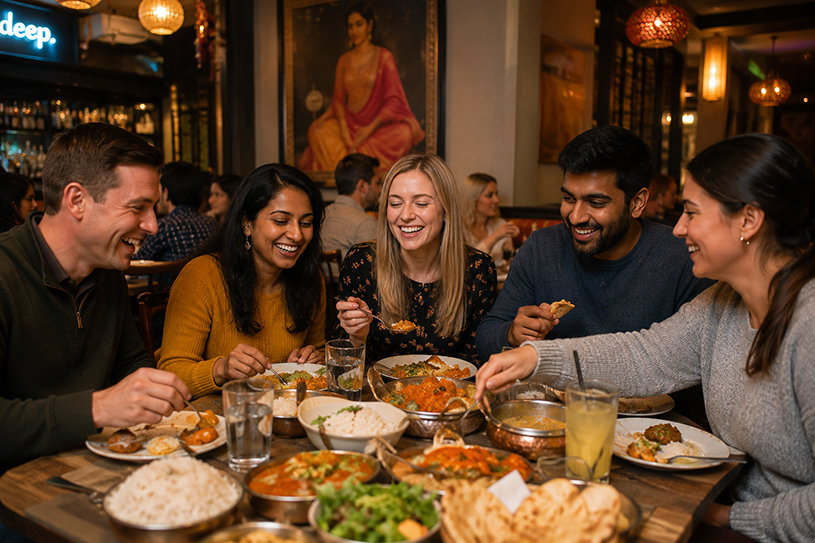
One table, many traditions—sharing India’s flavors
India’s 80th Independence Day and America’s 250th anniversary offer more than an unusual alignment of dates. Together, they create a historic moment of reflection for every Indian American.
We are the beneficiaries of two freedom movements.
From India, we inherited the lesson that moral courage can confront even the mightiest empire. From America, we inherited the proposition that rights do not belong only to rulers or inherited classes but to ordinary people.
From India, we learned that unity need not erase diversity. From America, we learned that people from across the world can become part of a shared national story.
From both nations, we learned that democracy is a continuous process. Both nations taught us that democracy is an ongoing process.
The Indian-American community now stands at a new stage of its journey. We are no longer invisible newcomers. Our numbers, accomplishments, and influence have grown. With that success comes an obligation: to serve, participate, build bridges, and protect the democratic freedoms that made our story possible.
This August, as we raise the American and Indian flags together at community gatherings, let us recognize them as more than just two national symbols. Together at community gatherings, let us see more than two national symbols.
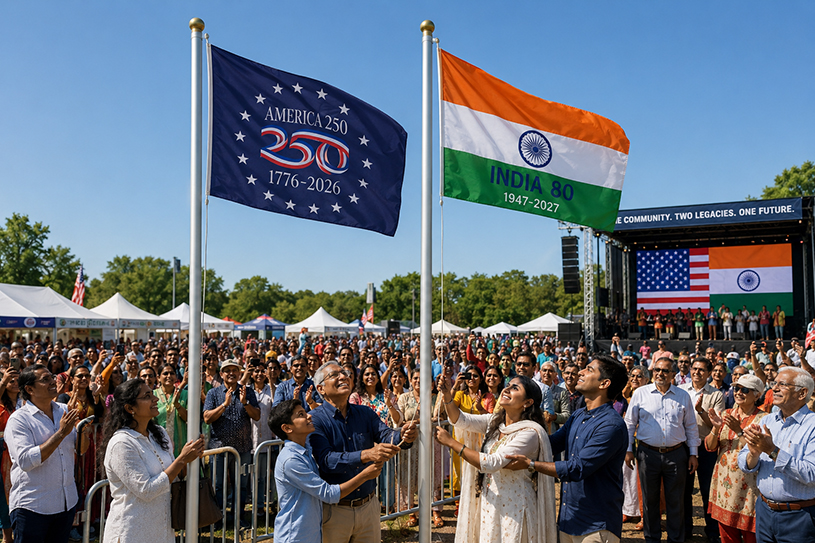
A simultaneous flag-raising during a community dual-anniversary celebration in the summer of 2026.
Let us remember the generations who struggled beneath each of them. Let us honor the immigrants who crossed oceans with little more than courage and hope. Let us thank the country that welcomed our labor and ambition and the civilization that gave us our cultural and spiritual foundation.
Most importantly, let us ask what we will contribute to the next chapter.
Two hundred and fifty years after America declared its independence, and on India’s 80th Independence Day, the work of liberty continues. It continues in courtrooms and classrooms, voting booths and houses of worship, family conversations and community institutions. It continues whenever someone chooses service over selfishness, dialogue over hatred, and courage over silence.
We may have come to America from India, or we may have been born here carrying India within us. Either way, we belong to a remarkable story—a story made possible by two nations, two journeys toward freedom, and one community connecting them.
Two flags. Two anthems. Two beloved nations.
And one Indian-American heart, grateful enough to hold both.
About the Author:
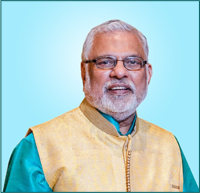 A software engineer by profession, Indian culture enthusiast, ardent promoter of Hinduism, and a cancer survivor, Raj Shah is a managing editor of Desh-Videsh Magazine and co-founder of Desh Videsh Media Group. Promoting the rich culture and heritage of India and Hinduism has been his motto ever since he arrived in the US in 1969.
He has been instrumental in starting and promoting several community organizations such as the Indian Religious and Cultural Center and International Hindu University. Raj has written two books on Hinduism titled Chronology of Hinduism and Understanding Hinduism. He has also written several children books focusing on Hindu culture and religion.