Why More Couples Are Choosing to Celebrate Pithi, Haldi, and Mehendi Together
Pithi, Haldi, and Mehendi have always been among the most cherished pre-wedding rituals in Indian weddings. Traditionally, these ceremonies were celebrated separately, with the bride’s family hosting their own functions and the groom’s family doing the same at their home or venue. The rituals may have been similar, but the experiences were completely different.
Today, however, a noticeable shift is taking place. More couples are choosing to celebrate these ceremonies together, bringing both families under one roof before the wedding day. From intimate family weddings to lavish destination celebrations, joint Pithi, Haldi, and Mehendi functions are becoming increasingly common.
What’s driving this change is not a desire to simplify weddings. If anything, families are investing more into these events than ever before. The appeal lies in creating shared experiences, stronger family connections, and memories that everyone gets to be a part of together.
Sharing the Journey, Not Just the Wedding Day
For many couples, one of the biggest advantages of a combined celebration is being able to experience these moments together.
In a traditional setup, the bride and groom would spend these important days apart, surrounded by their respective families. They would only hear stories later about what happened at the other ceremony or see it through photographs and videos.
A joint celebration changes that completely. The couple gets to laugh together, participate in the same rituals, interact with both families, and enjoy the excitement side by side. It allows them to share the entire pre-wedding journey rather than coming together only on the wedding day.
Bringing Families Together Before the Formalities Begin
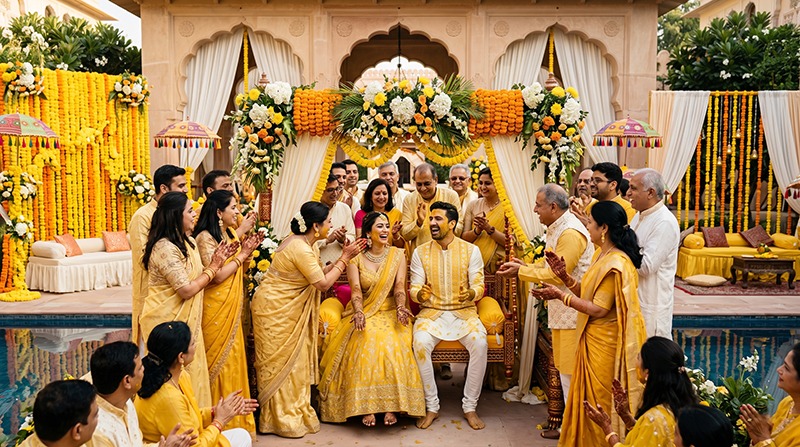 Weddings are often described as the union of two families, yet traditionally many relatives would not properly meet until the wedding ceremonies themselves.
Combined celebrations create opportunities for those connections to happen much earlier. Family members can spend time together in a relaxed setting without the formal schedule of the wedding day. Conversations flow naturally, introductions feel less rushed, and by the time the wedding arrives, many of the initial barriers have already disappeared.
This early bonding often helps create a warmer and more comfortable atmosphere throughout the wedding celebrations.
More People, More Energy, More Celebration
There is something special about having everyone together in one place.
When both families celebrate separately, the excitement remains limited to each side. Bringing everyone together creates a completely different atmosphere. The guest list becomes larger, the dance floor becomes more energetic, and every ritual feels like a bigger celebration.
The music is louder, the laughter is shared by more people, and the excitement builds collectively. Instead of two separate events happening simultaneously, there is one large gathering filled with enthusiasm from both sides.
Creating Opportunities for Genuine Family Bonding
Many guests attending a wedding may only meet once in their lives.
A combined Pithi, Haldi, or Mehendi gives relatives from both sides an opportunity to spend meaningful time together before the main wedding events. Cousins become friends, elders exchange stories, and families begin creating connections that extend beyond the wedding itself.
For couples, this is often one of the most rewarding aspects of the trend. The people they care about are not simply attending the wedding—they are getting to know one another and becoming part of a larger family network.
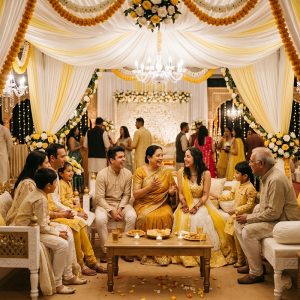 The Fun of Friendly Bride vs Groom Family Rivalries
One of the unexpected reasons these celebrations have become so popular is the playful interaction they encourage.
Whether it’s dance-offs, games, team challenges, or light-hearted teasing, bringing both families together naturally creates opportunities for fun competition. The bride’s side and groom’s side cheer for one another, challenge each other, and create moments that often become some of the most memorable stories from the wedding.
These playful interactions help break the ice and turn strangers into familiar faces long before the wedding ceremony begins.
Beautifully Coordinated Celebrations
Joint ceremonies also allow couples to create a more cohesive experience.
Matching colour themes, coordinated outfits, unified décor concepts, and shared entertainment bring a sense of continuity to the celebrations. The events feel connected rather than separate, creating a stronger overall wedding experience.
Photographers and videographers also benefit from having both families, as well as the couple, together in one setting. The result is a collection of candid moments and group memories that tell a complete story of the wedding journey.
A Natural Fit for Destination Weddings
The trend is particularly visible in destination weddings, where families and guests often travel from different cities or countries to attend.
Since everyone is already gathered in one location for several days, it feels natural to celebrate together. Rather than splitting guests into separate events, couples can maximize the time spent with loved ones and make every gathering part of the larger wedding experience.
For travelling families, these extra moments together often become just as meaningful as the wedding itself.
Tradition Remains, But the Experience Is Evolving
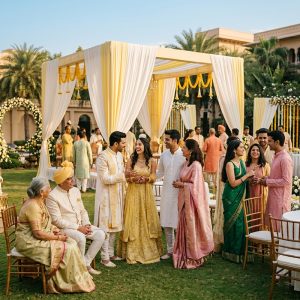 What’s interesting about this trend is that the rituals themselves have not changed.
Turmeric is still applied with blessings. Mehendi still carries cultural and symbolic significance. Pithi continues to be an important part of wedding traditions. The customs remain rooted in heritage and family values.
What has changed is the way people experience these rituals.
Instead of celebrating as two separate groups preparing for a wedding, many families now prefer to celebrate as one community from the very beginning. The focus has shifted from hosting individual ceremonies to creating shared memories.
And perhaps that is why combined Pithi, Haldi, and Mehendi celebrations continue to grow in popularity. They allow couples to spend more time together, give families a chance to bond before the wedding, and turn already meaningful traditions into experiences that everyone can enjoy together.