
The Great Bollywood Bias: When National Pride Becomes a Crime
By Raj Shah
The extraordinary success of films like Dhurandhar 1 and Dhurandhar 2 has reignited an important debate within Indian cinema—not just about storytelling, but about hypocrisy in Bollywood’s review ecosystem and influencer culture.
Despite record-breaking global earnings—estimated at over $240 million for the franchise combined—these films have faced repeated accusations of being “propaganda.” Yet, when we examine Bollywood’s history, a deeper contradiction emerges.
For decades, films that portrayed narratives perceived as anti-Hindu or sympathetic to Pakistan were rarely subjected to the same level of scrutiny. They were often praised as “bold,” “progressive,” or “realistic.”
This raises a fundamental question:
Why are some narratives celebrated while others are questioned?
The Success of Dhurandhar vs the Reaction It Received
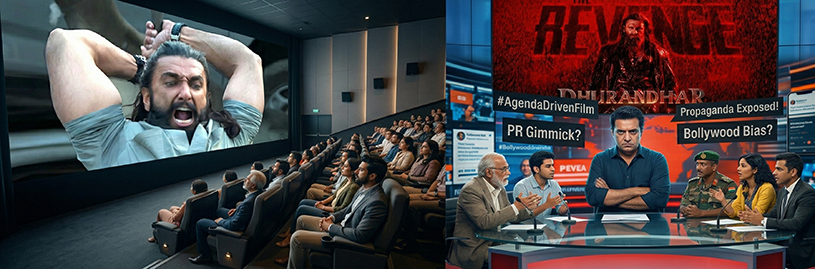
Both Dhurandhar 1 and Dhurandhar 2 achieved unprecedented commercial success. Packed theatres, strong overseas collections, and massive audience engagement demonstrated one clear fact:
Audiences connected deeply with these stories.
Yet, instead of celebrating this connection, sections of critics and influencers focused on labeling the films as “agenda-driven” or “propaganda.”
This reaction becomes even more puzzling when placed in historical context.
A Major Shift: The Rise of Nationalism and Patriotism in Bollywood
 One of the most significant transformations in recent years is the shift in audience preference toward nationalism and patriotism.
For decades, Bollywood was dominated by romance, family drama, and escapist storytelling. Today, audiences are increasingly drawn to films that emphasize the following:
- National pride
- Cultural identity
- Historical legacy
- Real-life heroes
This shift reflects deeper societal changes.
Examples of Nationalism and Patriotism in Bollywood
Several films have successfully captured this sentiment:
Military and Defense-Based Films
- Uri: The Surgical Strike
- Shershaah
- Border
Historical Narratives
- Tanhaji: The Unsung Warrior
- Kesari
Biographical Stories
- Sam Bahadur
- MS Dhoni: The Untold Story
Social Patriotism
- Pad Man
These films demonstrate that patriotism is not limited to war—it can also be expressed through social progress, innovation, and service to the nation.
Why This Shift Matters
 India today is more globally connected and culturally confident than ever before. The younger generation is more aware of national issues and more engaged in discussions around identity and pride.
The global Indian diaspora also plays a role, seeking stronger cultural connection through cinema.
As a result, audiences are naturally gravitating toward stories that reflect the following:
who they are, where they come from, and what they stand for.
The Trigger: When Patriotism Becomes Controversial
The controversy surrounding Bollywood’s evolving narrative gained momentum following an incident involving actor Arjun Rampal. While accepting an award for his role in Dhurandhar, he concluded his speech with the phrase “Bharat Mata ki Jai.”
Traditionally considered a simple expression of patriotism, this statement quickly became politicized.
Commentators argued that such expressions—and the films associated with them—signaled a growing ideological shift in Bollywood.
What was once a natural articulation of national pride was reframed as a political statement.
This reaction raises an important question: why has patriotism itself become a subject of suspicion?
The answer lies not in the phrase itself, but in the broader context of a changing cinematic landscape—one where narratives of nationalism, identity, and historical reflection are gaining prominence.
Bollywood’s Past: Selective Sensitivity
 Bollywood has never been apolitical. It has always reflected the mood, ideology, and narratives of its time. However, the reaction to different kinds of narratives has not been consistent.
Films Perceived as Sympathetic to Pakistan
Several Bollywood films have portrayed Pakistan or Pakistani characters in a sympathetic or humanized manner—often emphasizing shared culture and emotional bonds.
Examples include:
- Veer-Zaara – A cross-border love story portraying Pakistan in a deeply emotional and positive light
- Raazi—While patriotic, it also humanized Pakistani characters and their perspectives
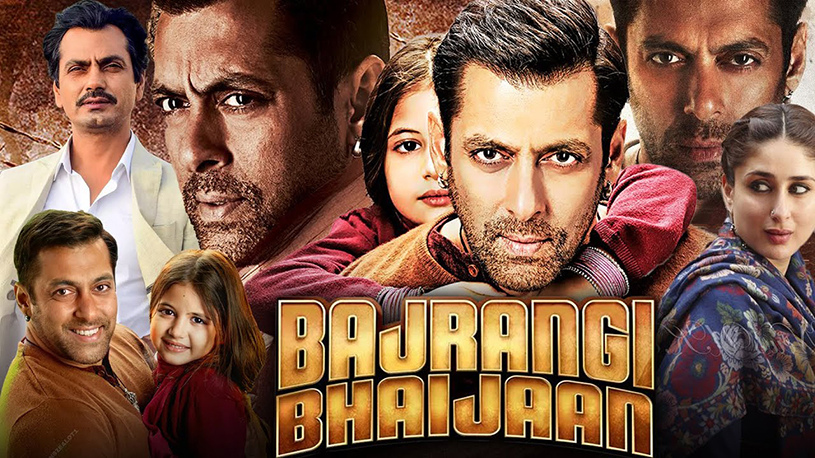
- Bajrangi Bhaijaan – Highlighted compassion across borders, showing Pakistan in a humane and empathetic way
These films were widely appreciated, celebrated internationally, and rarely labeled as propaganda.
In fact, they were praised for:
- Promoting peace
- Encouraging cross-cultural understanding
- Humanizing the “other side”
There was little outrage, no widespread labeling, and no ideological scrutiny.
Films Criticized as “Anti-Hindu” by Sections of Audience
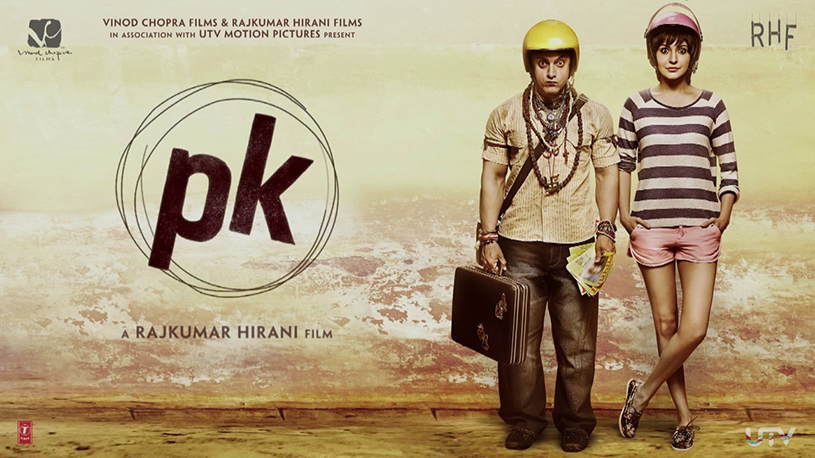 There have also been films that faced criticism from certain sections of society for allegedly portraying Hindu traditions, beliefs, or institutions in a negative or satirical light.
Examples often cited in public discourse include:
- PK—Questioned organized religion, with many viewers feeling Hindu practices were disproportionately targeted
- Oh My God! – Challenged religious institutions and commercialization of faith
- Haider – Focused on Kashmir with a narrative some felt leaned heavily against Indian state forces
Despite controversies, these films were largely defended by critics and influencers as:
- “Thought-provoking”
- “Courageous”
- “Necessary conversations”
Again, the dominant narrative was one of appreciation—not dismissal.
The Silence of the Past
 What makes the current outrage particularly striking is the relative silence that preceded it.
For decades, Bollywood produced films that leaned toward certain narratives—some of which romanticized Pakistan, minimized complex geopolitical realities, or overlooked aspects of Hindu experiences.
Yet during this period, there was little to no widespread criticism from the same voices that are now raising concerns.
There were no major debates about ideological imbalance, no accusations of propaganda, and no warnings about cultural distortion.
This contrast highlights a critical inconsistency: outrage appears to depend not on the presence of bias, but on the direction of that bias.
The Forgotten History of Real Control
Perhaps the most significant gap in today’s discourse is the lack of acknowledgment of Bollywood’s historical relationship with political power.
In earlier decades, political influence on artistic expression was far more direct—and often coercive. Artists faced censorship, imprisonment, and bans for dissenting views.
Ironically, those warning about alleged political influence today remain largely silent about a period when state control over the film industry was far more direct and coercive.
In 1949, lyricist Majrooh Sultanpuri was imprisoned for writing a poem critical of Nehru. He refused to apologize and spent nearly two years in jail. This was not censorship through criticism—it was censorship through incarceration.
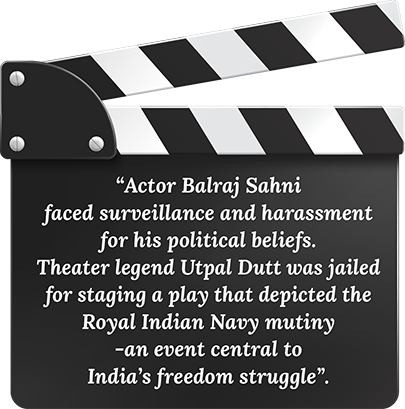
Actor Balraj Sahni faced surveillance and harassment for his political beliefs. Theater legend Utpal Dutt was jailed for staging a play that depicted the Royal Indian Navy mutiny—an event central to India’s freedom struggle.
During the Emergency (1975–77), the control became even more explicit. Singer Kishore Kumar had his songs banned from All India Radio because he refused to perform at a government event. This was not a subtle influence—it was outright punishment.
These are not isolated incidents. They represent a pattern where political power directly shaped artistic expression, often through fear and coercion.
Compared to that history, today’s environment—where criticism unfolds through debate rather than suppression—represents a far more open landscape.
The “Secular Consensus” and Its Limits
 For decades, Bollywood operated within what many describe as a “secular consensus.”
While the term suggests inclusivity, in practice it often meant adherence to certain narrative boundaries.
Stories that highlighted Hindu experiences, historical grievances, or sensitive political issues were often softened, avoided, or framed cautiously.
Over time, this created an unwritten rulebook.
Today, that rulebook is being challenged.
The Collapse of Narrative Monopolies
The most significant change in Bollywood today is not the emergence of political cinema—it has always existed.
What has changed is the distribution of narrative control.
The industry is no longer dominated by a single ideological framework.
New filmmakers, new platforms, and new audiences are contributing to a more diverse storytelling ecosystem.
What some critics interpret as a takeover is, in reality, a diversification.
A New Era of Audience-Driven Cinema
The success of films rooted in nationalism, history, and identity reflects a broader cultural shift.
Audiences are increasingly drawn to stories that resonate with their lived experiences and evolving sense of identity.
This trend is not imposed—it is organic.
The power has shifted from gatekeepers to viewers.

Market Demand vs. Political Narrative
Cinema, at its core, is driven by audience response. Films succeed because they resonate—not because they are “ordered” into popularity. The success of films like The Kashmir Files reflects a growing appetite among audiences for stories rooted in history, identity, and national consciousness.
To attribute this shift solely to government influence is to deny agency to millions of viewers. It also ignores a basic principle of the entertainment industry: audiences evolve. Preferences change. Narratives shift.
The decline of certain stars or genres, including the long dominance of actors like Shah Rukh Khan, Salman Khan, and Aamir Khan, is not evidence of ideological bias—it is a natural progression influenced by age, changing tastes, and storytelling formats.
To frame audience choices as political statements is both reductive and misleading.
A. R. Rahman’s Comment and the Larger Debate
The recent comment by A. R. Rahman describing parts of the film industry as becoming “communal” adds another layer to this discussion.
While his remark sparked debate, it also highlights the growing perception that cinema is increasingly being viewed through the lens of identity and ideology.
However, the success of films like Dhurandhar suggests a different reality:
Audiences are not as divided as the discourse suggests.
They respond to emotion, storytelling, and relatability—not just ideology.
The Spy Movie Double Standard
By definition, all mainstream spy and action films show one perspective from the hero’s side. The audience experiences events through them.
And yes, Pakistan’s spy films cast India as the villain. One of their biggest blockbusters, Waar (2013), revolves around Indian agents planning a terror attack in Pakistan. They go as far as depicting extremist Taliban outfits being secretly funded by India. To their audience, that’s a gripping thriller.
In the West, James Bond has spent more than sixty years saving the world for the British Crown, mostly through impossible stunts and a fair bit of old-school sexism. Mission Impossible’s Ethan Hunt regularly presents the CIA as the thin line between civilisation and chaos. Do we label Top Gun: Maverick as U.S.it. military propaganda in popular discourse? No, the reviews mostly admire the cinematography and enjoy the adrenaline rush in these films. So why deny Dhurandhar the same courtesy?
The Double Standard Becomes Clear
Now compare this with the reaction to films like Dhurandhar 1 and Dhurandhar 2.
- When a film promotes cross-border empathy → it is praised
- When a film questions religious structures → it is called bold
- But when a film emphasizes national security or strong patriotism → it is labeled propaganda
This is where the perception of hypocrisy arises.
The issue is not that criticism exists—criticism is essential for any art form.
The issue is that: Criticism is not applied equally.
The Role of Influencers in Amplifying Bias
In today’s digital era, influencers play a major role in shaping public opinion.
However, instead of offering balanced perspectives, many influencers:
- Echo dominant narratives
- Avoid controversial positions
- Align with trends to maximize engagement
When films like Dhurandhar 2 release, influencer reactions often become polarized:
- Extreme praise from one side
- Immediate dismissal from another
Very few attempt nuanced analysis.
This creates an environment where: Narratives are amplified, not examined.
The “Propaganda” Label: A Selective Tool
The term “propaganda” has become central to this debate.
But its usage raises important questions:
- Why are some films labeled propaganda while others are not?
- Who decides what qualifies as propaganda?
- Is it based on content—or on agreement with the content?
Every film, by its nature, reflects a perspective.
- A love story reflects a belief in romance
- A social drama reflects a viewpoint on society
- A political film reflects an ideological stance
If that is the case, then labeling only certain films as propaganda reveals more about the reviewer than the film.
The “Propaganda” Label: A Selective Tool
The term “propaganda” has become central to this debate.
But its usage raises important questions:
- Why are some films labeled propaganda while others are not?
- Who decides what qualifies as propaganda?
- Is it based on content—or on agreement with the content?
If that is the case, then labeling only certain films as propaganda reveals more about the reviewer than the film.
 Audience vs Critics: A Growing Divide
One of the most significant developments in recent years is the growing gap between critics and audiences.
Despite criticism:
- Dhurandhar 1 became a massive global success
- Dhurandhar 2 broke records within days
This indicates that audiences are:
- Thinking independently
- Trusting their own judgment
- No longer relying solely on critics or influencers
In many cases, controversy has even helped films, drawing more viewers curious to form their own opinions.
Industry Silence: The Quiet Hypocrisy
Another dimension of this issue is the selective silence within Bollywood itself.
When certain films are released:
- Celebrities openly praise them
- Social media is filled with endorsements
But when films like Dhurandhar face controversy:
- Many remain silent
- Few take clear positions
This selective engagement reflects:
- Fear of backlash
- Industry dynamics
- The risk of being associated with “controversial” narratives
But silence, too, is a form of response.
The Real Issue Is Not the Film—It Is the Reaction
The debate around Dhurandhar 1 and Dhurandhar 2 is not just about cinema. It is about fairness.
When some narratives are celebrated and others are dismissed,
when some films are defended and others are labeled,
when criticism is selective rather than consistent—
Hypocrisy becomes inevitable.
 The audience, however, has delivered its verdict.
With over $240 million in global box office success, the Dhurandhar franchise has proven that: Stories that resonate will find their audience—regardless of labels.
And perhaps that is the most important lesson for Bollywood today:
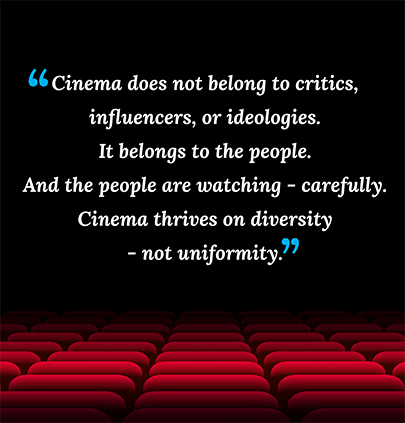
Cinema does not belong to critics, influencers, or ideologies.
It belongs to the people.
And the people are watching—carefully.
The Way Forward: Consistency and Credibility
If Bollywood is to maintain credibility, it must address this inconsistency.
Critics and influencers must:
- Apply the same standards to afilms.lms
- Separate personal bias from professional evaluation
- Encourage diverse storytelling rather than discouraging it
Because cinema thrives on diversity—not uniformity.
About the Author:
 Raj Shah Software by profession, Indian culture enthusiast, ardent promoter of hinduism, and a cancer survivor, Raj Shah is a managing editor of Desh-Videsh Magazine and co-founder of Desh Videsh Media Group. Promoting the rich culture and heritage of India and Hinduism has been his motto ever since he arrived in the US in 1969.
He has been instrumental in starting and promoting several community organizations such as the Indian Religious and Cultural Center and International Hindu University. Raj has written two books on Hinduism titled Chronology of Hinduism and Understanding Hinduism. He has also written several children books focusing on Hindu culture and religion.