
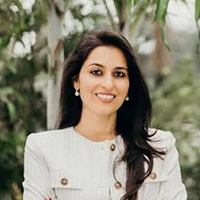
Pia Dandiya: Florida Roots, Indian Heritage, Congressional Ambition
 For Desh-Videsh Magazine readers in South Florida, Pia Dandiya’s campaign for Congress carries particular local significance. Born and raised in Palm Beach County by parents who immigrated from Jaipur, India, Dandiya has built a career spanning classroom teaching, school leadership, federal government service, and public sector work in the technology industry. Today, she is raising her family near the community where her parents established their lives more than three decades ago.
After winning the Democratic primary on August 18, Dandiya became her party’s nominee for Florida’s newly redrawn 22nd Congressional District. She faces Republican nominee Casey Askar in the November 3 general election. Recent polling and the Cook Political Report’s decision to move the race from “Lean Republican” to “Toss Up” have brought growing attention to this open-seat contest.
Her candidacy also adds to the story of Indian-American participation in public life. For families who have watched their children grow up in Florida, pursue an education, and move into positions of responsibility, her journey has a familiar beginning. It now places her before voters across a district that brings together communities with different backgrounds and needs.
A Family’s Journey from Jaipur to Jupiter
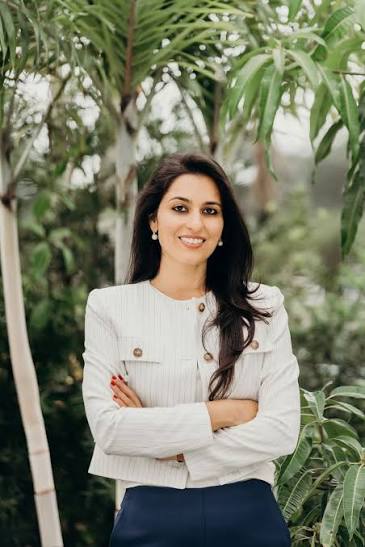
Dandiya’s parents moved from Jaipur to Jupiter, Florida, in the 1980s, seeking greater opportunity. Their daughter grew up in Palm Beach County, where education, hard work, and service were part of everyday family life.
Her father, Dr. Rohit Dandiya, has been in medical practice for more than 20 years. Her mother began a new chapter of her own at age 40, founding a Montessori school in Jupiter.
Pia now lives in Palm Beach Gardens with her husband, Navneet Alag, and their son, Sahib. Sahib attends the same school his grandmother founded. For the family, the school provides a connection between the life Pia’s parents built after arriving from India and the childhood she and her husband are creating for their son.
Living only miles from where she grew up gives Dandiya a personal connection to the area she hopes to represent. Her campaign emphasizes that connection, presenting her as someone whose understanding of local families comes from growing up in the community and raising a child there today.
Her parents’ experiences also help explain the importance she places on opportunity. A medical practice and a school require years of work and a continuing commitment to the people they serve. Within that family setting, Pia saw how professional effort and education could contribute to a community while helping a family establish a secure future.
From Teaching to Founding a High School
Dandiya holds a bachelor’s degree in government from Harvard University and a master’s degree in education from Boston University. She began her professional career teaching in low-income schools, where more than 90 percent of her students reached proficiency on state examinations.
Those early classroom experiences placed her close to the challenges facing children whose families had limited financial resources. They also gave her an opportunity to see how strong instruction and consistent support could affect student achievement.
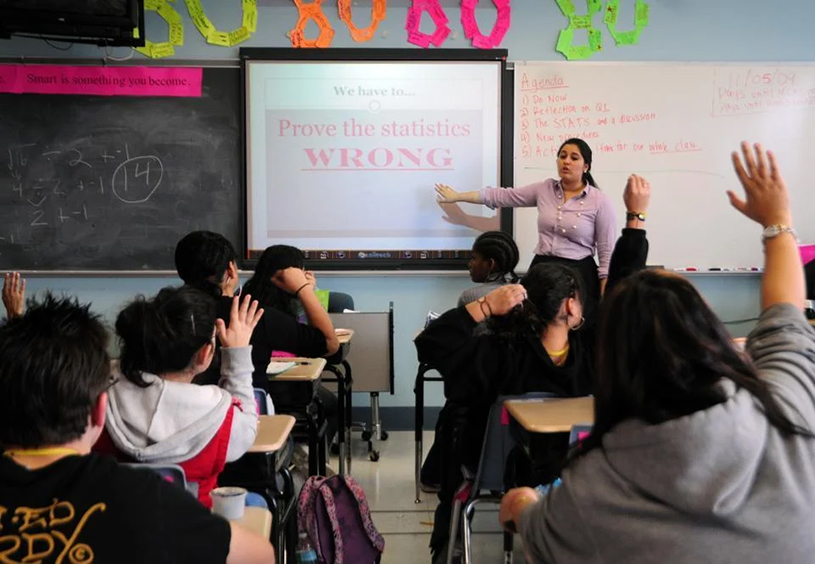 At age 28, Dandiya founded a high school in Harlem and became one of the youngest high school principals in the country. Her goal was to improve the prospects of students growing up in poverty by helping them prepare for college and the opportunities that could follow.
The school’s results became a defining part of her professional record. Every graduate earned admission to college, even though 86 percent of its students lived below the poverty line. For families facing economic hardship, college admission represented a significant step toward a wider range of future choices.
Her experience as a teacher and principal continues to shape how she discusses education. In her campaign, she emphasizes the close connection between schools and a family’s ability to build a stable life. Her work in Harlem gave her direct responsibility for helping students move from that idea to a concrete achievement: graduating from high school with a college acceptance in hand.
Experience in Washington and the Private Sector
Dandiya was later selected as a White House Fellow, serving at the White House Domestic Policy Council and the U.S. Department of Education. These assignments expanded her experience from individual classrooms and school leadership to the development and implementation of public policy.
Working in Washington allowed her to examine how federal decisions affect families, schools, and communities across the country. It also placed her in government institutions responsible for addressing issues she had encountered firsthand as an educator.
She subsequently led public sector initiatives at Apple, working with state leaders on efforts involving education, health care, and government systems. That role added private sector experience to a career already grounded in teaching and public service.
Illinois Governor J.B. Pritzker also appointed her to the Illinois P-20 Council, where she co-chaired its K-12 Computer Science working group. Her involvement brought another dimension to her education work, connecting school policy with the skills students may need as technology changes the workplace.
Together, these positions form the professional background she brings to her first congressional campaign. Voters can assess that record alongside her proposals and consider how her experience might translate into service in the U.S. House of Representatives.
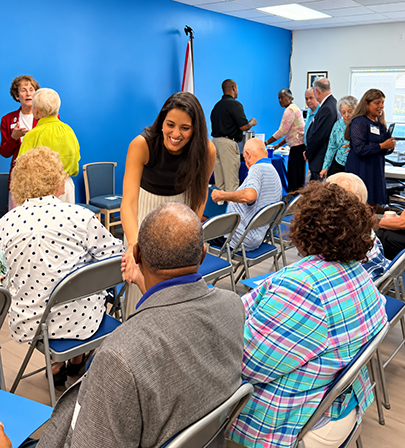
Her Priorities for Florida Families
Dandiya’s campaign centers on strengthening public education, expanding economic opportunity, and protecting families’ freedom to make decisions about their lives and futures. She connects those goals to the pressures households face as they try to pay their bills, raise children, and plan ahead.
She has emphasized household costs and economic security, arguing that families need access to good schools and jobs as well as affordable health care and dependable child care. Her approach reflects a belief that economic independence becomes more attainable when the services families rely on are within reach.
In Congress, Dandiya says she would work to expand early childhood education and job training. She also proposes making health care and child care more affordable, recognizing the effect these expenses can have on parents’ ability to work and maintain a stable household.
For older residents, she has pledged to defend Social Security and Medicare. She has also expressed support for veterans and emphasized access to government programs that help eligible residents.
Her campaign includes a commitment to protecting democratic values and ensuring that people have a voice in decisions affecting their communities. She presents these priorities as part of an effort to help Floridians build secure and fulfilling lives.
For voters, the next step is to examine the details of those proposals, consider how they would be carried out, and compare her approach with that of her opponent. Her background provides a record to evaluate; her campaign commitments indicate what she hopes to pursue if elected.
A New District with a Broad Range of Communities
 Florida’s 22nd Congressional District has changed significantly through the state’s mid-decade congressional redistricting. Its new boundaries include portions of Palm Beach, Broward, Hendry, and Collier counties, combining urban neighborhoods, suburban communities, and rural areas.
The Cook Political Report describes the newly drawn district as stretching from Palm Beach County toward Florida’s Gulf Coast. Its geographic reach means the eventual representative will serve communities whose daily concerns and local economies can differ considerably.
The new configuration is substantially different from the district’s previous boundaries, making comparisons with older election results less direct. With no incumbent running for the seat under the new boundaries, both nominees are working to introduce themselves and their priorities across the district.
Dandiya had previously campaigned for a different congressional district before entering the race in the newly configured 22nd District. She and her supporters describe the redistricting that created this open-seat contest as Republican mid-decade gerrymandering.
Askar secured the Republican nomination and brings his background as a Marine veteran and businessman to the race. The two candidates are now campaigning across the district as voters consider who should represent them in Washington.
What the Polling Shows
Recent surveys indicate a competitive election, but it’s important to consider the methodology and commissioning of each poll when interpreting the results.
A House Majority PAC poll conducted by Impact Research from August 24 through August 31 found Dandiya leading Askar by 46 percent to 44 percent among likely voters in the initial head-to-head matchup.
After respondents received information about both candidates, Dandiya’s support increased to 49 percent, while Askar remained at 44 percent. These were separate stages of the same survey, an important distinction when discussing the reported five-point lead.
The poll also found the generic congressional ballot tied, with 46 percent supporting a Democratic candidate and 46 percent supporting a Republican candidate. That result provides additional context for the closely divided electorate reflected in the candidate matchup.
When assessing the findings, consider the sponsorship of House Majority PAC, a Democratic-aligned political action committee.
A separate public survey by Tavern Research, conducted from August 10 through August 12 among 551 likely voters, showed Dandiya and Askar tied at 50 percent each.
Taken together, the available surveys point to a closely contested race. They show either a tie or a relatively small difference between the candidates, with Dandiya’s larger advantage appearing after respondents received additional candidate information in the Impact Research poll.
A Race Drawing Wider Attention
 On September 25, the Cook Political Report changed its rating for Florida’s 22nd District from “Lean Republican” to “Toss Up.” The change placed the contest among the closely watched House races of the 2026 election cycle.
Cook’s race summary identifies Dandiya as an education policy expert and the Democratic nominee and Askar as a Marine veteran who won the Republican primary. Its revised rating, alongside the polling, has increased interest in how the election will develop during the remaining weeks of the campaign.
For South Florida’s Indian-American community, Dandiya’s candidacy carries an additional connection. Her family’s journey from Jaipur to Jupiter, her mother’s school, and her son’s enrollment there give a personal dimension to a campaign being followed for its national political significance.
Desh-Videsh Media Group and its affiliate company Global Indian News Network are proud to support Pia Dandiya in this race and the effort to take back the U.S. House.
That support accompanies the responsibility voters have to examine candidates’ qualifications, proposals, and records.
On November 3, residents of the newly redrawn district will decide whether Dandiya or Askar represents them in Congress. For Pia Dandiya, the election is an opportunity to bring her experience in education, government, and the private sector to the communities surrounding the place where her family’s American story began.