
The Anti-Trump Wave and the Rise of Indian-Americans in U.S. Politics
By Raj Shah
Election nights in the United States have taken on a different texture for Indian-Americans. In living rooms and campaign headquarters, members of the community are watching candidates whose family stories resemble their own. Their participation extends from campaign donations and voter organizing to running for offices that shape life in their neighborhoods and across the country.
The central question of the 2026 midterms was how the backlash against the Trump administration intersected with this growing political influence. Democrats recaptured Congress, and Indian-American candidates shared in that advance. The connection varied from race to race: some confronted explicitly Trump-aligned opponents, while others faced fellow Democrats or ran without opposition.
The results also included Republican incumbents who survived, Democratic challengers who fell short, and well-known campaigns that ended in party primaries months before November. Examining those outcomes alongside the victories reveals the breadth of the community’s involvement.
Six Indian-American Democrats were reportedly elected to the incoming House: Ami Bera and Ro Khanna in California, Pramila Jayapal in Washington, Suhas Subramanyam in Virginia, Pia Dandiya in Florida, and Amish Shah in Arizona. Four are returning members. Dandiya and Shah will enter Congress for the first time.
Shah’s victory in Arizona’s 1st District offers a particularly clear intersection of local preparation and national opposition to Trump. An emergency physician and former state legislator, Shah had narrowly lost to Republican David Schweikert in 2024. With Schweikert pursuing the governorship, Shah faced former NFL kicker Jay Feely, who had Trump’s endorsement and described a friendship with the president spanning two decades.
The Associated Press called the race for Shah on November 5. His campaign had argued that Feely would answer to Trump rather than exercise independent judgment for Arizona. That argument gave the national question a local face. Shah also brought medical experience and an established campaign organization to a district he already knew. He became Arizona’s first Indian-American member of Congress.
Dandiya defeated Republican Casey Askar in Florida’s redrawn 22nd District. Raised in Palm Beach County by Indian immigrant parents, she worked as a teacher and high school principal before serving as a White House Fellow and later working at Apple. Her victory makes her the first Indian-American elected to Congress from Florida.
Both parties invested in the contest. Democrats included Dandiya in their Red to Blue program; Republicans placed Askar on their MAGA Majority roster. Trump-connected spending supported Askar. Dandiya’s success belongs within the wider Democratic advance, while her background and campaign work remain essential to explaining why voters chose her.
Subramanyam defeated Republican Dave Beckwith in Virginia’s 10th District, securing a second term. His earlier service in Virginia’s House of Delegates and Senate, together with his experience as a technology policy adviser in Barack Obama’s White House, gave him a record before entering Congress. Northern Virginia voters were judging a representative they had encountered in several public roles.
Bera defeated Republican Robb Tucker in California’s 3rd District and remains the longest-serving Indian-American in Congress. A physician first elected in 2012, he has developed experience in healthcare and foreign affairs. Khanna defeated fellow Indian-American Republican Ritesh Tandon in California’s 17th District. In Washington’s 7th District, Jayapal triumphed over Indian-American Republican Nirav Sheth.
The two contests between Indian-American candidates deserve attention. Shared ancestry did not erase disagreements over policy or party. Tandon and Sheth lost in constituencies with strong Democratic foundations. Those outcomes preserve influential Democratic voices, although they offer less evidence of voters abandoning Trump than a Republican-held seat changing hands.
Independent Anil Kumar lost in Michigan’s 11th District, where Democrat Jeremy Moss won. Republican Mahesh “Max” Ganorkar received less than a fifth of the vote against Democratic incumbent Valerie Foushee in North Carolina’s 4th District.
Earlier primary defeats also changed the community’s congressional prospects. Raja Krishnamoorthi lost Illinois’s Democratic Senate primary to Juliana Stratton. Shri Thanedar lost Michigan’s 13th District Democratic House primary to Donavan McKinney. Nida Allam, whose parents are Indian and Pakistani, lost North Carolina’s 4th District Democratic primary to Foushee.
Other congressional primary losses included Tina Shah in New Jersey’s 7th District, Jay Vaingankar and Sujit Singh in New Jersey’s 12th District, and Vichal Kumar in New York’s 7th District. These candidates were absent from November’s general-election ballot. Those contests reflected competition within the Democratic Party.
At the statewide level, Maryland Lieutenant Governor Aruna Miller won another term alongside Governor Wes Moore. Born in Hyderabad, Miller arrived in America at seven and spent twenty-five years working in transportation for Montgomery County before rising through elected office. Her career connects statewide leadership with the less visible work of local government.
Wisconsin Attorney General Josh Kaul defeated Republican Eric Toney and won a third term. Kaul’s father immigrated from India. His department had filed or joined more than seventy multistate lawsuits challenging Trump’s second administration, including cases involving birthright citizenship and federal funding. Voters were evaluating an officeholder already exercising legal authority against Washington.
Vivek Ramaswamy’s defeat in Ohio was the most significant. He launched his campaign for governor in February 2025 with what Trump called his “COMPLETE AND TOTAL ENDORSEMENT,” leaned on his ties to Vice President JD Vance, cleared the Republican field, and ran in a state Trump had carried three times. Amy Acton, the former state health director making her first run for office, beat him 52.0 percent to 44.7. She will be the first woman elected governor of Ohio and the first Democrat to win the office since 2006.
Much of the damage was his own. Two weeks before Election Day, his campaign put $4 million behind an ad in which Acton’s estranged mother called her daughter a liar. Several Republicans like Gov. Mike DeWine and Sen. Jon Husted strongly criticized it while Trump defended it.
Ramaswamy was also fighting on a second front, inside his coalition, and that part of his campaign matters to Indian-Americans of every party. It traced back to December 2024, when he and Elon Musk defended H-1B visas and set off a furious reaction among immigration hardliners on the right. Over the following two years he faced attacks on his Hindu faith and Indian heritage from far-right activists and from a primary rival who, The Washington Post reported, called him “not a real American.” At one campaign stop a questioner asked whether he had sufficiently integrated into American society. The white nationalist Nick Fuentes said Ohio was the only 2026 race he cared about and vowed to deny Ramaswamy the governorship. Ramaswamy had answered with a December 2025 speech at Turning Point USA’s AmericaFest rebuking racism in the MAGA movement, which angered some in his party.
Saritha Komatireddy, a former federal prosecutor, also lost her challenge to Democratic incumbent Letitia James in New York’s attorney general contest.
Earlier in the year, Democrat Nirav Shah lost Maine’s gubernatorial primary, and Hetal Doshi lost Colorado’s Democratic attorney general primary.
State legislatures supplied a much broader field of winners. In Illinois, Nabeela Syed defeated Republican incumbent Darby Hills in Senate District 26. Ram Villivalam returned to the state Senate. Kevin Olickal retained his House seat, and Saba Haider won House District 84. Syed’s Republican-seat flip offers stronger evidence of Democratic expansion than an uncontested return to office.
New York elected Lisa Kaul to Senate District 39 over Republican incumbent Robert Rolison. Jeremy Cooney won another term in Senate District 56. Republican Anil Beephan retained Assembly District 105. His victory is an important counterpoint to a story dominated by Democratic gains: Indian-American Republicans also maintained electoral support.
Georgia’s Jyot Singh won House District 97, becoming the first Indian-American and Sikh American elected to the Georgia General Assembly. In Texas, immigration attorney Pooja Sethi won House District 47, becoming the first Indian-American woman elected to the state legislature. Both victories carry historical significance while placing the winners inside everyday arguments about state spending and public schools.
Michigan’s Ranjeev Puri won reelection in House District 24. Arizona’s Priya Sundareshan returned to Senate District 18. Both emerged as figures to watch in legislative leadership discussions after Democratic gains. Any elevation to a chamber leadership post requires the relevant votes; winning a district election does not itself make someone speaker or Senate president.
In California, Ash Kalra returned to Assembly District 25, defeating fellow Indian-American Republican Himat Singh Bainiwal. Darshana Patel’s reelection in Assembly District 76 was also reported, following earlier coverage that had described her as leading. Washington returned Manka Dhingra to the Senate, while Vandana Slatter was among the state’s successful legislative candidates.
Connecticut’s Sujata Gadkar-Wilcox won another Senate term. North Carolina’s Jay Chaudhuri returned to Senate District 15. Pennsylvania’s Arvind Venkat won reelection to House District 30. Ohio’s Anita Somani also retained her House seat. These lawmakers bring established constituency relationships to their work, and their victories cannot be reduced to the president’s popularity.
Other reported winners included Megan Srinivas in Iowa, Nima Kulkarni in Kentucky, Reuben D’Silva in Nevada, Reena Szczepanski in New Mexico, and Renuka Mayadev in Wisconsin. Several faced no opposition. Their returns to office continued the community’s representation across a wide range of states.
Minnesota elected Krish Subrahmanian to Senate District 49. Maryland elected Amar Mukunda to Senate District 39. Vermont returned Kesha Ram Hinsdale and elected Nikhil Goyal to its Senate. Manoj Chourasia was reported among the winners in New Hampshire’s multimember Hillsborough-11 House district. Tennessee Republican Sabi “Doc” Kumar retained House District 66.
Democrats also suffered legislative defeats. Harjot Singh lost New York’s Senate District 2 contest. Sandeep Srivastava lost Texas House District 66. Jyoti Mohan lost Maryland House District 42A, and Nisha Lodhavia lost Delaware Senate District 15. Their experiences show how much the national political environment still depends on the constituency a candidate must win.
Among Republicans, Ashok Baddi lost Michigan House District 56 to Sharon MacDonell, while Ajay Gupta lost Illinois House District 41 to Janet Yang Rohr. In California, Vinaya Singh lost the Assembly District 10 contest. Democrat Jagtar Singh lost Assembly District 6 to fellow Democrat Maggy Krell.
Additional campaigns ended earlier. Jenifer Rajkumar lost New York’s Assembly District 38 Democratic primary to David Orkin. Rahul Garabadu lost Georgia’s Senate District 7 Democratic runoff, and Shelly Abraham lost Georgia’s House District 99 Democratic primary. Sion Roy failed to advance from California’s Senate District 24 primary.
Neal Walia lost Colorado’s House District 9 Democratic primary. Sunjay Kumar lost Illinois’s House District 13 Democratic primary. Adriana Leela Bohm lost Delaware’s Senate District 1 Democratic primary.
The judicial branch adds another dimension. In Texas, Juli Mathew won reelection to Fort Bend County Court at Law No. 3. Surendran K. Pattel won another term on Fort Bend County’s 240th District Court, defeating fellow Indian-American Republican Asha Reddi. That race placed two Indian-American legal careers before the same electorate.
Manpreet Monica Singh won reelection to Harris County Civil Court at Law No. 4. Sonia Rash, the daughter of Indian and Pakistani immigrants, was reportedly reelected as Fort Bend County justice of the peace for Precinct 3, Place 1. In Ohio, Manisha Kotian won a Hamilton County Court of Common Pleas judgeship. These offices carry responsibilities that can affect families directly and immediately.
The county government produced victories across several regions. Rohit Malhotra won Fulton County Commission District 4 in Georgia. Ranjan Rohatgi won. St. Joseph County Council District B in Indiana. In Florida, Hillsborough County Commission District 5 was won by Neil Manimala. Mona Singh won an at-large seat on North Carolina’s Wake County Board of Commissioners.
New York’s Anant Nambiar returned to the Westchester County Legislature. In Utah, Sim Gill won reelection as Salt Lake County district attorney. His office illustrates another route through which Indian-Americans exercise public authority: decisions about prosecution, public safety, and the operation of local justice systems.
Georgia also supplied a county-level defeat. Democrat Shuchita Patel lost Forsyth County Commission District 3 to Republican incumbent Todd Levent. Earlier, Steve Rao lost the Democratic primary for Wake County’s at-large commission seats. Their campaigns deserve a place in the national account alongside the county winners.
City politics produced one of the election’s most visible breakthroughs. Nithya Raman defeated Los Angeles Mayor Karen Bass, who conceded on November 5. Raman’s victory advanced an Indian-American leader in one of America’s largest cities. Marissa Roy was also reportedly elected Los Angeles city attorney, defeating John McKinney.
The mayoral contest was between Democrats. Housing and dissatisfaction with the city government were central to Raman’s campaign. Bass had herself opposed Trump’s actions toward Los Angeles. Raman’s win therefore reflects an argument about municipal leadership within Democratic politics and cannot simply be added to a tally of Republican defeats.
Elsewhere, Janani Ramachandran returned to Oakland’s City Council, and Aparna Raj won Washington, D.C. ‘s Ward 1 Council seat. New Jersey’s reported municipal winners included Ketan Bhuptani in Livingston, Mansi Patel in Long Hill, Aakash Shah in Tenafly, and Anita Chadha in South River. These smaller offices extend the community’s reach beyond the congressional map.
Municipal losses included Jaskirat Sondh in Rancho Cucamonga’s mayoral election, Santosh Sahoo in Milpitas’s mayoral race, and Jag Nagendra in a Folsom City Council contest. Earlier in 2026, Audrey Nath lost Houston’s District C special election. Jennifer Chawla and Venkat Mechineni lost Sacramento’s District 1 council election, decided in June.
Rini Sampath lost Washington, D.C.’s Democratic mayoral primary. School governance produced another earlier defeat when Ankur Patel lost the Los Angeles Unified School District’s District 4 election to Nick Melvoin in June. In Chicago, unofficial November returns placed incumbent Anusha Thotakura behind Isaiah White in school board District 6A. Sendhil Revuluri had withdrawn from the school-board presidency contest, although his name remained on the ballot.
There were educational-office victories as well. Silky Joshi-Malik won reelection to the Harris County Department of Education Board of Trustees in Texas. These contests receive less attention than Congress, even though education boards make decisions that parents encounter throughout the school year.
Several other results require restraint. Iowa Democrat Nikhil Wagle declared victory in Senate District 47, but reporting on November 5 still described the race as uncalled. In California, early returns showed Reena Gupta behind in Pleasanton, Vin Kruttiventi behind in another Pleasanton council district, and Vipin Sharma, Manisha Pathak, and Anurag Mishra trailing in Fremont contests.
Kashef Qaadri led Shivraj Singh in Dublin’s District 4 council race. Vipan S. Bajwa was reported ahead in Union City’s District 4. In Edison, New Jersey, Anjana R. Patel led the school-board field, while Niket Mull and Bijal Parikh were outside the three leading positions. Those standings should remain provisional until sufficient counting or reliable calls establish the outcomes.
Carnegie’s Indian American Attitudes Survey, run with YouGov over the winter, found that 71 percent of Indian-Americans disapproved of Trump’s job performance, 64 percent disapproved of his immigration policy, and only 20 percent approved of how he was handling India. Yet in January, support for Democratic congressional candidates stood at just 57 percent, with 25 percent for Republicans.
By October the split was 62 to 19. Carnegie’s researchers found the rebound sharpest among older men and driven heavily by negative partisanship, meaning voters were moving against Republicans more than toward Democrats. An AAPI Data survey over the summer put Indian-American support for Democratic House candidates at 66 percent, and 90 percent of respondents called the cost of living very or extremely important. Indian-Americans also had grievances specific to them. Trump’s tariffs on Indian goods reached 50 percent in 2025 before a February deal brought most of them down to 18, and the administration’s $100,000 fee on certain new H-1B petitions has been extended through September 2027.
The organizing machinery has grown along with the electorate. Indian American Impact said it put more than $625,000 into congressional races this cycle and has moved upward of $20 million into candidates and voter mobilization since its founding in 2016. Patel said South Asian Americans “turned out in historic numbers,” a claim that will have to wait for voter-file data.
Taken together, the results show a community gaining influence within a political landscape that remains competitive. The national backlash helped create opportunities, while district loyalties, candidate records, and local concerns continued to shape individual outcomes.
The winners will now confront responsibilities specific to their offices. Members of Congress can investigate federal policy and shape legislation affecting healthcare or visas. State lawmakers decide budgets and oversee agencies. Judges must apply the law impartially. City and county officials will face questions about housing, public safety, and services.
A Stronger Voice for America and U.S.–India Relations
Indian-American electoral victories could help strengthen U.S.–India relations by bringing greater familiarity with both countries into American public life. Lawmakers with personal connections to India may help colleagues understand concerns about trade, immigration, and the experiences of families whose lives span two countries. Their influence will depend on the positions they take and the relationships they build. They represent American constituents, and their views on India will sometimes differ.
For Indian-Americans, these victories should encourage wider participation in U.S. politics. Running for a school board, city council, or state legislature creates opportunities to address problems close to home. Voting in primaries and local elections helps determine who reaches office in the first place. Volunteering for campaigns, contributing within legal limits, and supporting candidates who listen to the community can also shape outcomes. Participation must continue after the celebrations, through public meetings and direct conversations with elected officials. As Indian-Americans assume greater responsibility in American democracy, they can help improve life in their communities while encouraging a thoughtful, constructive partnership between the United States and India.
About the Author:
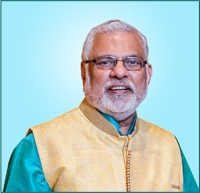 A software engineer by profession, Indian culture enthusiast, ardent promoter of Hinduism, and a cancer survivor, Raj Shah is a managing editor of Desh-Videsh Magazine and co-founder of Desh Videsh Media Group. Promoting the rich culture and heritage of India and Hinduism has been his motto ever since he arrived in the US in 1969.
He has been instrumental in starting and promoting several community organizations such as the Indian Religious and Cultural Center and International Hindu University. Raj has written two books on Hinduism titled Chronology of Hinduism and Understanding Hinduism. He has also written several children books focusing on Hindu culture and religion.