
The Role of Ayurveda & Ancient Medicine in Cancer Care
By Dr. Anjali Menon
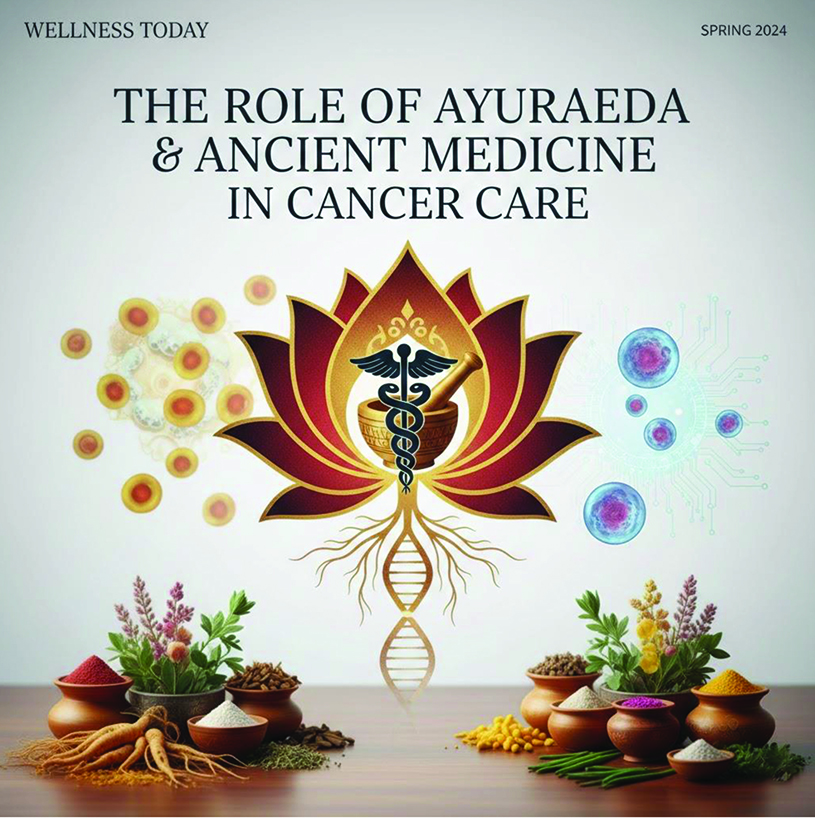
Cancer remains one of the most formidable health challenges of the 21st century, prompting patients and researchers alike to look beyond conventional oncology toward ancient healing traditions. Among these, Ayurveda, a 5,000-year-old system of natural healing originating in India, and other ancient medical traditions offer a holistic framework for health.
When discussing whether ancient medicine can be “equally effective” as a replacement or a supplement to modern treatment, it is vital to distinguish between integrative care (using both) and alternative care (using one instead of the other). Current scientific evidence strongly supports ancient medicine as a powerful supplementary tool, but cautions against it as a total replacement for life-saving conventional therapies.
 Ancient Perspectives on Cancer
In ancient Ayurvedic texts like the Sushruta Samhita and Charaka Samhita, cancer is not a new phenomenon. It was described using terms such as “Granthi” (minor neoplasm) or “Arbuda” (major neoplasm).
Ancient medicine views cancer as a systemic imbalance. In Ayurveda, this is often attributed to the aggravation of the three Doshas—Vata, Pitta, and Kapha—which leads to the loss of cellular coordination and tissue destruction. Rather than focusing solely on the tumor, ancient systems focus on the host, aiming to restore the internal environment so it no longer supports the growth of “malignant” tissues.
The Power of Supplementary (Integrative) Medicine
The most effective modern application of ancient medicine is Integrative Oncology. In this model, Ayurvedic practices are used alongside chemotherapy, radiation, and surgery to enhance the patient’s quality of life and potentially improve outcomes.
1. Mitigating Side Effects
One of the greatest hurdles in cancer treatment is the toxicity of conventional drugs. Ancient medicine offers various protocols to manage these:
- Gingers and Turmeric: Studies have shown that ginger can significantly reduce chemotherapy-induced nausea.
- Rasayana Therapy: This branch of Ayurveda focuses on rejuvenation and “life essence” (Ojas). Formulations like Rasayana Avaleha have been found in clinical pilots to reduce side effects like mucositis, fatigue, and hair loss during radiation.
- Panchakarma: These detoxification procedures (when performed mildly and under supervision) help the body flush out metabolic waste and treatment-related toxins, restoring “Agni” or digestive fire.
 2. Synergistic Effects
Emerging research suggests that some ancient herbs may actually make conventional treatments more effective. For example, Withaferin A, a compound found in Ashwagandha, has been shown in laboratory settings to sensitize certain cancer cells to chemotherapy, potentially allowing for lower, less toxic doses of drugs like cisplatin.
The Risks of Replacement (Alternative) Medicine
While ancient medicine is deeply effective at supporting the body, the claim that it can “replace” modern oncology is where significant medical risks arise.
1. The Survival Gap
A landmark study published in the Journal of the National Cancer Institute found that patients with curable cancers (breast, lung, colorectal) who chose alternative medicine over conventional treatment had a significantly higher risk of death. For breast cancer, the risk was five times higher. This is because ancient medicine, while excellent for chronic conditions and prevention, often lacks the “aggressive” intervention needed to halt rapidly dividing malignant cells.
2. The “Window of Opportunity”
Cancer is a time-sensitive disease. Choosing to replace surgery or chemotherapy with purely herbal protocols can result in a “lost window” where the cancer advances to a stage that is no longer curable by any means.
Important Note: Traditional medicine is often based on “low-potency, multi-target” approaches, whereas modern oncology uses “high-potency, specific-target” approaches. In the face of an aggressive tumor, the high-potency approach is usually necessary for survival.
| Herb/Compound | Source | Potential Action in Cancer Care |
|---|---|---|
| Curcumin | Turmeric | Strong anti-inflammatory; inhibits pathways of cell proliferation. |
| Withanolides | Ashwagandha | Immunomodulatory; potential to induce apoptosis (cell death) in tumor cells. |
| Guduchi | Tinospora cordifolia | Radioprotective; helps protect healthy tissues during radiation. |
| Triphala | Three Fruits | Antioxidant; supports gut health and detoxification during recovery. |
A Balanced Approach: The Way Forward
Ancient medicine is most effective when it is allowed to do what it does best: strengthen the patient. Instead of viewing them as “either/or” choices, a balanced approach utilizes both:
- Conventional Medicine: To target, shrink, and remove the tumor.
- Ayurvedic Medicine: To support the immune system, manage stress through Yoga and meditation, and nourish the body through a Sattvic (pure) diet.
This “Whole-System” strategy addresses cancer and the person simultaneously. It ensures the patient doesn’t just survive the treatment, but recovers with their vitality and mental.
Clinically Studied Single Herbs
Look for “standardized extracts,” which ensure you are getting a consistent amount of the active medicinal compound.
Scientific Evidence and Phytochemicals
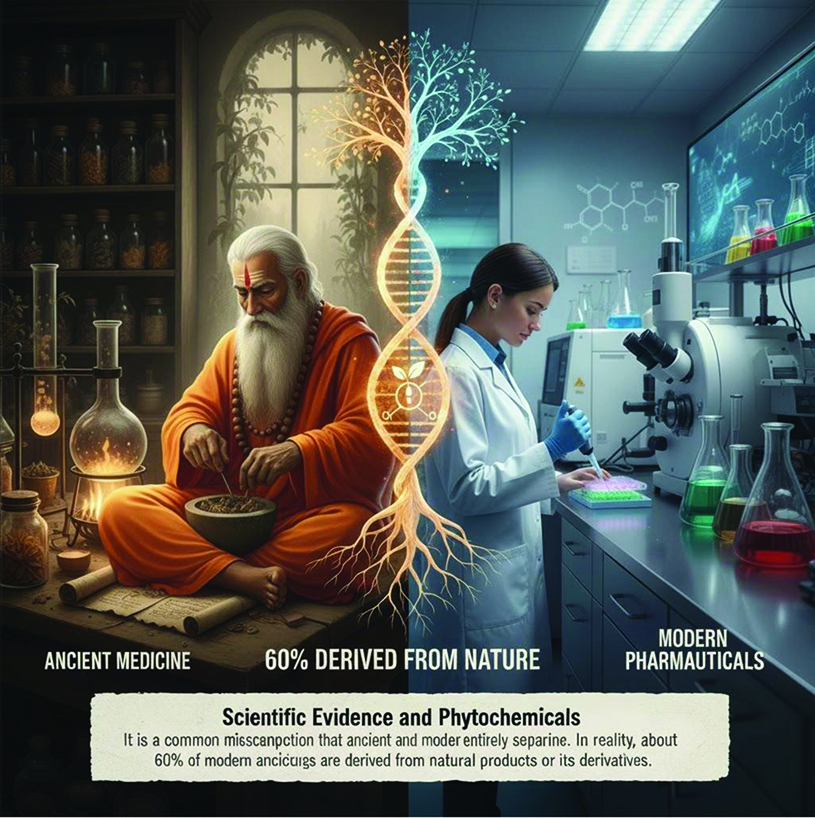
It is a common misconception that ancient and modern medicines are entirely separate. In reality, about 60% of modern anticancer drugs are derived from natural products or its derivatives.
| Product Type | Recommended Brand / Product | Why This Specific Product? |
|---|---|---|
| Ashwagandha | Thorne Ashwagandha or Pure Encapsulations (KSM-66) | These use KSM-66, the most clinically researched extract.
It is used to combat cancer fatigue and reduce cortisol (stress). |
| Curcumin | Patanjali Curcumin Gold 95 or Thorne Meriva-SF | Turmeric has poor absorption.
These products use phytosome technology or 95% curcuminoids to ensure the body actually absorbs the anti-inflammatory benefits. |
| Guduchi (Giloy) | Himalaya Wellness Guduchi | Known as “Amrita” (root of immortality), it is used to support white blood cell counts during chemotherapy.
Himalaya is a globally recognized, GMP-certified brand. |
| Amla (Vitamin C) | Organic India Amalaki | A potent antioxidant.
Organic India is highly regarded for its “seed-to-shelf” purity and organic heavy-metal testing. |
 Classical Ayurvedic Formulations
These are “complexes” (mixtures of many herbs) designed for specific systemic support.
- Chyawanprash (Immunity Jam): * Product: Kottakkal Arya Vaidya Sala Chyawanprash or Dabur Ratnaprash.
- Purpose: A nutritive tonic used to restore “Ojas” (vitality) after depleting treatments like radiation.
- Triphala (Digestive Support): * Product: Banyan Botanicals Triphala Tablets.
- Purpose: A gentle colon cleanser that helps manage chemotherapy-induced constipation without the harshness of chemical laxatives.
- Kanchanar Guggulu:
- Product: Maharishi Ayurveda Kanchanar Guggulu.
- Purpose: Traditionally used in Ayurveda specifically for “Arbuda” (tumors/growths) to support the lymphatic system and reduce inflammation.
Specialized Supportive Products
- For Mouth Sores (Mucositis): Turmeric mouthwashes or Glandosane (while not Ayurvedic, many integrative doctors suggest a rinse made from diluted Himalaya Turmeric powder and honey).
- For Skin Radiation Burns: Forest Essentials Aloe Vera Gel or pure Virgin Coconut Oil (Ayurveda views radiation as “Pitta” or excess heat; cooling oils are essential).
Important Quality Check
 When buying Ayurvedic products, especially for a condition as serious as cancer, always check for these three markers:
- GMP Certified: Ensures Good Manufacturing Practices.
- Heavy Metal Tested: Ancient herbs can sometimes contain lead or mercury if not processed correctly. Brands like Banyan Botanicals, Organic India, and Kottakkal are rigorous about this.
- Third-Party Verification: Look for “USP” or “NSF” seals on the label.
Warning: Avoid products marketed as “Cancer Cures” (like certain unverified versions of Carctol). Legitimate Ayurvedic medicine is meant to support your body’s resilience, not replace the tumor-shrinking power of modern medicine.
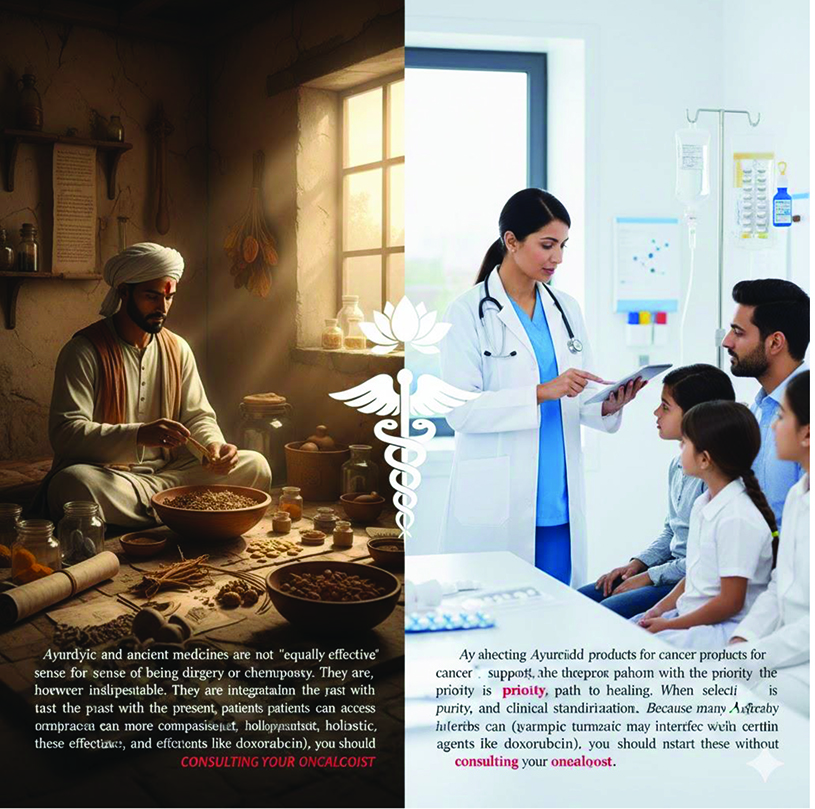
Ayurvedic and ancient medicines are not “equally effective” in the sense of being a direct swap for surgery or chemotherapy. They are, however, indispensable as supplementary partners. By integrating the wisdom of the past with the technology of the present, patients can access a more compassionate, holistic, and effective path to healing.
When selecting Ayurvedic products for cancer support, the priority is safety, purity, and clinical standardization. Because many Ayurvedic herbs can interact with chemotherapy (for example, turmeric may interfere with certain chemo agents like doxorubicin), you should never start these without consulting your oncologist.
 ⚠️ CRITICAL MEDICAL WARNING & DISCLAIMER
Do not attempt to use any of the herbs, products, or protocols mentioned in this article as a replacement for conventional cancer treatment or without the direct supervision of your oncologist. While ancient medicine offers supportive benefits, certain Ayurvedic supplements can dangerously interfere with chemotherapy, radiation, and immunotherapy, potentially making your treatment less effective or more toxic. Always consult with your medical team before adding any natural remedy to your regimen to ensure it is safe for your specific diagnosis
About the Author:
Dr. Anjali Menon (BAMS, MS, PGDYT) was born in Kochi, Kerala, where Ayurveda is a way of life, and this tradition inspired her path as an Ayurveda physician. Her journey began in 2007 with a BAMS degree from Amrita School of Ayurveda, Kollam, followed by a Master’s in Ayurveda from Gujarat Ayurveda University, Jamnagar. Along the way, she received training in yoga therapy, skin and beauty care, and pulse diagnosis.
Her education shaped not only her clinical and diagnostic skills but also her ability to blend logical reasoning with holistic healing. The guidance of her teachers went far beyond textbooks, offering both practical wisdom and spiritual insights.
Later, She served as an Assistant Professor at KLE Ayurveda Medical College, Belgaum, where She had the privilege of mentoring students and enhancing her own academic and clinical expertise.