MUST READ BOOKS AUGUST 2026

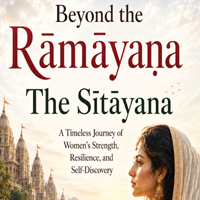
BEYOND THE RĀMĀYAṆA The Sītāyana – A Timeless Journey of Women’s Strength, Resilience, and Self-Discovery
By Dr. Mohini Shinde & Raj Shah
 You know the Rāmāyaṇa .
You know the exile, the abduction, the war, the victory, and the homecoming.
But the woman who lived through every single moment of it – who loved without condition, endured without breaking, and built an entire world with her hands while the kingdom looked away – She was never given a chance to speak.
Until now.
In Beyond the Rāmāyaṇa: The Sītāyana, Sita finally tells her story.
Not the story of a devoted wife. Not the story of a patient sufferer. Not the story that kings and poets found convenient to preserve.
Her story. The real one.
She will tell you what it felt like to walk through fire to prove an innocence that should never have been questioned.
She will tell you what it felt like to be sent into the forest – pregnant, alone, and utterly betrayed – by the man she had never once failed. She will tell you how she built a home from nothing. How she raised two sons who would one day stand before their father and sing her silenced truth back to him.
She will tell you what she said when he asked her to return. And she will tell you why – after a lifetime of proving, enduring, and surviving – She finally chose herself.
This is not just Sita’s story. This is every woman’s story. This story also resonates with every man who has ever loved a woman.
“Every generation inherits the Ramayana. This generation finally inherits Sita’s truth.”
For readers of The Palace of Illusions, this retelling offers a unique perspective. · The Forest of Enchantments · The Penelopiad · The Red Tent · Circe – but unlike those retellings, this version is not a story built around a silence in the margins of myth.
Sītā is the woman at the very centre of one of the world’s most beloved epics, finally given the voice that the original story always denied her. Where other retellings invent a world around a forgotten woman, The
Sītāyana excavates the truth buried inside a story everyone already thinks they know. This is not an adaptation. This is reclamation.
This is the retelling that readers have been waiting four thousand years for, and once you start it, you will not be able to put it down.
This is the book that will make you see the Ramayana – and every story you thought you knew – differently. Forever.
“Some stories are told. Others are taken back. This is Sita, taking hers back.”
Free your Mind from Overthinking – Discover the Power of Trust
By BK sister Shireen Chada
 IT’S 2AM AND YOUR MIND IS STILL RUNNING.
Replaying the conversation from Tuesday. Rehearsing the one coming Friday. Playing out scenes that haven’t happened and may never happen at all.
You’ve tried thinking your way to safety. You’re still awake, so you already know how that’s going.
Trust is the other way.
The Sacred Trust Code is a simple five-minute practice you can use at your desk, in your car, or lying awake at 2am. It doesn’t ask you to stop thinking. It teaches you where to place your trust when your mind refuses to let go.
Practiced daily, it changes what your mind does in the quiet. Old conversations lose their grip. The rehearsals get shorter. You stop reliving the same moment a hundred times.
Shireen Chada tested these principles through anxiety, illness, and cancer, and refined them with more than four thousand students in her Insight Timer course The Trust Revolution, before they became a book.
You don’t have to believe a single word.
Run the first experiment tonight. Let your own mind tell you.
Shireen Chada has spent more than three decades teaching Raja Yoga meditation in the Brahma Kumaris tradition. An author, speaker, and retreat leader, she draws on ancient spiritual wisdom and modern psychology to help people quiet the mind, cultivate inner peace, and discover the freedom that comes through trust.
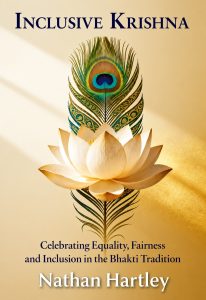
Inclusive Krishna : Celebrating Equality, Fairness and Inclusion in the Bhakti Tradition
By Nathan Hartley
 The theme of this book hasn’t been chosen simply because it’s fashionable, contemporary, or it’s trendy amongst a certain audience. No, not at all.
The theme of inclusion is a central teaching of the Gaudiya Vaishnava tradition, which can be traced back to that profound conversation that took place between Lord Krishna (God) and His friend and disciple, Arjuna, on the battlefield of Kurukshetra some 5,000 years ago.