
Garba, Diwali, and a Healthier Heart
What Indian American Families Should Know About Heart Health
BY Dr. Kavitha Reddy
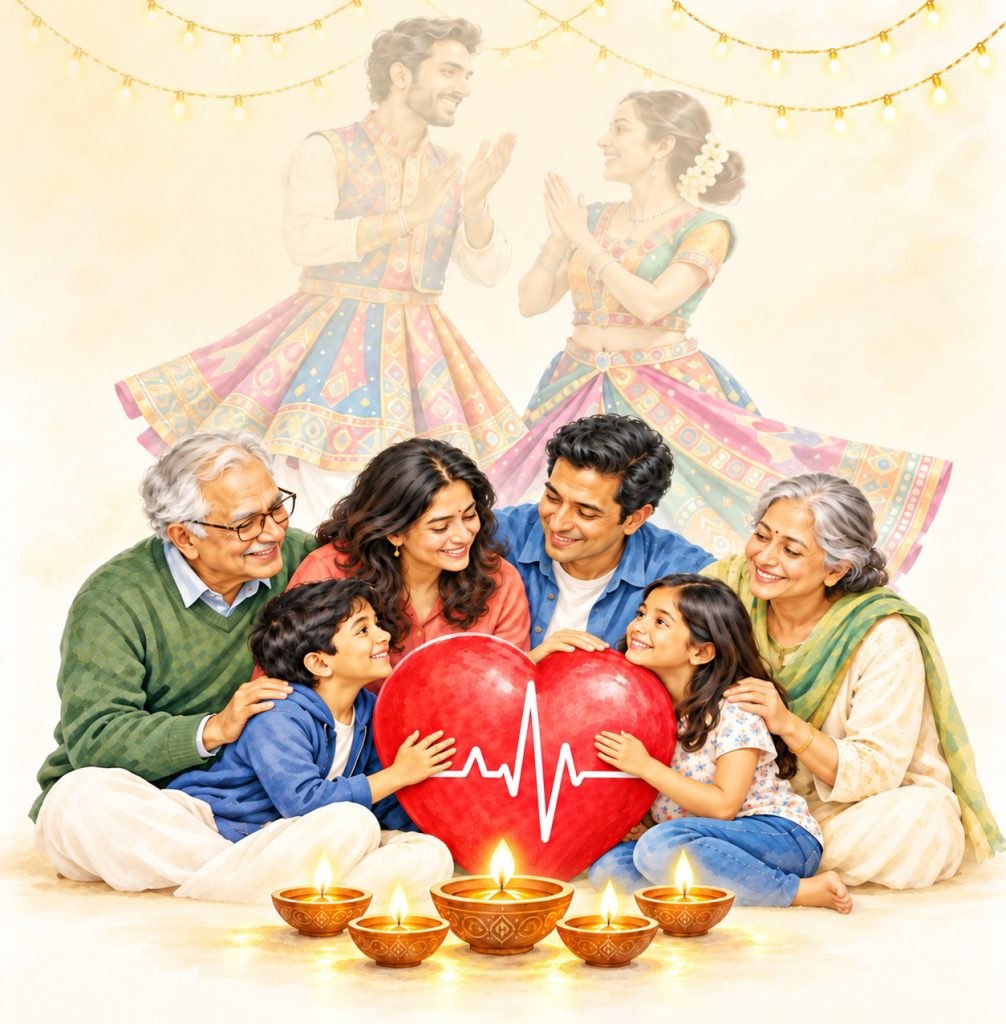
By the time the Garba music starts, the Patel family has already had a full day. The grandparents helped prepare dinner, the parents rushed home from work, and the children spent an hour deciding what to wear. Now everyone is at the community hall. The children run toward their friends, the adults greet people they have not seen in months, and Dada joins the Garba circle for a few rounds.
This is what many families love about the fall festival season. It brings generations together. It also changes the household routine. Dinner happens late. Sweets arrive from relatives and friends. A person who usually takes an evening walk may spend that time driving to rehearsals or helping organize an event.
None of this calls for giving up the celebrations. October offers a useful moment to ask a simple question: How can we enjoy the season while taking care of our hearts?
For Indian American families, the question deserves attention. Research has found that South Asian adults face elevated risks of heart disease and type 2 diabetes. Those risks can be present even when someone appears to be at a healthy weight. A recent study also found that several heart disease risk factors were more common by age 45 among South Asian adults than among some other groups studied. Family members who feel well may still have blood pressure, cholesterol, or blood sugar levels worth discussing with a clinician.
Know your numbers before the busy season.
 Many of us know the details of our family history: which uncle moved to America first, who makes the best undhiyu, and where the family will gather for Diwali. We may know less about our health history.
Did a parent or sibling have a heart attack? Does diabetes run in the family? When was your blood pressure last checked? If you have had blood tests, do you know what your cholesterol and blood sugar results mean for you?
A routine appointment can help answer these questions. Bring your family history and ask your healthcare professional whether your results and any recommended follow-up need special attention. Younger adults should join this conversation too. Waiting until retirement to think about heart health may mean overlooking risk factors that have been developing for years.
Keep moving in ways that you enjoy.
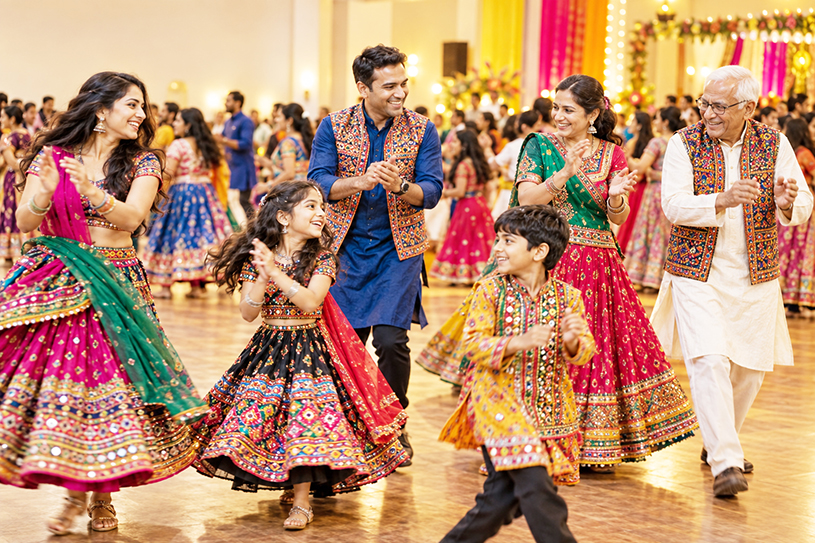
Garba itself can be a wonderful reason to move. So can a walk around the neighborhood to admire Diwali lights, a game with the grandchildren, or a stroll with a friend after dinner. Physical activity is one part of the lifestyle approach recommended for improving heart and metabolic health among South Asians.
The challenge is keeping movement in the week when the calendar becomes crowded. One family might take a short walk together before leaving for an evening event. Another might choose a nearby park on Sunday morning. A grandparent who does not want to dance for hours might enjoy a few comfortable rounds of Garba, then sit and watch the children.
Choose an activity that suits your health and abilities. If you have a heart condition, symptoms during exertion, or concerns about starting exercise, speak with your clinician about what is appropriate for you.
Make room for the foods you love.
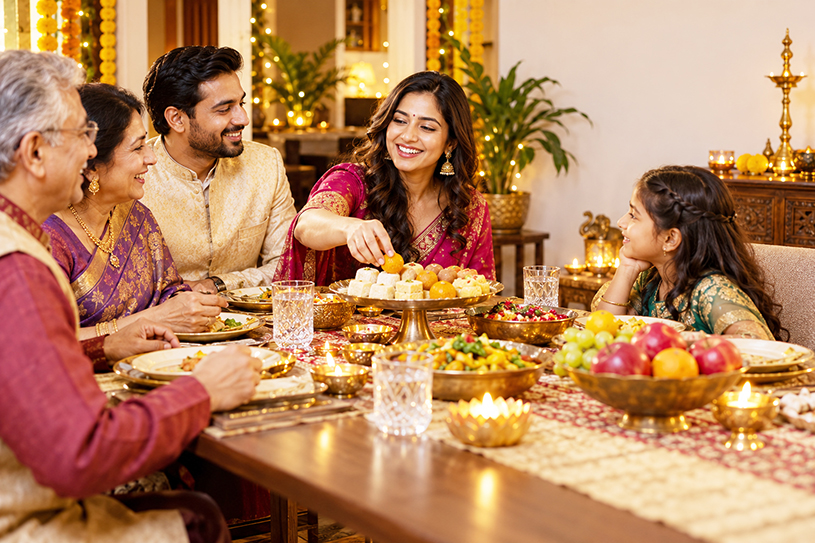 Festival food carries memory. A sweet made from a mother’s recipe can bring back a childhood Diwali more vividly than any photograph. Food also connects us to the people who made it and the guests who share it. A heart health article should respect that place at the family table.
Still, a month of celebrations can become a month of eating past the point of enjoyment. Before going to a party, consider having a regular meal instead of arriving very hungry. At the event, examine the offerings and select the dishes you desire most. Take a portion you will enjoy, sit down when possible, and give yourself time to notice when you have had enough.
Hosts can make small changes without changing the spirit of the occasion. Put water where guests can find it easily. Offer fruit alongside mithai. Serve a vegetable dish that people look forward to eating. If relatives exchange sweets, a smaller box may be just as thoughtful as a large one.
For someone managing diabetes or another health condition, a festival plan can be more specific. Talk with your healthcare team about meals, medicines, and what to do when the day’s schedule shifts.
Protect sleep during the festivities
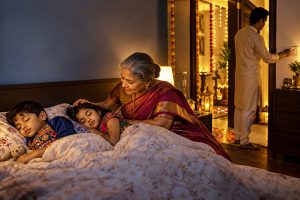 A late Garba night can be worth staying up for. Several late nights in a row, followed by early mornings, can leave a family tired and less able to keep its usual habits. Rest is part of caring for the body, even in a joyful season. Research also links the body’s daily sleep and wake rhythms with heart and metabolic health.
Look at the calendar before it fills up. Perhaps the family attends one event together and keeps the following morning free. Perhaps the children skip an extra rehearsal when schoolwork and sleep are already suffering. Older relatives may appreciate an early ride home, even if others stay for the final dance.
These choices can make the celebration more enjoyable. Few people have fun when they are exhausted.
Make heart health a family conversation.
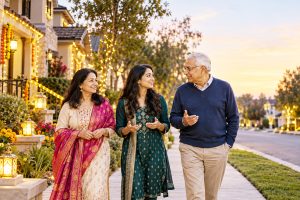 The most useful conversations often happen in ordinary moments. A daughter can ask her father whether he has checked his blood pressure recently. A mother can invite her college student to join her for a walk. A son can offer to drive his parents to a medical appointment.
Approach these talks with care. Comments about someone’s weight or what is on their plate can make a gathering uncomfortable. An invitation to walk together or an offer to help arrange a checkup is more likely to open a conversation.
This October, let the festival season bring your family closer in one more way. Dance when you can. Enjoy the foods that matter to you. Make time to rest. And before the decorations are packed away, learn your numbers and encourage the people you love to learn theirs. The habits we build together can continue long after the last diya has gone out.
About the Author
 Dr. Kavitha Reddy is a U.S.-trained MD specializing in Internal Medicine with over 20 years of clinical experience. She integrates conventional Western medicine with holistic and lifestyle-based approaches to promote whole-body wellness.
Her patient-centered philosophy blends nutrition, stress management, and preventive care into every treatment plan. Dr. Reddy is known for her compassionate care and dedication to empowering patients through education and self-care.
She has helped thousands of individuals find balance and healing through a uniquely integrative approach to medicine.